
 Worksheets
Newtons Laws
Total questions: 57
Worksheet time: 19mins
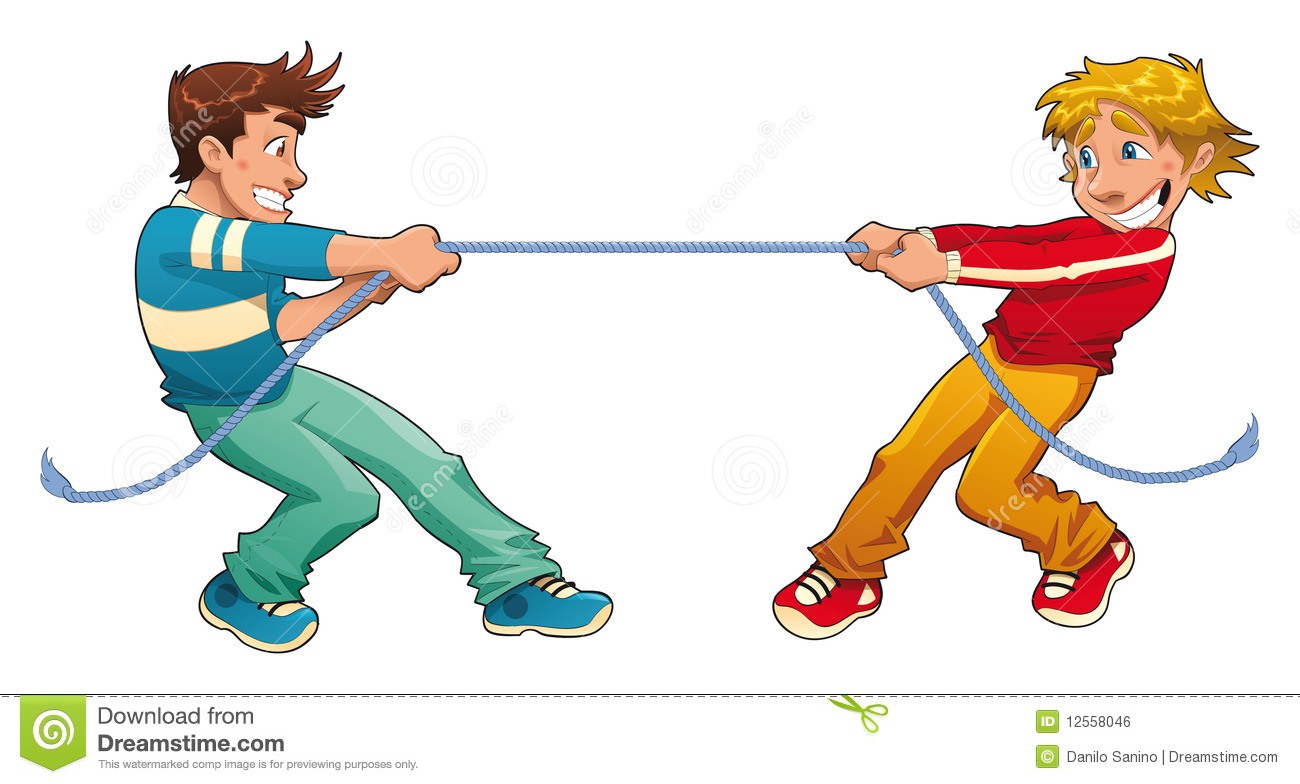
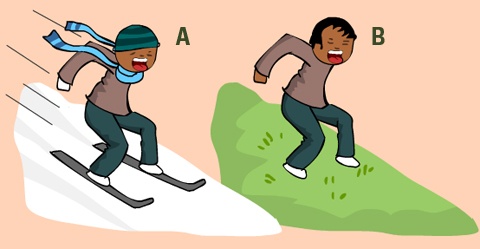

1st
Law of Motion
2nd
Law of Motion
3rd
Law of Motion

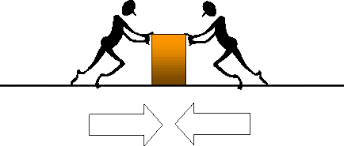

A squirrel sits on the ground and eats a donut. We know the forces on him must be balanced because...
Forces are always balanced
the squirrel is not accelerating
squirrels are projectiles
he's eating a donut

The Law of Inertia
Newtons 1st Law of motion
Newtons 2nd Law of motion
Newtons 3rd Law of motion
What does Newton's first law state about an object's motion?
An object's motion can change without any force acting on it.
A force is needed to keep an object moving.
An object's motion cannot change unless a force acts on it.
Friction is the only force affecting an object's motion.
According to Newton's second law, what happens to the acceleration of an object if the force applied to it increases?
The acceleration decreases
The acceleration remains the same
The acceleration increases
The acceleration becomes negative
What does Newton's third law state about forces?
Forces act independently of each other
Forces always result in motion
Every force has an equal and opposite reaction force
Forces are directly proportional to mass
Which of the following is an example of Newton's third law in action?
A car stopped in the driveway
A soccer ball hitting a goal post
A book resting on a table
A bird sitting in a nest
What force is responsible for slowing down a rolling ball on the ground?
Gravity
Magnetism
Friction
Electromagnetic Force
Which law of motion describes an object's resistance to a change in its motion?
Newton's 1st Law
Newton's 2nd Law
Newton's 3rd Law
None of these
What type of force is needed to change an object's motion?
Balanced Forces
Frictional Forces
Gravitational Forces
Unbalanced Forces
According to Newton's 2nd Law, what happens to acceleration if force remains constant but mass increases? The acceleration will _____.
decrease
increase
remain constant
become zero
Which law of motion describes the phenomenon where forces always occur in pairs?
Newton's 1st Law
Newton's 2nd Law
Newton's 3rd Law
None of these


When the force on a car is doubled, the acceleration is doubled.
Newton's 1st Law
Newton's 2nd Law
Newton's 3rd Law

You push against a wall and the wall is pushing back on you.
Newton's 1st Law
Newton's 2nd Law
Newton's 3rd Law
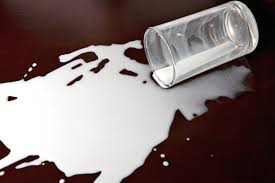
You are carrying a lunch tray when you bump into the edge of a table. Although the tray did not tip, your milk falls off of the front of the tray.
Newton's
1st
Law of Motion
Newton's
2nd
Law of Motion
Newton's
3rd
Law of Motion
In Newton's first Law of Motion, an object at rest will ___________.
defy gravity
want to move
remain at rest
Go to the Moon!
Mass of an object can be defined by...
how small an object is
how large an object is
how far an object is from the sun
How much matter an object is made out of.
The greater the mass of an object, the greater the amount of ______ is needed to make it accelerate.
Force
Matter
Acceleration
Velocity

Jumping into the air is an example of _________.
Action-reaction forces
Momentum
electromagnetic fields
Mass

True or False. If an object is hit opposite sides with the same amount of force on each side, the forces cancel out and the object will NOT move.
True
False

1st
Law of Motion
2nd
Law of Motion
3rd
Law of Motion

You push off and the boat moves the opposite direction. This is Newtons ____ law.
1st
2nd
3rd

If you kick a soccer ball with 1000 Newtons of force it will go a lot farther than kicking a bowling ball with the same force.
1st
2nd
3rd
1st
Law of Motion
2nd
Law of Motion
3rd
Law of Motion
1st
Law of Motion
2nd
Law of Motion
3rd
Law of Motion
You push off and the boat moves the opposite direction. This is Newtons ____ law.
1st
2nd
3rd
Work is done when .....
a force is exerted on an object.
an object exerts force onto another object.
a force is exerted on an object causing the object to move.
an object does not move.

When force is used to move an object across a distance, this is called...
effort
power
energy
work
Work is done when .....
a force is exerted on an object.
an object exerts force onto another object.
a force is exerted on an object causing the object to move.
an object does not move.

If you have a balloon and a bowling ball, which object would need more force to make it move. Explain why. (answer in complete sentences)
True or False. If an object is hit opposite sides with the same amount of force on each side, the forces cancel out and the object will NOT move.
True
False

What is Newton's 1st law?
Law of Force and Acceleration
Law of Inertia
Law of Action-Reaction
Law of motion
Which is an example of Newton's 2nd law?
A ball bouncing
A fan spinning
Pushing a 10 pound box
Sneezing
An object in motion stops when.....
It falls of an edge.
it is acted upon by an outside force.
It is eaten
It never stops
A fireman turns on his hose and is knocked backwards is an example of...
Newton's 1st Law
Newton's 2nd Law
Newton's 3rd Law
Newton's 4rth Law
Friction
an opposed force that causes a change in motion.
the action of surfaces rubbing against each other.
the tendency of an object to resist a change in motion or a change in rest.
when the forces acting on an object are equal in size but act in opposite directions.
Which ball has the most inertia?
Baseball
Soccer ball
Bowling ball
Beach ball

