
 Worksheets
Progressivism and Imperialism Test
Total questions: 47
Worksheet time: 45mins
Individuals who attempted to expose corruption and inequality during the Progressive Era were known as
Muckrakers
Populists
Suffragists
Fundamentalists
The Progressive Movement wanted to
Fix social and economic problems
protect big business interests
expand America’s landholdings overseas
promote civil rights for African Americans
3: “Be it enacted by . . . Congress . . . (t)hat no producer, manufacturer, or dealer shall ship or deliver for shipment in interstate or foreign commerce, any article or . . . product of any mine or quarry situated in the United States, in which . . . children under the age of sixteen years have been employed or permitted to work . . .” This quote reflects the public’s support for the
control of the mining industry
abolition of child labor
regulation of product transportation
limitation of foreign trade
What were political machines?
A machine that counted votes
Political parties that used illegal means to gain power
Construction vehicles used to build cities
Machines working to make labor easier
How did political machines gain power?
Convincing poor immigrants to vote a certain way
Bribes
Extortion
All of the above
Ida Tarbell wrote about the -
ruthless methods used by the Standard Oil Company in its rise to power
evils of the political machines found in large, eastern industrial cities
bribery schemes practiced by the owners of the nation's largest railroad systems
selfish motives behind the rise of the feminist movement and temperance leagues
What would be another way to describe the role of a Muckraker?
A: A sanitation worker
B: a landscape architect
C: a corrupt politician
D: an investigative journalist
Where did the term muckraker come from?
The book The Jungle
a speech by Teddy Roosevelt
A Thomas Nast Cartoon
A Home Depot Ad
The Pendleton Civil Service Act was aimed at eliminating what?
monopolies
political machines
The spoils system
political reform
Which of the following activities would John Dewey think was the BEST method to educate children?
Watching a movie and taking notes
Memorizing flashcards
Reading a textbook account
Writing a journal entry from the point of view of a historical figure
Why did American industrialists in the late 19th century generally support expansionism?
They believed that these regions would benefit from democratic government.
These areas would provide new sources of raw materials and customers.
Antitrust laws did not apply to American territories overseas.
American colonies would increase tariff revenues.
Upton Sinclair’s book “The Jungle” exposed the practices of what industry?
farming
logging
meatpacking
mining
Which best describes the practice of Yellow Journalism?
Exaggerating and sensationalizing events to sell papers.
Accurately reporting just the facts of a news story.
Opinion-based stories meant to support 1-side of an issue.
A balanced approach to the news that is fair to all sides.
In 1898, the mysterious and controversial destruction of the battleship USS Maine was viewed by many in the United States as
an accident with nobody to blame
an act of sabotage by unhappy Americans
cause for war with Spain
the beginning of yellow journalism
When sugar planters, missionaries, and Marines drove Queen Liliuokalani from power, the U.S. gained a permanent foothold in
Hawaii
Guam
Samoa
Panama
What was Upton Sinclair saying when he said, “I aimed for their hearts, but I hit them in their stomachs.”
He intended to address suffrage issues, but instead affected labor issues
He was trying to improve things for workers, but the food conditions is what people noticed
He was trying to make an emotional connection with leaders
He tried to shoot someone, but his aim was off
What Nickname did Mary Harris Jones earn for working for reform for her "boys" in the coal mines?
Protector
Sister
Mother
Grandma
Which statement would MOST likely have been made by a suffragist?
“Women should not exercise political power; rather, they should manage the home.”
“Alcohol is the root of all evil in society and must be outlawed.”
“Big businesses are exploiting the public. The government must regulate them.”
"The right to vote should be expanded to include all citizens of the United States.”
21: “(T)he manufacture, sale, or transportation of intoxicating liquors within, the importation thereof into, or the exportation thereof from the United States . . . is hereby prohibited . . .” This text is an excerpt from which amendment?
16th
17th
18th
19th
How did George Washington Carver revolutionize southern agriculture?
He created multiple different uses for cotton
He advocated for a return to sharecropping
He developed uses for soybeans
He developed hundreds of uses for peanuts.
Why were many reformers middle class women?
They were well-educated
They had more free time
They were expected not to work
All of the above
On March 25, 1911 a deadly fire killed 146 garment workers at...
Haymarket Square
The Pullman factory
The Triangle Shirtwaist Factory
Carnegie Steel's Homestead Plant
Which of the following was not true of the deadly fire in the previous question?
It was started by an arsonist
The owners had locked the doors
The fire escape failed
Some died jumping to their deaths
What effect did compulsory education laws, giving kids more access to education, have on the workplace?
A decline in wages for children
A decrease in child factory workers
Better working conditions for children
Longer work weeks for children
How did William M. Tweed become rich on the taxpayers’ dime?
He stole from the federal treasury
He raised city taxes
He took kickbacks on city construction projects
He robbed banks
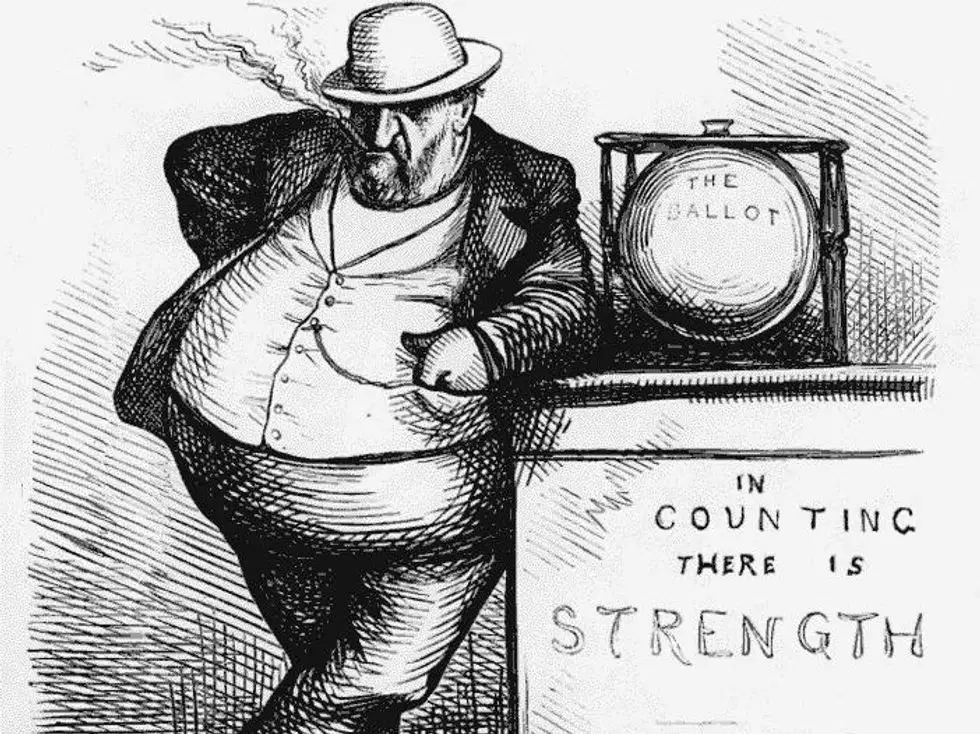
Who finally took down Boss Tweed, exposing his corruption?
The police
The FBI
A Cartoonist
No one. He never got caught.
Which progressive reform was Carrie Nation concerned with?
Political corruption
Child Labor
Tenements
Temperance
What was Carrie Nation’s weapon of choice?
A: A Hatchet
B: A Gun
C: A bat
D: Diss tracks
This African American reformer’s Atlanta Compromise stressed education to gain eventual equality.
Booker T. Washington
George Washington Carver
W.E.B. Dubois
Lincoln Steffens
This African American reformer helped found the NAACP and favored using lawsuits to gain equality.
Booker T. Washington
George Washington Carver
W.E.B. Dubois
Lincoln Steffens
Why was the purchase of Alaska known as “Seward’s folly?”
People knew it contained valuable resources
People thought it was a frozen wasteland
Because of its natural beauty
Because it cost way too much
The Chinese secret society The Righteous and Harmonious Fist who rebelled against foreigners in China were known in America as the
Qing Dynasty
Boxers
Kickers
Wu Tang Clan
What did Alfred Thayer Mahan believe was necessary to have a strong empire?
strong political unity
a strong Army
a strong economy
a strong navy
Teddy Roosevelt became president in 1901 when... ?
he was elected in a landslide
he narrowly defeated his opponent
he was appointed by congress
The president was assassinated
37: Roosevelt was famous for saying, “Speak softly and carry a big stick.” What was the “big stick?”
A club
A bat
The U.S. Military
Dollar Diplomacy
What was William Howard Taft’s dream job?
President
Chief Supreme Court Justice
Senator
Bathtub installer
Who were the Rough Riders?
Philippine rebels
Teddy Roosevelt’s volunteer cavalry
Spanish mercenaries
A motorcycle gang
A toymaker named the Teddy Bear after Teddy Roosevelt after he.....?
Won the presidential election
Killed a grizzly bear with his bare hands
Refused to shoot a defenseless bear
Won a boxing match against a guy named bear
Which territory was NOT gained by the U.S. as a result of the Spanish American War?
Philippines
Puerto Rico
Alaska
Guam
What was the popular idea that technologically advanced societies should rule over and control less advanced societies?
Isolationism
Special Darwinism
Social Imperialism
Social Darwinism

Why is the child outside the door not able to enter the room?
He is Native American
He is Japanese
He is Chinese
He is African American
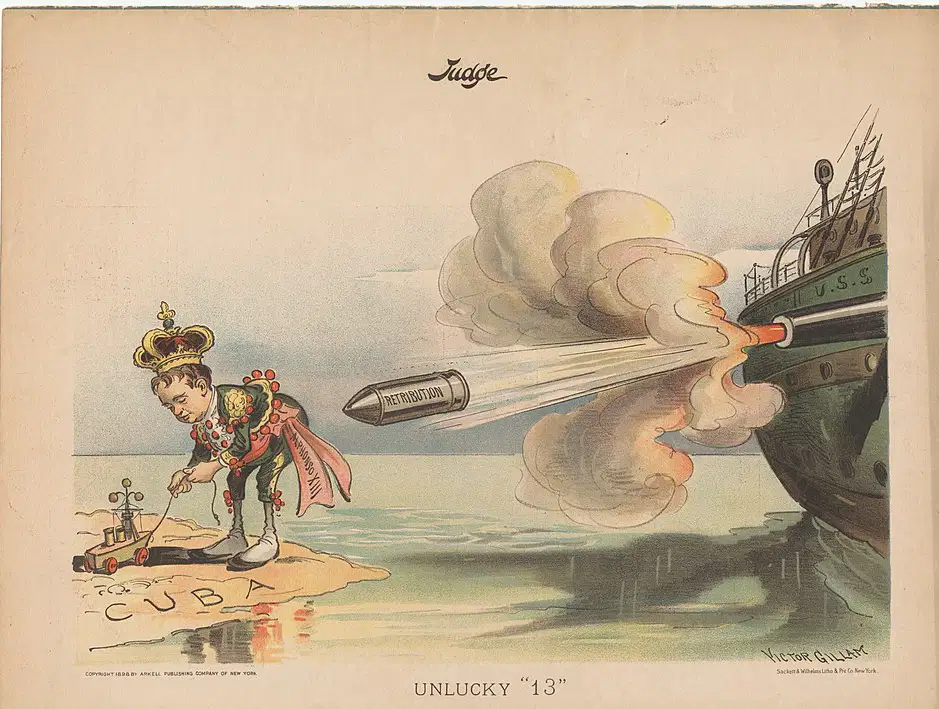
Who is the target of the “retribution”?
The King of Hawaii
The King of France
The King of Spain
The King of Mexico

Who is "building the war"?
Roosevelt and King Alphonso
Roosevelt and Taft
Hearst and Pulitzer
Riis and Nast
Which book by Upton Sinclair led to the passage of the Pure Food and Drug Act?
"The Jungle"
"How the Other Half Lives"
"The Shame of the Cities"
"The History of the Standard Oil Company"
Who was known for photographing the harsh realities of life in New York City's slums?
Lewis Hine
Jacob Riis
Dorothea Lange
Ansel Adams
Which of the following best describes the impact of the Progressive Era on American society?
It had little to no impact, with most reforms failing to pass
It led to significant social, political, and economic reforms that addressed the challenges of industrialization and urbanization
It primarily benefited the wealthy, with few changes for the working class
It resulted in a stronger emphasis on laissez-faire economics

