Wayground logo

Free Printable Worksheets

Font size

S
M
L
XL
Worksheets

Atomic Theory and structure Exam

Total questions: 35

Worksheet time: 3hrs 12mins

Name
Class
Date
1.
Change from standard form to scientific notation: 12,000,000
a)
12.0  x  107
b)
0.12  x  107
c)
1.2  x  106
d)
1.2  x  107
2.
Change from standard form to scientific notation:  0.000398
a)
39.8  x  10-5
b)
3.98  x  10-5
c)
3.98  x  10-4
d)
39.8  x  10-6
3.
How would you write 50,000 in scientific notation?
a)
50 x 105
b)
5 x 10⁴
c)
5 x 10³
d)
.5 x 103
4.

How many numbers can be in front of the decimal if the number is in correct scientific notation?

a)

Only a Zero

b)

One

c)

Two

d)

Any amount

5.
Which of the following is correct scientific notation?
a)
20.35 x 10⁴
b)
.2035 x 104
c)
2035 4
d)
2.035 x10⁴
6.
Try to change the number back to standard form:  6.79  x  104
a)
679,000
b)
6,790
c)
67,900
d)
6,790,000
7.
Try to change the number back to standard form: 3.97  x  10-2
a)
0.000397
b)
0.0397
c)
0.0000397
d)
0.397
8.
How would you write -5.6 x 10⁻³ in standard form?
a)
0.0056
b)
-5,600
c)
0.00056
d)
-0.0056
9.
(2 x 10⁻⁵)+ (7 x 10⁻⁵)
a)
9 x 10⁻¹⁰
b)
14 x 10-5
c)
9 x 10⁻⁵
d)
1.4 x 10⁻⁴
10.
(8 x 10⁴) - (2 x 10⁴)
a)
16 x 1016
b)
16 x 108
c)
6 x 10⁸
d)
6 x 10⁴
11.

Which scientist discovered the electrons?

a)

Dalton

b)

Thomson

c)

Atristotle

d)

Bohr

12.

The smallest particle of an element that still represents that element.

a)

Nucleus

b)

electron

c)

proton

d)

atom

13.

Bohr discovered that electrons are located in

a)

the nucleus

b)

inside protons

c)

electron cloud

d)

circular orbits around the nucleus

14.

What is a particle with one positive charge called?

a)

proton

b)

electron

c)

neutron

d)

quark

15.

What is the center of an atom called?

a)

nucleus

b)

electron cloud

c)

proton center

d)

photon center

16.

What is the neutral particle found in the nucleus called?

a)

proton

b)

neutron

c)

electron

d)

quark

17.

All matter is made of

a)

energy

b)

atoms

c)

electrons

d)

compounds

18.
Matter always has mass.
a)
true
b)
false
19.
In Dalton's Atomic Theory, all elements consist of __________ that cannot be divided.
a)
Atoms
b)
Parts
c)
Molecules
d)
Hydrogen
20.

Who was the Greek philosopher who called the smallest particle of matter an "atom"?

a)

Democritus

b)

Aristotle

c)

J.J Thompson

d)

Einstein

21.

Which of the following is/are conclusions based on Rutherford’s gold foil experiment?

a)

Atom is mostly empty space

b)

The nucleus is positively charged

c)

The atom has a small dense nucleus

d)

All answers are correct

22.
Who is the scientist who proposed the "solar system" model of an atom where the electrons orbit around the nucleus?
a)
Democritus
b)
Niels Bohr
c)
Ernest Rutherford
d)
Chadwick
23.
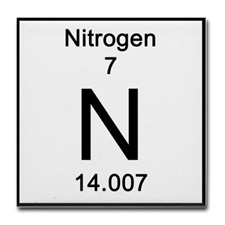
What is the number of protons that the element in this image contain?
a)
14
b)
7
c)
15
d)
18
24.
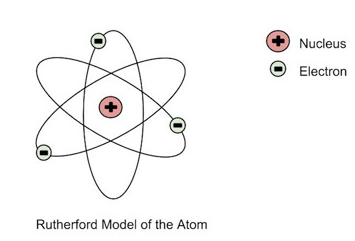
What number indicates the nucleus?
a)
1
b)
2
c)
3
d)
4
25.
Rutherford's gold foil experiment provided evidence that...
a)
negative and positive charges are spread evenly throughout the atom.
b)
alpha particles have a positive charge.
c)
gold is not a dense as previously thought.
d)
there is a dense positively charged nucleus at the center of an atom.
26.
J.J. Thomson provided evidence that an atom...
a)
is the smallest particle of matter
b)
contains negatively charged particles
c)
has an overall negative charge
d)
has an overall positive charge
27.

The majority of an atom's mass exists where?

a)

In the nucleus

b)

In the electron cloud

c)

In the space between the nucleus and the electrons

d)

In the neutrons

28.

What atom does this Bohr Model represent?

(a)  

29.
What's a valence electron?
a)
electrons in the second energy level
b)
electrons in the outermost energy level
c)
the atomic number
d)
electrons in the first level
30.
?
a)
Helium
b)
Hydrogen
c)
Argon
d)
Silver
31.

What is the atomic number of this element?

a)

17

b)

18

c)

35

d)

35.453

32.

What is the mass number of this atom of Chlorine?

a)

17

b)

18

c)

35

d)

35.453

33.

Which element is this?

a)

Calcium

b)

Chlorine

c)

Silicon

d)

Potassium

34.

What is a positive ion called?

a)

anion

b)

cation

c)

isotope

d)

covalent

35.

What is a negative ion called?

a)

anion

b)

cation

c)

covalent

d)

isotope