
 Worksheets
Producers/Consumers/Decomposers
Total questions: 70
Worksheet time: 57mins


A dung beetle is a
Producer
Consumer
Decomposer

A giraffe is a
Producer
Consumer
Decomposer
Which of the following is an example of a decomposer?


Which of the following is an example of a consumer?


Which of the following is an example of a producer?


A consumer is an organism that gets its energy from
The sun
Eating plant or animal matter
Breaking down dead/rotten matter
A producer is an organism that gets its energy from
Eating plant matter
Eating animal matter
The sun
Breaking down dead/rotten matter
What do earthworms use as a source of matter and energy?
Fresh plants
Dead animals/Leaves
Sunlight
Fresh fruits
What are bacteria in the context of decomposers?
Large animals
Small plants
Organisms too small to be seen without a microscope
Visible fungi
How do fungi digest their food?
By chewing it
By swallowing it whole
By releasing digestive juices
By using sunlight
What happens to the leftover matter that fungi cannot digest?
It becomes part of the air and soil
It is used for photosynthesis
It turns into water
It evaporates
What do worms do to dead leaves and plant material in a rainforest ecosystem?
They eat them whole.
They break them into tiny pieces.
They turn them into water.
They bury them underground.
What are molds?
A type of bacteria
A group of fungi
A kind of plant
A type of animal
How do fungi like molds store excess food?
As fat
As starch
As sugar
As protein
What happens to bacteria if there are not enough dead materials and wastes to break down?
They grow rapidly
They become dormant
They store food as fat
They turn into fungi
What do decomposers produce when they break down food to release energy?
Oxygen
Carbon dioxide
Nitrogen
Hydrogen
Which gas, produced by some bacteria when breaking down dead material, can be dangerous and flammable?
Oxygen
Helium
Methane
Nitrogen
What do plants use from decomposing matter to grow?
Rocks
Nutrients
Sand
Plastic
Which living thing is a producer?
plankton
animals
plants
bacteria
By using sunlight, water, and carbon dioxide, what do producers make?
seeds
sugar
candy
soil
Does a consumer make their own food?
Yes
No
The Sun
Producer
Consumer
Decomposer
None Of These
What are the reactants of photosynthesis?
Water
Oxygen
Carbon Dioxide
Glucose
What are the products of photosynthesis?
water
oxygen
sugar
carbon dioxide
Plants take in Carbon Dioxide through tiny pores called stomata found on the plant's...
stems
roots
leaves
flowers
The process where plants make food from carbon dioxide, water and light from the sun is called...
germination
photosynthesis
phototropism
geosynthesis
Where do the leaves and stems of plants get their green color from?
glucose
oxygen
carbon dioxide
chlorophyll
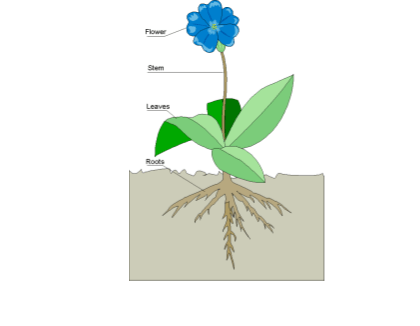
Where do plants get the energy for photosynthesis to take place?
nutrients in the soil
the sun
chlorophyll
bee pollination
what a person breathes out and a plant uses for photosynthesis
helium
hydrogen
oxygen
carbon dioxide
If a plant is put in a dark closet for a week, which of the following could happen? Choose 2.
It would grow taller
It would begin to die
It would not be able to do photosynthesis
It would sprout new plants
What is a consumer in an ecosystem?
An organism that produces its own food
An organism that gets energy by eating other organisms
An organism that captures energy from the sun
An organism that decomposes dead material
What type of food do hawks and lions primarily eat?
Only plants
Only meat from other animals
Both plants and animals
Only insects
What do deer, rabbits, and land snails primarily eat?
Only meat from other animals
Mostly plant material
Both plants and animals
Only insects
Why is food important to an animal?
It provides entertainment.
It gives animals building materials and energy to grow and survive.
It helps animals sleep.
It makes animals run faster.
What is digestion?
The process of making food taste better.
The process of breaking down food into simple materials an animal's body can use.
The process of storing food for later use.
The process of cooking food.
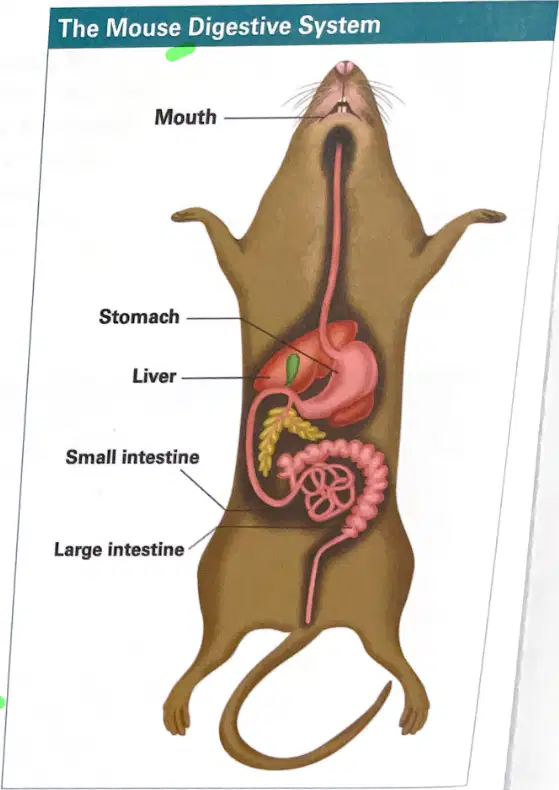
Which parts are involved in a mammal's digestive system?
Heart, lungs, and brain.
Mouth, stomach, small intestine, and large intestine.
Eyes, ears, and nose.
Skin, hair, and nails.
What happens first when a mouse eats a meal?
The food is stored for later.
The mouse chews the food up into small pieces.
The food is immediately digested in the stomach.
The mouse runs around.
What is the process of moving blood in a large, complicated loop through the body called?
Digestion
Circulation
Respiration
Excretion
What acts like a pump to circulate blood in the body?
Lungs
Stomach
Heart
Brain
What do blood vessels in a mouse's body form?
A straight line
A large loop
A triangle
A square
What does the blood pick up as it passes through the lungs?
Carbon dioxide
Oxygen
Water
Nutrients
What do birds do with the excess food they eat before migrating?
They immediately use all the energy.
They store the materials and energy for later use.
They discard the excess food.
They share it with other birds.
How is most of the excess food stored in a bird's body?
As sugar
As protein
As fat
As water
What happens when an animal eats more food than it needs right away?
It wastes the extra food.
It stores the extra energy as sugar or fat.
It uses the extra energy immediately.
It loses weight.
What is the short-term storage form of energy in animals?
Fat
Protein
Sugar
Water
What can animals do with stored food when they cannot find other food to eat?
They can only sleep.
They can use it to repair body parts, move, and stay warm.
They cannot use stored food.
They can only use it to grow.
What is one of the wastes produced by animals during digestion?
Oxygen
Carbon dioxide
Nitrogen
Hydrogen
What part of the body removes solid digestive waste?
Small intestine
Stomach
Large intestine
Liver
What happens to the waste materials from an animal's body after it dies?
They disappear
They become part of the nonliving things in an ecosystem
They turn into energy
They remain unchanged
What do producers reuse to make food and grow?
Oxygen
Carbon dioxide
Water
Nitrogen
Which is an example of a producer?


What part of the digestive system is responsible for absorbing the nutrients from digested food
stomach
small intestine
large intestine
liver
This monkey gets the energy it needs to climb trees by eating the tree’s leaves. Where did the energy stored in the leaves come from originally?
from the soil
from the air
from sunlight
from animal wastes
This otter is eating a fish she captured in the river where she lives. Where does the otter store the energy from this meal in case she will need it weeks later when she cannot find food?
It is stored in fat, because is stored in for short periods of time.
It is stored in fat, because it is stored in for long periods of time.
It is stored in sugar, because it is stored in for long periods of time.
It is stored in sugar, because it is stored in for short periods of time.
Animal species _________ the food sources that they use.
vary greatly in
vary slightly
do not vary in
always change
Consumers can use the materials and energy from food to
grow larger.
stay warm.
reproduce.
all of the above
__________ is not a part of the digestive system.
Stomach
Blood
Mouth
Small intestine
Circulation ________ useful materials, like food and oxygen, throughout the body.
carries
produces
creates
breaks down
Food is broken down into simple materials as it
is processed in the small intestine.
is chewed and mixed with digestive juices.
travels throughout the bloodstream.
absorbs energy from the sun.
Humans use the energy they consume when they
sleep
move
breathe
all of the above
What is the process of breaking down food into simple materials?
circulation
digestion
consumption
elimination
A wetland food chain is made up of plankton, shrimp, fish, and dolphins. Which of the following is the original source of energy for all of the organisms in the food chain?
air
ice
water
sunlight

