wayground logo

Free Printable Worksheets

Font size

S
M
L
XL
Worksheets

Earth's Systems

Total questions: 73

Worksheet time: 1hrs 23mins

Name
Class
Date
1.
This part of the Earth System includes the crust, mantle, and core.
a)
Geosphere
b)
Atmosphere
c)
Hydrosphere
d)
Biosphere
2.
This part of the Earth System includes the gases that surround the earth.
a)
Geosphere
b)
Atmosphere
c)
Hydrosphere
d)
Biosphere
3.
This part of the Earth System includes all living things, including plants and animals.
a)
Geosphere
b)
Atmosphere
c)
Hydrosphere
d)
Biosphere
4.
This part of the Earth System includes the planet's water, including the oceans, lakes, rivers, ground water, ice, and vapor.
a)
Geosphere
b)
Atmosphere
c)
Hydrosphere
d)
Biosphere
5.
The earth is divided into natural areas called:
a)
Biomes
b)
Bumbles
c)
Niomes
d)
Geomes
6.
This biome is treeless, cold, and contains very few animals.
a)
Tundra
b)
Taiga
c)
Rainforest
d)
Grassland
7.
This biome is full of pine trees and is cold.
a)
Tundra
b)
Taiga
c)
Desert
d)
Grassland
8.
This biome is hot and rainy, with lots of wildlife.
a)
Tropical Rainforest
b)
Tundra
c)
Taiga
d)
Desert
9.
This biome is flat and dry, with lots of grass but not many trees.
a)
Tundra
b)
Taiga
c)
Grassland
d)
Tropical Rainforest
10.
This biome is dry with not much wildlife, and it can be hot or cold.
a)
Grassland
b)
Tundra
c)
Taiga
d)
Desert
11.
This biome has trees that drop their leaves, and lots of rain and wildlife.
a)
Deciduous Forest
b)
Desert
c)
Grassland
d)
Tundra
12.
This biome is in the water.
a)
Tundra
b)
Taiga
c)
Aquatic
d)
Grassland
13.
All of the living and non-living things in a place.
a)
Ecosystem
b)
Hydrosphere
c)
Grassland
d)
Organism
14.
Mount Everest is:
a)
Geosphere
b)
Biosphere
c)
Hydrosphere
d)
Atmosphere
15.
This picture shows:
a)
Biosphere
b)
Atmosphere
c)
Geosphere
d)
Hydrosphere
16.
This picture best describes which connection?
a)
Atmosphere-Biosphere
b)
Atmosphere-Biosphere
c)
Hydrosphere-Geosphere
d)
Geosphere-Biosphere
17.
Polar Bears hunt seals on ice:
a)
Biosphere-Hydrosphere
b)
Biosphere-Atmosphere
c)
Hydrosphere-Atmosphere
d)
Hydrosphere-Geosphere
18.
Bats find shelter in caves:
a)
Atmosphere-Biosphere
b)
Biosphere-Geosphere
c)
Geosphere-Hydrosphere
d)
Atmosphere-Hydrosphere
19.
What is the correct order (starting from the surface) of Earth's layers?
a)
mantle, outer core, inner core, crust
b)
inner core, outer core, mantle, crust
c)
crust, mantle, outer core, inner core
20.
How does temperature change as you move from the crust to the core?
a)
it gets cooler
b)
it gets hotter
c)
it stays the same
d)
the core is frozen
21.

We live on the ___.

a)

Crust

b)

Mantle

c)

Outer Core

d)

Inner Core

22.

The crust is made of ___.

a)

Metal

b)

Liquid Rock

c)

Solid Rock

d)

Inner Core

23.
What layer is shown by letter A?
a)
Crust
b)
Mantle
c)
Outer core
d)
Inner core
24.
What layer is shown by letter B?
a)
Crust
b)
Mantle
c)
Outer core
d)
Inner core
25.
What layer is shown by letter C?
a)
Crust
b)
Mantle
c)
Outer core
d)
Inner core
26.
What layer is shown by letter D?
a)
Crust
b)
Mantle
c)
Outer core
d)
Inner core
27.

The core is made of ___.

a)

Solid Rock

b)

Liquid Rock

c)

Metal

28.

Earth has a magnetic field because of the liquid metal in the ____.

a)

Crust

b)

Mantle

c)

Outer Core

d)

Inner Core

29.

Organize the Layers from the Surface to the Deepest.

a)

Crust

b)

Mantle

c)

Outer Core

d)

Inner Core

1)
2)
3)
4)
30.

Match the layer to its composition.

a)

Crust

1.

Solid Rock

b)

Mantle

2.

Liquid Rock

c)

Outer Core

3.

Liquid Metal

d)

Inner Core

4.

Solid Metal

31.

Match the layer to a handy fact.

a)

Crust

1.

The layer we live on

b)

Mantle

2.

Visible during volcanoes

c)

Outer Core

3.

Creates Earth's magnetic field

d)

Inner Core

4.

The same temperature as the Sun

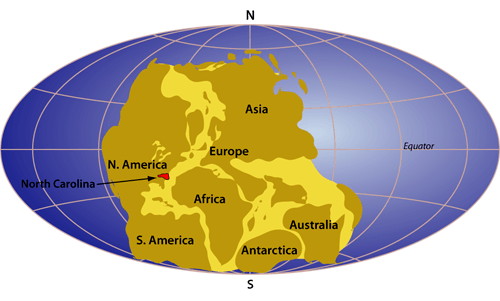
32.
What is this a picture of?
a)
plate tectonics
b)
continental drift
c)
pangea
d)
glacier scaring
33.
What was Pangea?
a)
An ancient Mountain Range that divided Africa
b)
A large valley where civilization began.
c)
A supercontinent where all Earth's land masses were joined.
d)
A large meteor that hit Earth and destroyed all of the dinosaurs
34.

Heat and ____________ can change sedimentary rock into metamorphic rock.

a)

Pressure

b)

Melting

c)

Coolig

35.

A model showing the processes that create and change rock.

a)

Water Cycle

b)

Carbon Cycle

c)

Rock Cycle

d)

Nitrogen Cycle

36.

Magma that reaches the surface flows from a volcano as ____________

a)

Magma

b)

Water

c)

Ice

d)

Lava

37.

These Rocks are formed from Magma and Lava

a)

Metamorphic

b)

Igneous

c)

Sedimentary

38.

These Rocks are formed from Heat and Pressure

a)

Metamorphic

b)

Igneous

c)

Sedimentary

39.

These Rocks are formed from layers of sediment over a long period of time.

a)

Metamorphic

b)

Igneous

c)

Sedimentary

40.

This rock started as molten magma but transformed after a volcano erupted. What type of rock is this?

a)

Sedimentary

b)

Igneous

c)

Metamorphic

41.

This rock was another type of rock that was heated and compressed over time. What type of rock is this?

a)

Sedimentary

b)

Igneous

c)

Metamorphic

42.

Molten rock below the Earth's surface is called...

a)

Magma

b)

Lava

c)

Goo

d)

Really hot goo

43.

The process when rocks break into smaller pieces due to exposure to natural elements is called

a)

erosion

b)

weathering

c)

sediments

44.

Select the three main parts of the Water Cycle. 

a)

Precipitation

b)

Condensation

c)

Evaporation

d)

Ground Water

45.

Jack noticed that a puddle was gone that was there on his walk to school. What happened to the puddle?

a)

It evaporated

b)

It melted

c)

It condensed

46.

When water evaporates, it changes from a liquid to a  ​ ​ (a)  

Choose from the below words
gas
solid
47.

Earth's freshwater is located in 

a)

Lakes

b)

Rivers

c)

Oceans

d)

Soil

e)

Glaciers

48.

Water that evaporates from the ocean contains salt.

a)

True

b)

False

49.
Question Image

Match the following

a)

Evaporation

1.

A

b)

Condensation

2.

B

c)

Precipitation

3.

C

d)

Transpiration

4.

D

e)

Groundwater

5.

E

50.
When water vapor s cooled and forms droplets-
a)
Condensation
b)
Evaportation
c)
Transpiration
d)
Run-off
51.
Forms of precipitation are-
a)
only sleet and snow
b)
rain, sleet, hail, and snow
c)
only dew and rain 
d)
only snow and rain
52.
Water in lakes and rivers that does not contain salt-
a)
recycled water
b)
new water
c)
salt water
d)
fresh water
53.
When water is heated in the ocean by the sun and turns into water vapor
a)
condensation
b)
evaporation
c)
transpiration
d)
runoff
54.
What is it called when plants give off water vapor as a waste product?
a)
condensation
b)
evaporation
c)
sublimation
d)
transpiration
55.
What is precipitation?
a)
The part of the water cycle when the sun heats up water, turning it from a liquid into water vapor or steam. It rises from the ground into the air.
b)
The part of the water cycle when the water vapor in the air gets cold. The water turns back into a liquid and forms clouds.
c)
The part of the water cycle when clouds get heavy and can no longer hold the liquid water. This causes the water to fall from the sky to the earth as rain, snow, sleet, or hail.
56.
What is water vapor?
a)
Water on the land (geosphere)
b)
Water in the air (atmosphere)
c)
Water in plants
d)
Water in the water (hydrosphere)
57.

What do we call water in its gas state?

a)

rain

b)

snow

c)

ice

d)

water vapor

58.
When water _________, dew forms.
a)
Melts
b)
Evaporates
c)
Condenses
d)
Precipitates
59.
True or False -
The greatest amount of water found on earth is fresh water.
a)
True
b)
False
60.

This picture of the mirror shows an example of--

a)

precipitation

b)

transpiration

c)

evaporation

d)

condensation

61.

This picture shows -

a)

evaporation

b)

condensation

c)

precipitation

d)

transpiration

62.

Select the three main parts of the Water Cycle. 

a)

Precipitation

b)

Condensation

c)

Evaporation

d)

Ground Water

63.

What percentage of the Earth's water is saltwater, and cannot be used by people?

a)

99%

b)

97%

c)

71%

d)

3%

64.

Most of the frozen water on Earth is found in?

a)

groundwater

b)

glaciers

c)

geysers

d)

hail

65.

Most of the Earth's water is __________ water.

a)

fresh

b)

land

c)

salt

d)

frozen

66.

Glaciers, rivers, ponds, and most lakes contain ____________.

a)

salt water

b)

fresh water

c)

frozen water

67.

_________ water has very little salt.

a)

fresh

b)

ocean

c)

salt

68.

Water that fills the cracks and spaces in underground soil and rock layers is

a)

salt water

b)

rainwater

c)

groundwater

d)

water vapor

69.

A lake that stores water for human use is called a(n)

a)

reservoir

b)

dam

c)

oxbow lake

d)

pond

70.

the stream and smaller rivers that feed into a main river are its

a)

watersheds

b)

divides

c)

tributaries

d)

reservoirs

71.

Approximately what percentage of Earth's water is freshwater?

a)

97%

b)

71%

c)

30%

d)

3%

72.

Water that falls to Earth as rain, snow, sleet, or hail is called

a)

condensation

b)

evaporation

c)

precipitation

d)

transpiration

73.

Most of Earth's freshwater is in the form of ______.

a)

Ice

b)

Oceans

c)

Ponds

d)

Lakes