Wayground logo

Free Printable Worksheets

Font size

S
M
L
XL
Worksheets

Circuits & Ohm's Law

Total questions: 51

Worksheet time: 37mins

Name
Class
Date
1.
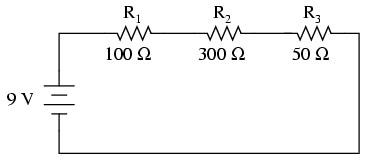
This is an example of a _______ circuit
a)
open
b)
series
c)
parallel
d)
square
2.
This is an example of a ______ circuit
a)
Series
b)
Parallel
c)
Open
d)
Dihexihedral
3.
What kind of circuit is this?
a)
Series
b)
Consecutive
c)
Parallel
d)
Training
4.
What kind of circuit is this?
a)
Series
b)
Consecutive
c)
Parallel
d)
Training
5.
In a parallel circuit, if one connection is broken, all of the connections stop working.
a)
True
b)
False
6.
A series circuit has ____ path(s) that the electric current can take. 
a)
One
b)
Two 
c)
Three 
d)
Four
7.
In a parallel circuit if one of the light bulbs burns out the rest _________.
a)
stop the flow of electricity
b)
 can still light up
c)
 will go out
d)
of the light bulbs burn out also
8.
Does this statement best describe a parallel or a series circuit.
 
When more light bulbs are added they all remain bright. 
a)
Parallel circuit
b)
Series circuit
9.
What does the resistance of a wire tell you?
a)
The speed of electron flow through it.
b)
How tough it is for electrons to flow through it.
c)
The amount of energy given to the electrons.
d)
The amount of energy taken away from the electrons.
10.
Unit for resistance
a)
Ampere
b)
Ohm
c)
Volt
d)
Watt
11.
Unit for current
a)
Ohm
b)
Ampere
c)
Volt
d)
Watt
12.
As resistors are added in series to a circuit, the total resistance will...
a)
increase
b)
decrease
c)
stay the same
13.
As the resistance of a circuit increases, the current will...
a)
increase
b)
decrease
c)
stay the same
14.
In a parallel circuit which of the following is the same value throughout the circuit?
a)
Voltage
b)
Current
c)
Resistance
d)
Charge
15.
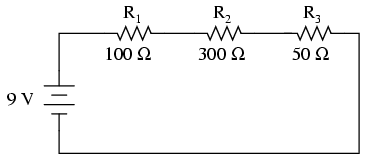
The total resistance in this circuit is 
a)
100 ohms
b)
450 ohms
c)
400 ohms
d)
30 ohms
16.
The total current through this circuit is
a)
0.02 amps
b)
0.09 amps
c)
50 amps
d)
9 amps
17.
What is one problem with using a series circuit? 
a)
It has a lot of series. 
b)
If one light goes down, they all go down! 
c)
It doesn't work properly.
d)
There are no problems. 
18.
An ammeter is a device that can be used to measure
a)
Current
b)
Voltage
c)
Resistance
d)
Power
19.
The picture shows an electrical circuit. This circuit is a series circuit because: 
a)
It has 3 light bulbs.
b)
The same current flows through all three light bulbs.
c)
It uses a single battery.
d)
The electrical current is divided between the three light bulbs.
20.

What is the total resistance (RT) across this circuit?

a)

3 kΩ

b)

10 kΩ

c)

13 kΩ

d)

18 kΩ

21.
As the resistance of a circuit increases, the current will...
a)
increase
b)
decrease
c)
stay the same
22.

As you continue to add lightbulbs in series, what happens?

a)

The bulbs get brighter

b)

The bulbs get dimmer

c)

The bulbs remain the same brightness

d)

The bulbs explode and shards of glass get everywhere

23.

If the switch was opened, what would happen?

a)

the ammeter would measure a current flowing

b)

current would no longer flow, so everything would be off

c)

the bulbs would stay on because they're connected to the cell

d)

the bulbs would burn out and catch fire

24.
Which of these materials is a good insulator?
a)
Plastic and metal
b)
Metal and rubber
c)
Plastic and rubber
25.
What is the energy source for a circuit?
a)
Light bulb
b)
Battery
c)
Wire
d)
Switch
26.
What 'flows' in a wire?
a)
Protons
b)
Neutrons
c)
Atoms
d)
Electrons
27.

What is a closed circuit?

a)

A pathway that allows one circuit to flow

b)

A pathway that does not allow an electric current to flow.

c)

A Parallel circuit.

d)

A pathway that allows an electric current to flow freely - light is on!

28.

What is an open circuit?

a)

A parallel circuit

b)

A pathway that prevents electric current from flowing freely or stops the flow - light is off!

c)

A series circuit

d)

A pathway that allows electric current from flowing freely or stops the flow - light is off!

29.

What is a Conductor?

a)

A Parallel circuit

b)

A material that allows heat and electricity to flow through it

c)

The pathway through which electric current (electron) flows.

d)

A series current

30.

What is an example of a Conductor?

a)

Rubber, styrofoam, cotton

b)

Wood

c)

Plastic

d)

Paperclip, penny, pencil lead

31.

What is a Switch in a circuit?

a)

One of the parts of a circuit that carries electrons from place to place

b)

One of the parts of a circuit that carries electrons from place to place

c)

The device that provides electrical energy

d)

The device that opens and closes a circuit

32.
What is the equivalent or total resistance (Re) across this circuit?
a)
50 Ω
b)
100 Ω
c)
300 Ω
d)
450 Ω
33.
a)
Series circuit - Bulbs are lit
b)
Series circuit - Bulbs are off
c)
Parallel circuit - Bulbs are lit
d)
Parallel circuit - Bulbs are off
34.
Which best describes a parallel circuit?
a)
Electricity flows along one pathway.
b)
The flow of electricity comes from one source. 
c)
Electricity flows along more than one pathway. 
d)
The flow of electricity comes from more than one source. 
35.

What would happen if in a circuit, the resistance increases but the voltage stays the same?

a)

The current would decrease

b)

The current would increase

c)

The voltage would decrease

d)

The voltage would increase

36.

What would happen if in a circuit the voltage is increase?

a)

The time would increase

b)

The current would increase

c)

The current would decrease

d)

The current would stay the same

37.
What size resistor would produce a 3 Amp current flow with a 12 Volt battery
a)
1 Ohm
b)
3 Ohms
c)
4 Ohms
d)
12 Ohms
38.
What is the Voltage of a circuit that has a resistance of 5 Ω and a current of 2 A?
a)
25 V
b)
10 V
c)
2.5 V
d)
0.4 V
39.
The mathematical relationship among Voltage, Current, and Resistance
a)
Faraday's Law
b)
Tesla's Law
c)
Edison's Law
d)
Ohm's Law
40.
Current times Resistance equals
 (I X R)
a)
Power
b)
Voltage
c)
Amperage
d)
Ohm
41.

Voltage divided by Current

(V / I)

a)

Current

b)

Power

c)

Resistance

d)

Watts

42.

If the battery produced 12.6 Volts what would be the current flow for a 6 Ohm resistor?

a)

2.1 Amps

b)

2.4 Amps

c)

1.71 Amps

d)

15 Amps

43.
How many Volts would we need to produce a current flow of 8 Amps through a 6 Ohm resistor
a)
12 volts
b)
24 volts
c)
1.3333
d)
48 volts
44.
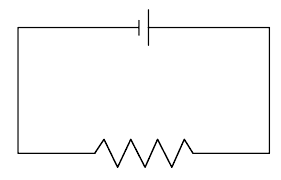
This circuit has a 24 volt battery and the resistor is 8 ohms. How many amps are running through the circuit?
a)
3 Amps
b)
192 Amps
c)
2 Amps
d)
4 Amps
45.
What size resistor would produce a 3 Amp current flow with a 12 Volt battery
a)
1 Ohm
b)
3 Ohms
c)
4 Ohms
d)
12 Ohms
46.
What size resistor would produce a current flow of 5 Amps with a battery voltage of 12.6 volts
a)
60 Ohms
b)
2.52 Ohms
c)
1.71 ohms
d)
5.04 Ohms
47.
DC stands for ____ and is used in batteries.
a)
Distant Current
b)
Don't Current
c)
Direct Current
d)
Distributed current
48.
An electric current that switches direction rapidly
a)
Direct Current
b)
Alternating Current
c)
Electric Charge
d)
Resistance 
49.
An electric current that flows in only one direction
a)
Direct Current
b)
Parallel Circuit
c)
Alternating Current
d)
Ohm
50.

3. The two types of current are...

a)

Alternating Current

b)

Direct Current

c)

Floating current

d)

Fluctuating current

51.

The electricity in our house is

a)

AC

b)

AD

c)

BC

d)

DC