
 Worksheets
Circulatory System Quiz
Total questions: 42
Worksheet time: 32mins
left ventricle
right ventricle
heart and lungs
aorta
the large artery that carries oxygen-rich blood from the heart to the rest of the body.
artery
a type of blood vessel that carries oxygen-rich blood from the heart to the rest of the body.
blood
the red fluid that circulates in the heart, arteries, veins and capillaries of humans and animals.
carbon dioxide
a colorless, odorless gas that is composed of carbon and oxygen. It is absorbed from the air by plan
circulation
the movement of blood throughout the body.
heart
the hollow organ in the chest that pumps blood through the body.
homeostasis
in humans and animals, a state of balance or equilibrium caused by many body systems working togethe
lung
one of the two saclike organs that people and animals use to breathe.
oxygen
a colorless, odorless, gaseous element that is found in air and water. It is necessary for humans, a
vein
a type of blood vessel that carries oxygen-poor blood from the body toward the heart.
Blood pressure
the force that blood exerts on the inside walls of the artery.
Capillary
A tiny blood vessel where substances are exchanged between the blood and the body cells.
Hemoglobin
Red iron-containing pigment in blood that combines with and transports oxygen.
Jugular vein
any of several large veins in the neck, carrying blood from the head and face.
Platelet
small blood fragment that collects at sites of injury to begin the clotting process
Pulse
Beat of the heart as felt through the walls of the arteries.
Red blood cell
Blood cells that carry oxygen from the lungs to the body cells.
Valve
Membranous extension of a vessel or the heart wall that opens and closes. Ensuring one-way flow.
Hypertension
higher than normal blood pressure
Hypotension
lower than normal blood pressure
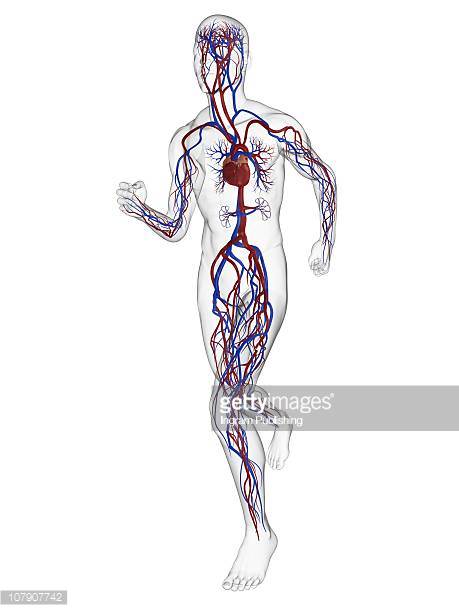
What is the main organ of the circulatory system?
small intestine
bone
lungs
heart
As the blood reaches the lungs, what is removed from the blood?
oxygen
carbon dioxide
red blood cells
white blood cells
The part of the blood that carries oxygen is called ___________. (Remember we can't live without our blood-line)
red blood cells
white blood cells

State the general relationship between exercise and heart rate in humans.
If a person exercises, then their heart rate will not change
If a person exercises, then their heart rate will increase
If a person exercises, then their heart rate will decrease
Person exercising and heart rate are not related
The smallest vessels are called
arteries
veins
vessels
capillaries
Which of the following does the circulatory not consist of?
Heart
Lungs
Blood
Blood vessles
Tubes containing blood are called _____
veins
arteries
capillaries
blood vessels
What is blood pressure
The pressure exerted by blood on the walls of the arteries
The pressure exerted by blood on the walls of the heart
The pressure exerted by blood on the walls of the veins
If you wanted to feel pressure waves in your body, where would you touch?
Anywhere where you'd take your pulse, like your neck
Anywhere where there's a prominent bone
When is blood pressure the highest?
. When blood is pumped out of the heart
When oxygen is transferred from the lungs into the bloodstream
When blood is circulating through your hands and feet

The job of the heart is to . . .
pump blood around the body.
break down food
Deoxygenated blood means that the blood is low in...
Oxygen
Carbon dioxide

What do we call the movement of blood through the heart and around the body?
circulation
digestion

