
 Worksheets
Unit 5 Review
Total questions: 34
Worksheet time: 17mins
Which of the following was considered the first to develop a heliocentric model of the universe:
Ptolemy
Which of the following discovered the law of universal gravitation:
Francis Bacon
Robert Boyle
Isaac Newton
Which of the following was considered the father of modern rationalism:
Margaret Cavendish
Antoine Lavoisier
Montesquieu was famous for his doctrine of:
Laissez-faire
Locke was famous for suggesting that the social contract was formed to:
protect natural rights
For Rousseau, the social contract meant that people agreed to follow:
the laws of the country
individual self-interest
the general will
Frederick the Great was the king of:
Joseph II was the emperor of:
Russia
Austria
Rome
France
Catherine the Great was the empress of:
Spain
The British raised taxes on their American colonists to pay for:
the Civil War
the War of 1812
the French and Indian War
the Revolutionary War
The Declaration of Independence was highly influenced by:
Jean-Jacques Rousseau
Montesquieu
Thomas Hobbes
The first constitution for the independent United States was called the:
U.S. Constitution
Which of the following was NOT one of the Intolerable Acts:
The Quartering Act
The Massachusetts Government Act
The Quebec Act
The Tea Act
What did the “committees of correspondence” do:
organized military training for colonial militias
established trade agreements with foreign nations
created a system of taxation for the colonies
coordinated boycott efforts
The first government for all the British colonies in America was:
the House of Burgesses
the Continental Congress
the Mayflower Compact
the National Assembly
Before the Revolution, France was divided into:
Three Estates
Five Estates
Two Estates
Four Estates
The Bastille was stormed to:
seize gunpower to allow the people to protect themselves
As a ruler, Napoleon had which title:
King
First Consul
President
Governor
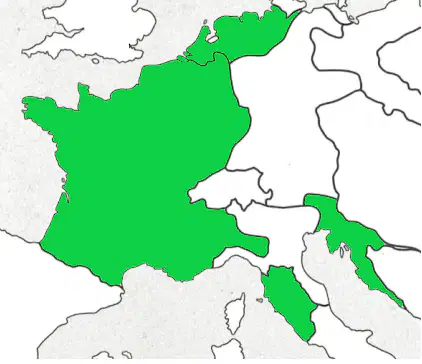
This country is:
the Austrian Empire
the Spanish Empire
the Russian Empire
the French Empire
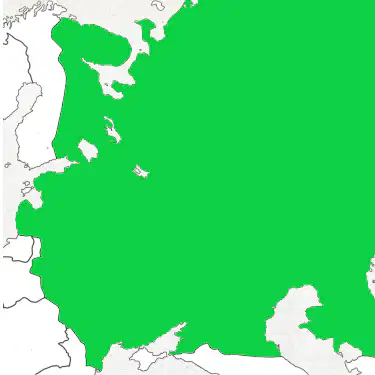
This country was:
allied against Napoleon
allied with Napoleon
a dependent state of the French Empire
the French Empire
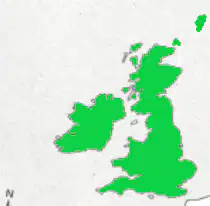
This country was:
allied against Napoleon
allied with Napoleon
a dependent state of the French Empire
the French Empire
Which of the following events happened first:
Tennis Court Oath
Campaign in Egypt
French invasion of Russia
French Concordat
Which of the following events happened last:
Coronation of Napoleon
Reign of Terror
Women's March on Versailles
Flight to Varennes
Which set of events occurred in chronological order:
1. Meeting of the Estates-General, 2. Reign of Terror, 3. invasion of Russia
1. Storming of the Bastille, 2. invasion of Russia, 3. Flight to Varennes
1. Campaign in Egypt, 2. Coronation of Napoleon, 3. Reign of Terror
1. invasion of Russia, 2. Reign of Terror, 3. Meeting of the Estates-General
In Saint-Domingue, the people on the top of the social hierarchy were called:
peninsulares
big whites
free people of color
little whites
The beginning of the Haitian Revolution was the:
calling of the Continental Congress
signing of the Declaration of Independence
1791 Rebellion
storming of the Bastille
The people of Saint-Domingue fought against the French because:
they wanted to protect Toussaint Louverture
they did not want to be re-enslaved
they wanted to protect the big whites
they wanted to protect the little whites
Ptolemy is associated with:
rationalism
geocentrism
heliocentrism
the scientific method
Which of the following was a baroque composer?
Franz Joseph Haydn
Which of the following is the best explanation for the cause of the English Civil War?
Which of the following countries fought in the Seven Years' War?
Britain
Which war helped cause the American Revolution?
The Seven Years' War
The War of Spanish Succession
The War of Austrian Succession
What was Napoleon's trade alliance called?
Continental Congress
Mexican independence was led by:
Simon Bolivar
Napoleon Bonaparte
Toussaint Louverture

