wayground logo

Free Printable Worksheets

NEW

Font size

S
M
L
XL
Worksheets

energy ions and isotopic

Total questions: 60

Worksheet time: 48mins

Name
Class
Date
1.

Cations have what charge?

a)

+

b)

-

2.

Anions are what charge?

a)

+

b)

-

3.

Noble gases are...

a)

Happy and stable because they have full valence electrons

b)

Happy BUT UNSTABLE because they are gases

c)

Not happy because they don't want to be noble

d)

Not happy but stable because they are group number 18

4.

Valence electrons means..

a)

Electrons inside the atoms

b)

Electrons on the outer most energy level

c)

Electrons with no charge

d)

Electrons that are stable

5.

Element Chlorine [Cl] at group #17 have how many valence electrons?

a)

6

b)

7

c)

17

d)

5

6.

Element Chlorine [Cl] will make a(n)...

a)

Cation

b)

Anion

7.

Anions will

a)

lose electrons

b)

gain electrons

8.

Cations will

a)

Lose electrons

b)

Gain electrons

9.

Isotopes behave chemically the same as other same elements

a)

True

b)

False

10.

Isotopes behave physically same with other same elements

a)

True

b)

False

11.

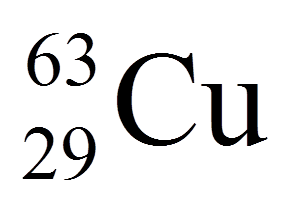
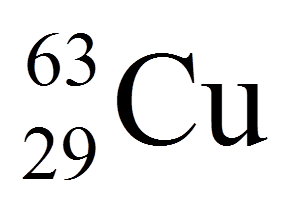
This isotope have how many neutrons?

a)

26

b)

12

c)

14

d)

16

12.

Which of the Chlorine [Cl] is heavier?

a)

Cl-37

b)

Cl-35

13.

For Cl 37, what does the 37 represent?

a)

Number of Protons

b)

Number of Neutrons

c)

Number of Electrons

d)

Atomic Mass Number

14.

Which element is located at period 4 group 6? [click the picture to zoom in]

a)

Cr

b)

Sg

c)

Hf

d)

Ta

15.

What is the planetary model also known as?

a)

Thomson model

b)

Plum pudding model

c)

Bohr model

d)

Nuclear model

16.

Which scientist proposed the Nuclear Model by doing the Gold Foil Experiment?

a)

Rutherford

b)

J.J. Thomson

c)

Bohr

d)

Dalton

17.

Protons are...

a)

Positive charge

b)

Negative charge

c)

Neutral/No charge

18.

Electrons are...

a)

Positive charge

b)

Negative charge

c)

Neutral/No charge

19.

Neutrons are...

a)

Positive charge

b)

Negative charge

c)

Neutral/No charge

20.

Which particles are NOT inside the nucleus of atoms?

a)

Protons

b)

Electrons

c)

Neutrons

21.
How many protons does He have?
a)
4
b)
2
c)
6
d)
0
22.
The top number in this isotope notation is
a)
the mass number
b)
the atomic number
c)
the atomic mass
d)
the neutron number
23.
The bottom number in this isotope notation is
a)
the mass number
b)
the atomic number
c)
the atomic mass
d)
the neutron number
24.
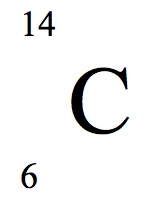
The photo above shows the isotopic notation for which isotope?
a)
Carbon 12
b)
Carbon 13
c)
Carbon 14
d)
Carbon 15
25.
Different isotopes have...
a)
different masses
b)
different atomic numbers
c)
different electrons
d)
different protons
26.

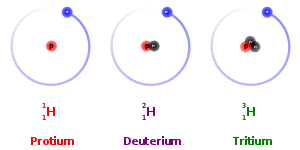
What is the atomic mass of the pictured isotope?

a)

2

b)

4

c)

6

d)

The correct answer isn't one of the choices.

27.
Which of the following is the proper equation for determining the number of neutrons for a given isotope?
a)
mass # - atomic #
b)
atomic mass - protons
c)
protons + electrons
d)
mass # + protons
28.
According to the isotopic notation for copper-63, how many neutrons are present in this type of atom?
a)
29
b)
34
c)
63
d)
92
29.
Isotopes occur when atoms of the same element have a different number of ___________.
a)
protons
b)
neutrons
c)
electrons
d)
nucleons
30.
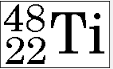
How many protons does this isotope of titanium have?
a)
48
b)
22
c)
26
d)
70
31.
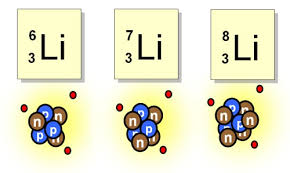
How many neutrons does the isotope of lithium have?
a)
8
b)
3
c)
4
d)
5
32.
What do these isotopes of carbon all have in common?
a)
neutrons & mass number
b)
atomic number and neutrons
c)
atomic number and electrons
d)
protons, atomic number, and mass number
33.
which atom has  4 neutrons?
a)
Li-6
b)
Li-7
c)
Li-8
d)
they have the same # of neutrons
34.
which explanation of this notation is correct?
a)
 12 is proton #
b)
6 tells you there are 6 neutrons
c)
6 tells you there are 6 protons
d)
12 is not a mass # here
35.

What charge does an atom have when it GAINS electrons?

a)

Positive

b)

Negative

c)

Neutral

36.

What is the atomic mass of bromine?

a)

35

b)

45

c)

80

d)

79.904

37.

How many neutrons does this bromine atom have?

a)

35

b)

45

c)

80

38.

What type of ion is this?

a)

Neutral atom

b)

Cation

c)

Anion

d)

Isotope

39.

What two particles determine the mass number?

a)

Protons and electrons

b)

Electrons and neutrons

c)

Protons and neutrons

40.

What is the atomic number of this Neon atom?

a)

10

b)

11

c)

21

d)

20

41.

How many electrons does this magnesium ion have?

a)

24

b)

12

c)

10

d)

14

42.
What is the charge on a lithium atom that looses 1 electron?
a)
+1
b)
0
c)
-1
d)
-2
43.
Is the element shown in this image an ion, isotope or normal atom?
a)
atom
b)
isotope
c)
cation (+ ion)
d)
anion (- ion)
44.
Which atom has  4 neutrons?
a)
Li-6
b)
Li-7
c)
Li-8
d)
they have the same # of neutrons
45.
Although carbon's three isotopes are carbon-12, carbon-13, and carbon-14, its average atomic mass is 12.01 because
a)
Carbon-12 is the heaviest isotope
b)
Carbon-12 is the most useful to humans
c)
Carbon-12 is the most common isotope
46.
An ion forms when an atom gains or loses
a)
Protons
b)
Neutrons
c)
Electrons
47.
A neutral atom would become an ion that has a charge of 2+ by 
a)
Losing two protons
b)
Losing two neutrons
c)
Losing two electrons
48.
Isotopes are atoms that have different
a)
Mass numbers
b)
Element names
c)
Atomic Numbers
49.
Two atoms that have different numbers of protons are 
a)
Different ions
b)
Different isotopes
c)
Different elements
50.
If neutral copper atom (atomic number 29) becomes an ion that has a charge of 2+, how many electrons does the resulting ion have?
a)
27
b)
28
c)
29
d)
31
51.
Two neutral atoms that have the same atomic number and different mass numbers are
a)
Ions
b)
Isotopes
c)
Alpha particles
d)
Different elements
52.
An ion that has a negative charge is formed when an atom 
a)
Loses neutrons
b)
Loses electrons
c)
Gains neutrons
d)
Gains electrons
53.
How are Protons and Neutrons similar
a)
Both are in the nucleus of the atom and they both have the relative mass of 1
b)
They both have alpha particles and have the relative mass of 2
c)
They both have 1 high-energy electron and different elements
54.
Can an atom of Hydrogen have 2 protons?
a)
Yes, because it can be an ion
b)
No, because protons identify the atom
c)
Yes, because it can be an isotope
d)
No, because only neutral atoms exist
55.
If an atom has more protons than electrons, it is a(n)
a)

Cation

b)

Anion

c)
Isotope
d)
Neutral atom
56.

The complete isotopic notation for a sodium ion with 10 electrons is

a)

A

b)

B

c)

C

d)

D

57.

Which of the following is an isotope with 38 protons and 50 neutrons

a)

Strontium-88

b)

Strontium-50

c)

Tin-88

d)

Tin-50

58.

What term do we give to forms of the same element with different physical properties?

a)

Allotropes

b)

Ions

c)

Isotopes

59.
What is the relative atomic mass of carbon not a whole number?
a)
because we have not rounded it yet
b)
neutrons and protons have a mass that is not given in whole numbers. 
c)
it is an average of all the isotopes of carbon
60.

Think fast! An element has 25 protons and 22 electrons. It has a charge of...

a)

3+

b)

3-

c)

2+

d)

1-