
 Worksheets
Engineering Materials Quiz
Total questions: 45
Worksheet time: 26mins
Which metals are less ductile at room temperature?
Aluminium, copper, gold
Zinc, magnesium, cadmium
Chromium, tungsten, steel
Beryllium, titanium
Which structure has less slip planes and thus less ductility than FCC?
Body-centred cubic (BCC)
Face-centred cubic (FCC)
Close-packed hexagonal (CPH)
Simple cubic
What is the main feature of the close-packed hexagonal (CPH) structure?
Open structure with 2 atoms per lattice
More dense structure with 4 atoms per lattice
Close packed structure with 6 atoms per lattice
Simple cubic structure
Which structure is less dense and has more resistance to slip?
Face-centred cubic (FCC)
Body-centred cubic (BCC)
Close-packed hexagonal (CPH)
Simple cubic
What is the initial state of metal before solidification begins?
Solid
Liquid
Gas
Plasma
What are dendrites in the context of metal solidification?
Crystals that dissolve
Structures that grow from nucleations
Bubbles formed in liquid
Impurities in metal
Where do columnar grains typically grow?
Towards the hot center
Towards the cold edges
Randomly throughout the metal
At the surface
Where do planes of weakness occur in solidified metal?
At the surface
Where columnar grains meet
In the center
At the edges
What does the term "plastic deformation" refer to?
Temporary shape change
Permanent shape change
No shape change
Elastic shape change
What does waste reuse involve?
Disposing of products
Using a product only once
Using a product more than once
Increasing waste
Which of the following is an example of waste reuse?
Throwing away plastic bags
Reusing plastic supermarket carrier bags
Using new glass bottles
Disposing of tyres
Which structure of metals is less ductile than FCC?
BCC
FCC
CPH
HCP
What happens to dislocations when stress is applied to metal?
They disappear
They move through the lattice
They strengthen the metal
They form new bonds
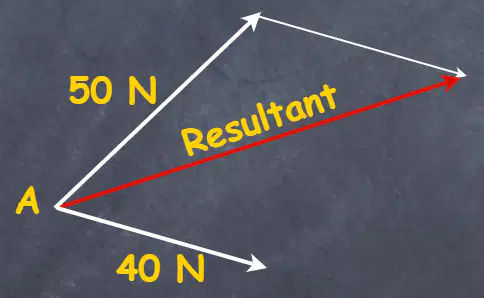
Which method is used to find the resultant of two vectors by completing a triangle?
Triangle method
Parallelogram method
Polygon method
Rectangular method
What is the force component Fx in the given example?
70.7 N
50 N
100 N
120 N
What is the primary characteristic of a body-centred cubic (BCC) structure?
High density
Low density
High ductility
Low ductility
What is the process called when a metal changes from a liquid to a solid state?
Evaporation
Condensation
Solidification
Melting
Which of the following is a characteristic of face-centred cubic (FCC) metals?
High melting point
Low ductility
High ductility
Low density
What is the main advantage of using face-centred cubic (FCC) metals in construction?
High density
High ductility
Low melting point
Low cost
Which process involves the transformation of a solid metal into a liquid state?
Condensation
Melting
Solidification
Evaporation
What is a common characteristic of metals with a body-centred cubic (BCC) structure?
High ductility
Low density
High melting point
Low melting point
What is the process called when a liquid metal turns into a gaseous state?
Condensation
Evaporation
Solidification
Melting
Which of the following structures is known for having the highest packing efficiency?
Body-centred cubic (BCC)
Face-centred cubic (FCC)
Close-packed hexagonal (CPH)
Simple cubic
What is the term for the ability of a metal to be drawn into wires?
Ductility
Malleability
Hardness
Toughness
What is the primary reason for using metals with a high melting point in high-temperature applications?
Low cost
High ductility
Resistance to deformation
Lightweight
Which of the following processes is used to improve the hardness of a metal?
Annealing
Quenching
Melting
Evaporation
What is the term for the ability of a metal to withstand impact without fracturing?
Ductility
Malleability
Toughness
Hardness
What is the primary characteristic of metals with a hexagonal close-packed (HCP) structure?
High ductility
Low density
High strength
Low melting point
Which process is used to increase the ductility of a metal?
Quenching
Annealing
Hardening
Tempering
What is the term for the ability of a metal to be hammered or rolled into thin sheets?
Ductility
Malleability
Hardness
Toughness
What is the process called when a metal is heated and then cooled slowly to remove internal stresses?
Quenching
Annealing
Tempering
Hardening
Which property of metals allows them to conduct electricity?
Elasticity
Conductivity
Malleability
Hardness
What is the term for the temperature at which a metal becomes liquid?
Boiling point
Freezing point
Melting point
Condensation point
Which metal structure is known for having the lowest packing efficiency?
Face-centred cubic (FCC)
Body-centred cubic (BCC)
Close-packed hexagonal (CPH)
Simple cubic
What is the term for the process of heating a metal to a high temperature and then cooling it rapidly to increase hardness?
Annealing
Quenching
Tempering
Hardening
Which property of metals allows them to be shaped into thin wires without breaking?
Malleability
Ductility
Hardness
Toughness
Which process is used to increase the hardness of a metal without making it brittle?
Annealing
Tempering
Quenching
Melting
What is the term for the ability of a metal to return to its original shape after deformation?
Elasticity
Plasticity
Ductility
Malleability
What is the primary characteristic of metals with a face-centred cubic (FCC) structure?
High ductility
Low density
High melting point
Low melting point
Which of the following is a benefit of reusing materials?
Increases waste production
Reduces the need for new resources
Increases energy consumption
Decreases product lifespan
What is the term for the ability of a metal to resist deformation under stress?
Elasticity
Plasticity
Hardness
Toughness
What is the term for the ability of a metal to absorb energy and plastically deform without fracturing?
Elasticity
Plasticity
Toughness
Hardness
The 2 groups of quantities encountered in engineering mechanics are: (a) & (b)
Primary bonds - have the highest bond strength & are called: (a) , (b) & (c)
Engineering materials are usually classified into 4 main groups: (a) , (b) , (c) & (d)

