
 Worksheets
Basic Electricity Concepts
Total questions: 40
Worksheet time: 20mins
What is the smallest unit of matter that has the characteristic properties of a chemical element?
Molecule
Atom
Proton
Electron
What is the smallest unit into which matter can be divided without releasing electrically charged particles?
Molecule
Atom
Proton
Neutron
Match each part of the atom with its correct description.
Electron Orbit
The region where electrons are likely to be found orbiting the nucleus.
Nucleus
The central part of the atom containing protons and neutrons.
Proton
A positively charged particle found in the nucleus.
Electron
A negatively charged particle found in the electron orbit.
Which subatomic particle orbits around the nucleus of an atom?
Proton
Neutron
Electron
Nucleus
Which subatomic particles are found inside the nucleus of an atom?
Electrons and Protons
Protons and Neutrons
Neutrons and Electrons
Protons and Electron Orbits

What percentage of the atom's mass is represented by the nucleus?
50%
75%
99.99%
100%
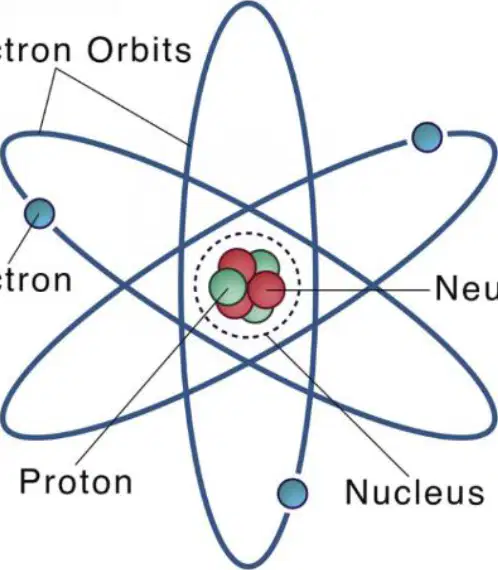
The charge of a proton is (a)

What is the charge of a neutron?
Positive (+) charge
Negative (-) charge
Neutral charge
No charge
The nucleus of an atom is made of (a) .

What is the smallest subatomic particle in an atom?
Proton
Neutron
Electron
Nucleus

What charge does an electron carry?
Positive (+)
Negative (-)
Neutral
No charge

What is true about stable atoms?
They have more electrons than protons.
They have fewer electrons than protons.
They have the same number of electrons as protons.
They have no electrons.
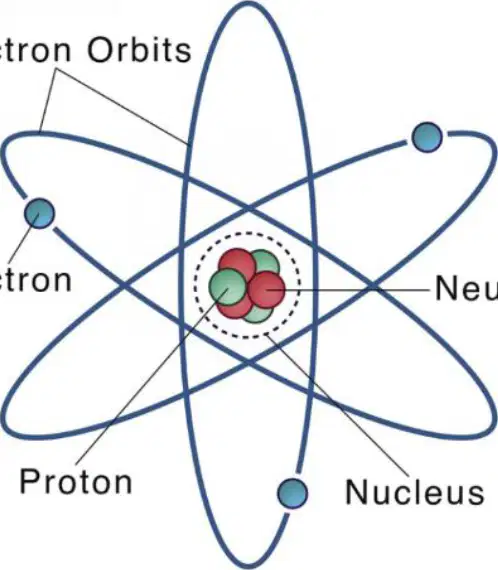
What helps electrons move in the space around the nucleus in orbits?
The force of attraction between neutrons and protons
The force of attraction between electrons and neutrons
The force of attraction between electrons and protons
The force of attraction between protons and the nucleus

What is ionization?
The process by which atoms gain protons to become charged.
The process by which electrically neutral atoms are converted to electrically charged atoms through gaining or losing electrons.
The process by which atoms lose neutrons to become charged.
The process by which atoms split into smaller particles.

When an atom loses an electron, the atom becomes (a) .

What happens when an atom gains an electron?
The atom becomes positively charged.
The atom becomes negatively charged.
The atom remains neutral.
The atom loses a proton.
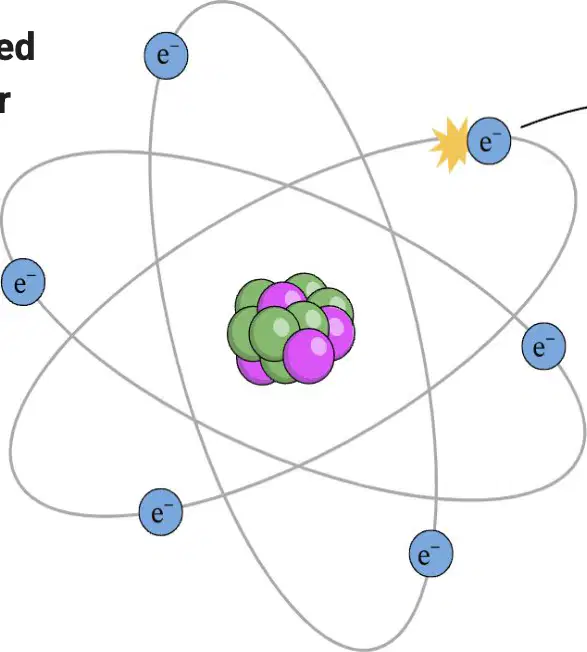
Which subatomic particle is responsible for the formation of ions?
Proton
Neutron
Electron
Nucleus

What is an ion?
An atom with a neutral charge.
An atom with an electrical charge.
An atom with no protons.
An atom with extra neutrons.

What is the role of acid in a battery?
To provide flavor to the battery
To act as a chemical that produces electricity
To make the battery heavier
To prevent the battery from overheating
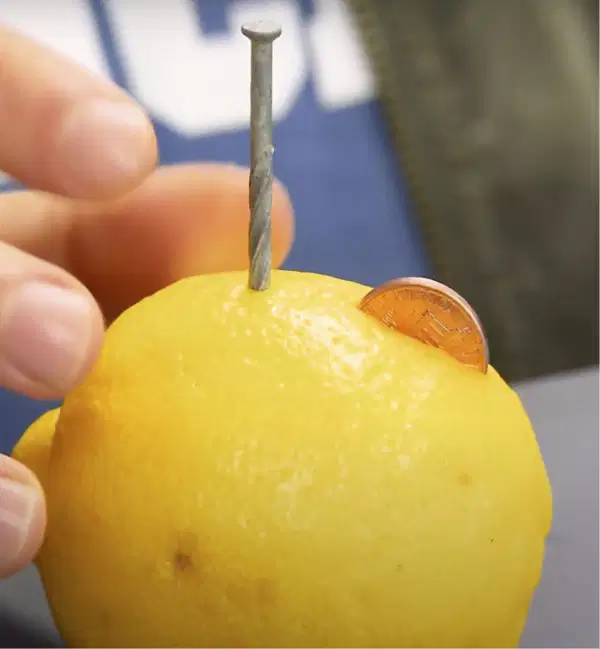
What materials are used to create the positive and negative ends of a lemon battery?
Zinc and aluminum
Copper and galvanized nail
Iron and steel
Plastic and rubber

Which part of the lemon battery acts as the positive pole?
Galvanized nail
Copper
Zinc
Aluminum
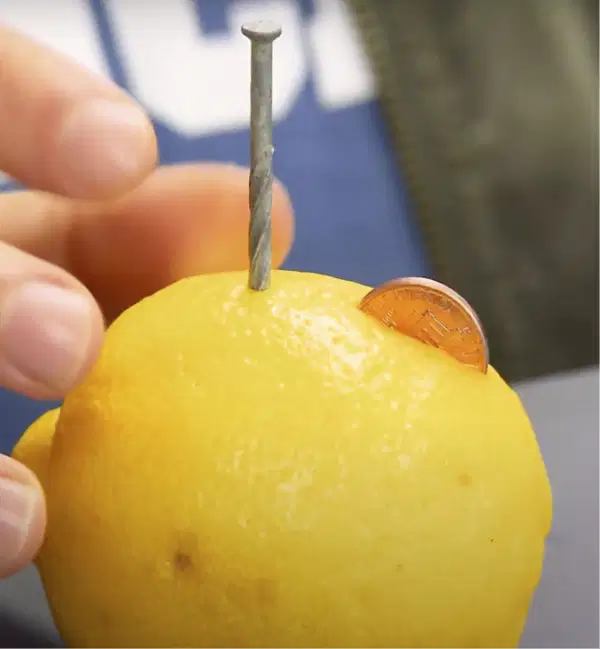
Which part of the lemon battery acts as the negative pole?
Copper
Zinc
Galvanized nail
Aluminum

The process caused by the acidity of the orange, leading to electron concentration on one side, is called (a) .

What term is used to describe the cloud of electrons concentrated on the negative (-) pole, waiting to be released?
Kinetic energy
Potential energy
Thermal energy
Electrical energy

The abbreviation for electric potential difference between the negative (-) and positive (+) poles is (a)

What is the electric potential difference most commonly referred to as?
Current
Resistance
Voltage
Power
What is the abbreviation for voltage?
V
E
R
I

What is electricity?
The flow of protons through a conductive material.
The flow of electrons through a conductive material.
The flow of neutrons through a conductive material.
The flow of atoms through a conductive material.
What is required for current to flow in a circuit?
A complete path (closed circuit).
A broken path (open circuit).
A single electron.
A magnetic field.
What is the unit of measurement for current?
Volts.
Ohms.
Amperes (Amps).
Joules.
What does the letter "I" stand for in the context of current?
Intensity of current.
Internal resistance.
Input voltage.
Insulation.
How is current defined?
The speed of electrons in a circuit.
The number of electrons passing through per unit of time.
The voltage in a circuit.
The resistance in a circuit.
What is resistance in the context of electrical flow?
The flow of electrons through a material
The opposition of a material to the current flow
The ability of a material to conduct electricity
The speed at which electrons move through a material

What happens when a material has higher resistance?
It allows more electrons to flow through
It prevents the flow of electrons
It increases the speed of current flow
In what unit is resistance measured?
Volts (V)
Amperes (A)
Ohms (Ω)
Watts (W)
Which type of material has little to almost no resistance?
Insulators
Conductors
Semiconductors
Resistors
Which type of material has lots of resistance?
Conductors
Insulators
Semiconductors
Resistors
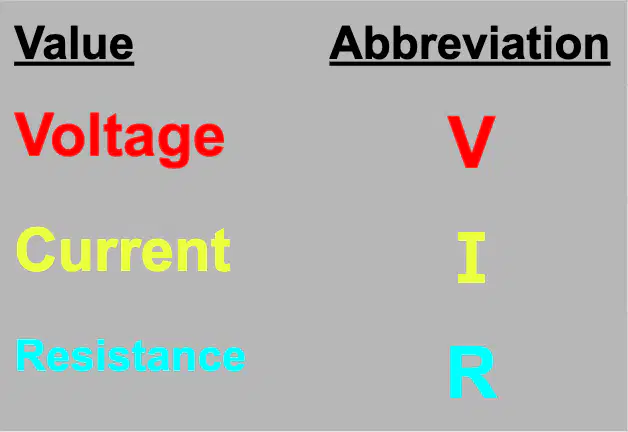
Which value is represented by the abbreviation "I"?
Voltage
Current
Resistance
Capacitance

What does the abbreviation "R" stand for in the context of electrical circuits?
Resistance
Voltage
Current
Reactance

In an electrical circuit, what flows through the conductor as a result of Voltage and Resistance?
Heat
Current
Light
Sound

