
 Worksheets
Unit 4 Vocabulary (Force, Motion, Work, Machines)
Total questions: 48
Worksheet time: 24mins
a push or pull upon an object resulting from the object's interaction with another object
how much matter is in an object
Mass
Density
Weight
Volume
the phenomenon in which an object changes its position
"how much ground an object has covered" during its motion
the object's overall change in position
the rate at which an object covers distance
the speed of something in a given direction
how long it takes for an object to get from its initial position to its final position
speed
distance
time
velocity
the rate at which an object changes its velocity
the tendency of objects to resist changes in their state of motion
for every force there is an equal but opposite reaction force
force pairs
inertia
free fall
motion
a graphical illustration used to visualize the applied forces
The presence of an unbalanced force will accelerate an object
Newton's 1st Law
Newton's 2nd Law
Newton's 3rd Law
Newton's 4th Law
Which formula represents Newton's 2nd Law?
F=ma
What is the formula for gravitational force?
a force that attracts any two objects with mass
gravitational force
buoyancy force
Any object that is being acted upon only by the force of gravity.
All free-falling objects (on Earth) accelerate downwards at a rate of...
when the speed of a falling object is no longer changing
changes the magnitude and/or direction of forces
a rigid bar resting on a pivot, used to help move a heavy or firmly fixed load with one end when pressure is applied to the other
the force of gravity on the object
weight
mass
free fall
terminal velocity
When a force acts upon an object while it is moving
rest
work
distance
time
how much a machine changes the input force
the ratio of the output force to the input force
devices with no, or very few, moving parts that make work easier
Electronic devices
when using a machine to do work, if you decrease the amount of force needed, you must apply it over a greater distance, and vice versa
force-mass trade off
time-distance trade off
force-work trade off
force-distance trade off
an object or mechanical device that receives an input amount of work and transfers the energy to an output amount of work
a collection of simple machines working together
compound machine
When two forces acting on an object are equal in size but act in opposite directions
balanced force
unbalanced force
fulcrum force
applied force
When two forces acting on an object are not equal in size, and the object will change in acceleration
oppositional force
balanced force
inertia
unbalanced force
the fulcrum is located between the load and the effort
the load is located between the effort and the fulcrum
the effort is located between the load and the fulcrum
the point on which the beam pivots
the force exerted on a surface or body
Load
Effort
the amount of force you use times the distance over which you use it
Effort
the force used to move the load
the force applied to the machine
machine force
output force
input force
friction force
the force the machine exerts onto the load
a circular frame that revolves on a shaft or rod
gear and shaft
wheel and axle
pulley and rope
lever and fulcrum
an inclined plane that moves through or between objects
an inclined plane wrapped in a spiral around a central cylinder
a flat surface set at an angle to a horizontal surface
a grooved wheel with a rope, chain, or cable running along the groove
a simple machine that changes the direction of a force on a rope or belt that moves around the wheel's circumference
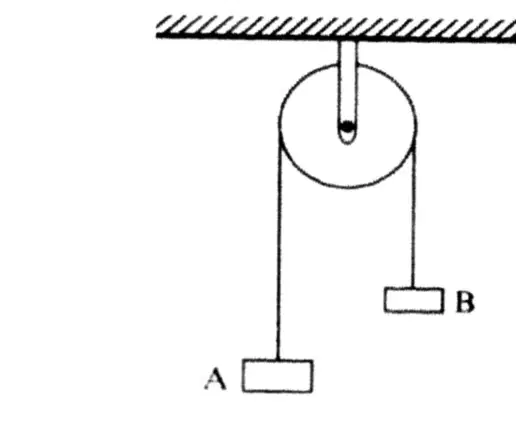
a pulley attached to a fixed point

a pulley system that can move up and down, with one end attached to a fixed object and the other end free to attach a load

a system of two or more pulleys with a rope or cable threaded between them that amplifies the force applied to the rope

