
Font size
 Worksheets
Understanding the Digestive System
Total questions: 106
Worksheet time: 1hrs 9mins
Which of the following best describes the primary function of the digestive system?
To circulate blood throughout the body
To break down food into nutrients
To filter waste from the blood
To protect the body from pathogens
Which part of the digestive system is primarily responsible for nutrient absorption?
Stomach
Large intestine
Small intestine
Esophagus
Identify the enzyme that breaks down proteins in the stomach.
Amylase
Lipase
Pepsin
Lactase
Which of the following is a common digestive disorder characterized by inflammation of the stomach lining?
Ulcerative colitis
Gastritis
Crohn's disease
Irritable bowel syndrome
What is the role of bile in the digestive process?
To digest carbohydrates
To emulsify fats
To break down proteins
To neutralize stomach acid
Which structure connects the mouth to the stomach?
Trachea
Esophagus
Pharynx
Duodenum
Which enzyme is responsible for the breakdown of carbohydrates in the mouth?
Pepsin
Amylase
Lipase
Trypsin
What is needed to produce vitamin K in the human body?
Sunlight exposure
Intestinal bacteria
Consumption of dairy products
Regular exercise
Which of the following disorders is characterized by the backflow of stomach acid into the esophagus?
Celiac disease
Gastroesophageal reflux disease (GERD)
Diverticulitis
Appendicitis
What is the primary function of the pancreas in digestion?
To produce bile
To secrete digestive enzymes
To absorb nutrients
To store vitamins
Which part of the digestive system is primarily involved in the mechanical breakdown of food?
Stomach
Mouth
Small intestine
Large intestine
Which enzyme is responsible for the digestion of fats in the small intestine?
Amylase
Lipase
Pepsin
Trypsin
Which of the following is a common symptom of irritable bowel syndrome (IBS)?
Weight gain
Constipation or diarrhea
High fever
Skin rash
What is the primary function of the stomach in the digestive process?
Absorption of nutrients
Storage and mixing of food
Production of bile
Absorption of water
Which of the following is a function of the liver in digestion?
Production of insulin
Production of bile
Absorption of nutrients
Secretion of digestive enzymes
Which of the following is a common cause of peptic ulcers?
Viral infection
Bacterial infection (Helicobacter pylori or H pylori)
High fiber diet
Excessive exercise
What is the role of the villi in the small intestine?
To secrete digestive enzymes
To increase surface area for absorption
To produce bile
To neutralize stomach acid
Which of the following enzymes is involved in the digestion of proteins in the small intestine?
Amylase
Lipase
Trypsin
Lactase
Which of the following is a structural component of the digestive system that prevents food from entering the respiratory tract?
Epiglottis
Uvula
Diaphragm
Larynx
Which of the following is a function of hydrochloric acid in the stomach?
To digest carbohydrates
To activate pepsinogen to pepsin
To emulsify fats
To absorb nutrients
Match the function with the term
unabsorbed food is removed from the body
elimination
breakdown of food
digestion
movement of food from mouth to stomach
propulsion
aids in chemical digestion
secretion
movement of nutrients to the rest of the body.
absorption
Match the term with the description.
release of digestive fluids (saliva, mucus, etc)
secretion
unabsorbed materials are eliminated
defection
nutrients and other molecules pass into the bloodstream
absorption
breaking down food
digestion
eating
ingestion
Where does the majority of mechanical digestion occur?
In the mouth and stomach
In the small and large intestines
In the esophagus and stomach
In the stomach and large intestine
Bile is produced by the _______ and stored in the _______.
Pancreas; Gallbladder
Liver; Gallbladder
Gallbladder; Liver
Stomach; Pancreas
Which of the following is NOT a role of the large intestine?
Absorption of water
Production of digestive enzymes
Formation of feces
Absorption of vitamins produced by gut bacteria
Which of the following enzymes is involved in the breakdown of proteins?
Amylase
Lipase
Pepsin
Lactase
How does the body benefit from dietary fiber?
It provides essential nutrients
It aids in the absorption of water in the large intestine
It speeds up the digestion of proteins
It increases the production of digestive enzymes
What is the function of the digestive system?
helps the body get the glucose it needs to make ATP
takes in oxygen and releases carbon dioxide
helps with body movement
transports oxygen to the cells

stomach

esophagus

liver
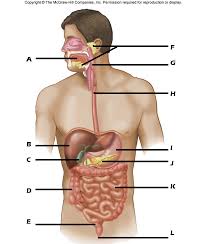
Which digestive organ is represented by the letter B?
Pancreas
Liver
Mouth
Small intestine


Match the following
gallbladder
A
duodenum
B
pancreas
C
jejunum
D
right lobe of the liver
E
Label the digestive system
Mouth
Esophagus
Stomach
Large intestine

What is the function of bile in the digestive system?
It breaks down carbohydrates
It emulsifies fats
It activates digestive enzymes
It absorbs vitamins
Which of the following is true about the process of digestion?
It only occurs in the stomach and small intestine
It involves both mechanical and chemical processes
It is solely a chemical process
It does not involve enzymes
Which vitamin is absorbed directly into the bloodstream in the stomach?
Vitamin A
Vitamin B12
Vitamin C
Vitamin D
What is the significance of the stomach's acidic environment?
It neutralizes bacteria in the food
It aids in the digestion of fats
It facilitates the absorption of carbohydrates
It enhances the action of digestive enzymes
Which organ is the primary site for nutrient absorption?
Stomach
Small intestine
Large intestine
Liver
What is steatorrhea?
inflammation of the liver caused by a virus, A-E
hepatitis
emesis
mumps
heartburn
gastritis
bile duct is blocked, bile will enter the blood stream
diverticulitis
enteritis
appendicitis
jaundice
gastroenteritis
inflammation of a diverticula ( an outpouching of intestinal tissue), can be life threatening if it ruptures
diverticulitis
enteritis
appendicitis
jaundice
gastroenteritis
What disorder is characterized by the stomach and esophagus sliding through the diaphragm?
inflammation of the mucus membrane lining of the stomach and intestines
diverticulitis
enteritis
appendicitis
jaundice
gastroenteritis
acute or chronic inflammation of the stomach lining
hepatitis
emesis
mumps
heartburn
gastritis

What part of the digestive system is highlighted?
Large intestine
Small intestine
Stomach
Appendix
After a large Thanksgiving meal, about how long will it take until your stomach is completely empty again?
about 6-8 minutes
about 6-8 hours
about 6-8 seconds
What is the process called when glucose is converted into glycogen in the liver?
Glycolysis
Glycogenesis
Gluconeogenesis
Glycogenolysis
Which hormone primarily stimulates the conversion of glucose to glycogen in the liver?
Glucagon
Insulin
Adrenaline
Cortisol
Where is glycogen primarily stored in the human body?
Pancreas
Kidneys
Liver and muscles
Heart
Which of the following are correct functions of the digestive system? Select TWO correct answers
The digestive system absorbs nutrients the body can use for energy.
The digestive system transports nutrients throughout the body.
The digestive system filters blood and removes wastes from the body.
The digestive system regulates body activities using hormones.
The digestive system breaks down the foods we eat into smaller substances.
What is the role of trypsin in the digestive system?
Breaks down carbohydrates
Breaks down proteins into peptides and amino acids
Emulsifies fats
Neutralizes stomach acid
How is trypsinogen activated into trypsin in the small intestine?
By the enzyme pepsin
By the enzyme enterokinase
By bile acids
By hydrochloric acid
Which of the following is a function of trypsin related to pancreatic health?
It acts as a marker for pancreatic function
It regulates blood sugar levels
It produces insulin
It stores digestive enzymes
What is the term for the muscle contraction that moves food through the digestive system?
Osmosis
Peristalsis
Diffusion
Respiration
What maximizes molecule absorption in the small intestine?
Villi
Enzymes
Hormones
Bile
Where does the final deconstruction of proteins into amino acids occur?
Stomach
Large intestine
Liver
Small intestine
What is the final byproduct of digestion called?
Stool
Chyme
Bolus
Waste
Which of the following helps digest carbohydrates in the mouth...
salivary amylase
lysozymes
mucin
bolus
What is the muscular tube that connects the mouth to the stomach?
Liver
Large Intestine
Esophagus
Pancreas
What happens to the bolus when it enters the stomach?
Bile is produced and digests the bolus
stomach muscles contract and smash the bolus
nutrients from the bolus are absorbed
enzymes in the bolus create acid
Which digestive organ is the longest?
Esophagus
Small Intestine
Large Intestine
Stomach
What is the function (job) of the large intestine?
To absorb water and minerals
To store vitamins and fats
To produce bile and acid
To regulate the blood sugar and hormones
What is the liver's function in the digestive system?
It produces bile
It controls blood sugar
It stores digested food
It removes solid waste

What is the name of the highlighted organ in the picture?
esophagus
stomach
small intestine
large intestine

What is the name of the highlighted organ in the picture?
Pancreas
Gall Bladder
Liver
Colon

What is the name of the highlighted organ in the picture?
esophagus
stomach
small intestine
large intestine

What substance in the mouth contains an enzyme that begins chemical digestion?
fiber
mucus
pepsin
saliva

What process involves muscle contractions that move food through the esophagus?
absorption
peristalsis
mechanical digestion
elimination

What structure enables the small intestine to absorb large amounts of nutrients?
villi
pancreas
liver
gallbladder

When you swallow, a flap of tissue called the ___________ prevents food from entering your windpipe.
esophagus
epiglottis
pancreas
bile

Enzymes are proteins that help in the kind of digestion called ______________ digestion.
mechanical
chemical

One of the roles of the ____________ intestine is to prepare waste material for elimination.
large
small
Which of the following help with mechanical digestion
Saliva
Chewing
Stomach Acid
Muscular squeezing

Where does MOST of the digestion process occur?
Small intestine
Mouth
Stomach
Large Intestine
Colon

Pick the correct order of digestion
Mouth,stomach,esophagus,large intestine,small intestine
Mouth,esophagus,stomach,small intestine, large intestine
Mouth, esophagus, stomach, large intestine, small intestine, colon
Mouth, stomach, esophagus, small intestine, large intestine

What chemical breaks down Fat?
Water
Saliva
Sodium
Bile

What does the Gall Bladder store?
Bile
Fat
Carbohydrates
Insulin

What organ produces Insulin?
Liver
Stomach
Appendix
Pancreas

Another name for the Large Intestine?
Really big intestine
Colon
Pancreas
Massive
Identify the pictures that represent chemical digestion.

The digestive process starts in your (a) when you chew. (b) a digestive juice, moistens the food so it easily moves through the (c) and into the (d) where digestive juices further break it down. It then moves into the (e) first and then the large intestine and is finally expelled out of the body through the rectum.
What part of the digestion system does mechanical digestion start ?
In the mouth
In the esophagus
In the Stomach
In the small intestines
Point to the two organs where most chemical digestion takes place.

Reorder the following to show how the body processes food
Ingestion
Digestion
Absorption
Egestion
Match the following enzyme with the correct action
pepsin
breaks down proteins
lipase
breaks down fats
amylase
breaks down starches/carbs
In the first step of digestion, (a) is chopped up into small pieces by your (b) . The muscles in the esophagus (c) the food farther and farther down until it reaches the stomach. This is also known as (d) . Then the (e) takes everything you eat and churns it around ad around like a blender.


Amylase is an enzyme found in our saliva. Amylase changes starch into...
glucose
salt
iron
starch
The Structure that Stores bile

Chemical Digestion and Absorbs Nutrients into Bloodstream

Absorbs water into bloodstream and forms solid waste

Mechanical digestion through churning and chemical digestion through acid and enzymes

Together these structures produce and store bile

Produces enzymes and insulin
Match the following digestive organs to their functions
Absorbs water and vitamins
Large Intestine
Mechanically breaks down food by chewing and mashing
Mouth
Chemically breaks down food using acid and enzymes
Stomach
Absorbs nutrients and uses diffusion to deliver them to the blood stream
Small intestine
Pushes food down the digestive tract from the pharynx to the stomach
Esophagus
Match the following
Contains villi; site of the majority of digestion and nutrient absorption
small intestine
opens to allow elimination to occur
anus
produces pancreatic juice and insulin
pancreas
carries out chemical digestion with gastric juices and mechanical digestion with churning
stomach

