
 Worksheets
Epithelial Quiz
Total questions: 44
Worksheet time: 33mins
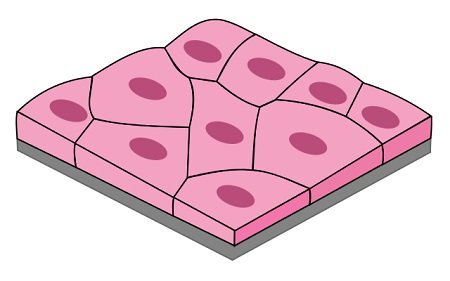
Name the type of epithelium
simple cuboidal
simple squamous
simple columnar
stratified squamous
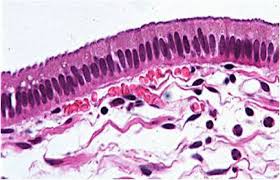
Name the type of epithelium
simple squamous
stratified squamous
simple cuboidal
simple columnar

What are the 3 basic shapes of Epithelial Cells? (Select all that apply)
Cuboidal
Columnar
Orbital
Squamous
Cube shaped
Squamous
Cuboidal
Columnar
Transitional
More tall than wide
Squamous
Cuboidal
Columnar
Transitional
Single layer of cells of the same shape
Simple
Stratified
Many layers of cells
Simple
Stratified
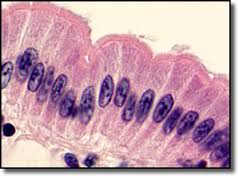
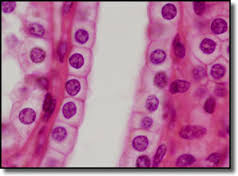

Which of the following is NOT a function of epithelial tissue?
Protection
Absorption
Filtration
Secretion
Messaging

What type of epithelial tissue is this?
Stratified Columnar
Pseudostratified
Simple columnar
Stratified squamous
Stratified cuboidal

What type of epithelial tissue is this?
Stratified Columnar
Simple cuboidal
Simple columnar
Stratified squamous
Stratified cuboidal

Identify this type of ET.
stratified cuboidal
simple transitional
simple squamous
simple cuboidal

Identify the structure at the yellow arrows.
connective tissue
basement membrane
simple cuboidal
apical surface

Identify this type of ET.
stratified cuboidal
stratified squamous non keratinized
stratified squamous keratinized
stratified transitional
Which of the following is NOT a characteristic of epithelial tissue?
cells are tightly packed together
cells form sheet-like layers
cells are interconnected with adhesion proteins called tight junctions and desmosomes
ET is vascular
ET in innervated
Which of the following is NOT a function of epithelial tissue?
secretion (hormone and non-hormone products)
absorption of materials
(from one space into another space)
supporting/connecting other structures
protection of underlying structures
formation of a barrier (covering/lining)


Epithelial tissue regenerate really quickly
True
False
Hair like projections found in Pseudostratified Epithelium.
Nuclei
Cilia
Mucus
Goblet Cells

Where in the body would you most likely find this type of cell layer?
lungs
heart
small intestine
pancreas

Where might you find this type of epithelium?
stomach
trachea
small intestine
lungs
How can you tell a pseudostratified columnar epithelium from a simple columnar epithelium or stratified columnar epithelium?
Look at the basal surface.
Look at the apical surface.
Check if its ciliated or not.
Look at the nuclei.
What are the three types shapes of epithelial tissue?
squamous, cuboidal, columnar
skeletal, cardiac, smooth
connective tissue proper, fluid connective tissues, and supporting connective tissues
reticular, elastic, and collagen
brain, spinal cord, and nerves
Epithelium is connected to underlying connective tissue by
a basement membrane
avascular tissue
proteglycan
interfacial canals
a reticular lamina
The study of tissues is called ________.
cell biology
histology
microbiology
tissueology
cytology
Epithelial tissue is __________ meaning that no blood or blood vessels are found in it.
avascular
vascular
Epithelial tissue is regenerative
True
False
What function does the basement membrane serve?
provide blood to the epithelial tissue
hold cartilage to bone
anchor epithelial tissues to underlying connective tissue
secretes the matrix.
How are epithelial tissue classified?
by shape
by size
by number of layers
by shape and number of layers.

