
 Worksheets
Focus on Organic
Total questions: 74
Worksheet time: 3625secs
What is the name of the alkane with two carbon atoms?
Ethane
Methane
Butane
Propane
What chemicals are found in crude oil?
Methane only
A mixture of compounds, which are mostly hydrocarbons
A mixture of elements
Carbon only
What is the definition of a hydrocarbon?
A compound made of hydrogen and carbon only
A compound that includes hydrogen or carbon
A mixture that includes hydrogen and carbon
A mixture of hydrogen and carbon only
What is the first stage in the fractional distillation of crude oil?
Heating, to vaporise the hydrocarbons
Heating, to make it a hot liquid
Cooling it
Separating the fractions
What happens to the viscosity of hydrocarbons as the length of the molecule increases?
Longer hydrocarbons are more viscous
All hydrocarbons have the same viscosity
Hydrocarbons aren’t viscous
Shorter hydrocarbons are more viscous
What compounds are produced in the complete combustion of hydrocarbons?
Carbon dioxide and water
Carbon monoxide and water
Carbon dioxide and nitrogen
Water and nitrogen
The alkanes are a homologous series.
What is the general formula of the alkanes?
n carbon atoms, 2n hydrogen atoms
2n carbon atoms, n hydrogen atoms
n carbon atoms, n+2 hydrogen atoms
n carbon atoms, 2n+2 hydrogen atoms
What property allows us to separate hydrocarbons during fractional distillation?
Different hydrocarbons have different boiling points
Different hydrocarbons have different melting points
Different hydrocarbons are different colours
Some hydrocarbons have a positive charge and others have a negative charge
Which is the best description of fractional distillation?
Breaking down longer hydrocarbon chains into smaller ones that are more useful
Separating the hydrocarbons in crude oil into fractions, with each fraction containing molecules with a similar number of carbon atoms
Pumping crude oil out from under the sea
Ensuring resources are used to meet the needs of current generations without compromising the needs of future generations
Crude oil is finite because we use it before more can be formed.
How was crude oil formed?
From the remains of an ancient biomass, consisting mainly of plankton, that was buried in mud
Mostly from the remains of dinosaur bones
By fractional distillation
By cracking
Why, in terms of column temperature, do the fractions condense at different levels in the fractionating column?
The column is hotter at the bottom and cooler at the top
The column is cooler at the bottom and hotter at the top
All the column is at the same temperature
The column has a hotter section halfway up
What happens to the boiling point and flammability of hydrocarbons as the length of the molecules increases?
Longer hydrocarbons have lower boiling points and are less flammable
Longer hydrocarbons have higher boiling points and are more flammable
Longer hydrocarbons have lower boiling points and are more flammable
Longer hydrocarbons have higher boiling points and are less flammable
Hydrocarbons with shorter carbon chains are more flammable.
What does this make them useful for?
Lubricants
Fuels
Plastics
Feedstock
How many carbon atoms and hydrogen atoms are there in propane?
2 carbon atoms, 6 hydrogen atoms
4 carbon atoms, 8 hydrogen atoms
3 carbon atoms, 8 hydrogen atoms
3 carbon atoms, 6 hydrogen atoms
Put the two processes used in fractional distillation in the correct order.
Evaporating and then melting
Evaporating and then condensing
Condensing and then evaporating
Melting and then condensing
Which substances can be produced from crude oil?
Metal alloys and glass
Glass and concrete
Limestone and steel
Kerosene and polymers
What happens to carbon and hydrogen during combustion reactions?
They are reduced
They are oxidised
They are cracked
They are distilled
Crude oil is (a) , meaning it will eventually run out. It is a (b) of hydrocarbon molecules, formed from the (c) of ancient organisms buried under mud.
Identify the Alkanes
Butane

Propene


The general formula for an alkane is:
CnH (a)
Complete the Alkane formula:
C6H (a)
Match the following
C7H__
16
C3H8
Propane
C8H__
18
C_H20
9
C_H10
4
Reorder the following
Methane

C3H8
Butane

Where are the smallest hydrocarbons collected?
Reorder the following
Crude oil is vaporised
Before entering the column
The column is hottest at the bottom
Larger molecules condense lower down
Small hydrocarbons have a very low boiling point
Collected at the top of the column
The length of the hydrocarbon affects its boiling point
Boiling points separate hydrocarbons
Match the statements
Hydrocarbon series with no double bonds
Alkanes
Hydrocarbon series with double bonds
Alkenes
A method of separating hydrocarbons
Fractional Distillation
A method of splitting larger hydrocarbons into smaller ones
Cracking
Turns from orange to clear with alkenes
Bromine Water
Match the following
Small hydrocarbons can be used as fuel and feedstock
Why is cracking carried out
More viscous
Large hydrocarbons
More flammable
Small hydrocarbons
Complete combustion
Oxygen is not limited
In-complete combustion
Produces Carbon Monoxide
Categorise these hydrocarbons based on if they will de-colour bromine water
Ethene
C3H6

CH4
Ethane

Cracking splits (a) hydrocarbons into (b) hydrocarbons. This can be done using a (c) or steam . There will only be one (d) produced and one or more (e)
C102H206 --> C50H102 + C (a) H104
name the group that has a single bond
alkenes
alcohols
alkanes
ethers
the name of this compaund C4H10
METHANE
HEXENE
BUTANOIC ACID
BUTANE
which compound is made up of carbons and hydrogen
hydrocarbons
aldehytes
condensed structure
alcohols
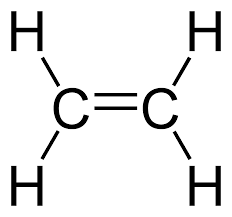

Classify the compound based on the functional group present.
alkane
alkene
alkyne
aromatic
Which homolgous series contains a C=C double bond?
alkanes
alkenes
alcohols
carboxylic acids
Which homolgous series contains only C-C single bonds?
alkanes
alkenes
alcohols
carboxylic acids

What is fractional distillation?
a process used to separate crude oil
a process used to burn up fuels
a way to make different products
how oil is extracted from the ground
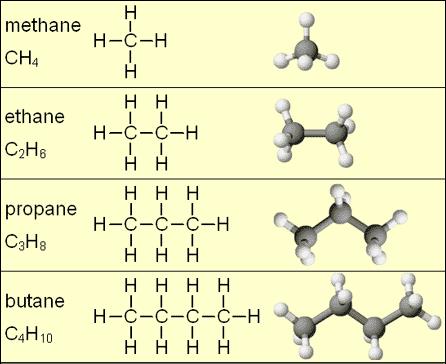
Which of these substances is not a hydrocarbon?
methane
ethane
propane
butane
ammonia
Fractional distillation separates crude oil based on the different __________ of the molecules in the mixture
melting point
boiling point
freezing point
chemical reactivity
A fraction of crude oil is made up of:
Hydrocarbons of similar chain lengths
Numbers
Large hydrocarbons
Alkenes only
Crude oil is made up of:
Ethane
Butane
A mixture of different hydrocarbons
Extremely large hydrocarbons which are broken up once extracted
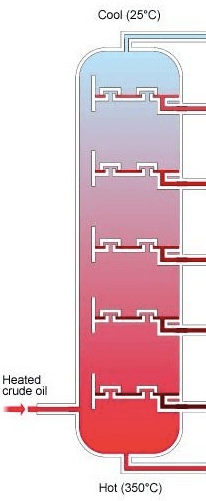
What process happens at each level in the fractionating column?
Evaporation
Condensation
Combustion
What process happens as the crude oil enters the fractionating column?
Evaporation
Condensation
Combustion

Where do short chain hydrocarbons collect?
At the top
In the middle
At the bottom

Where do long chain hydrocarbons collect?
At the top
In the middle
At the bottom
Shorter hydrocarbons have:
Higher boiling points
Lower boiling points

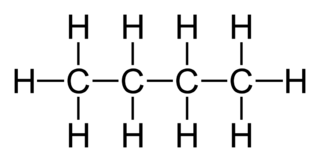
Hydrocarbons burning is an example of what type of chemical reaction ?
neutralisation
endothermic
addition
exothermic
A saturated hydrocarbon is an ... ?
Alkane
Alkene
Which homolgous series contains a C=C double bond?
alkanes
alkenes
alcohols
carboxylic acids
Shorter hydrocarbons have:
Higher boiling points
Lower boiling points
What is the general formula for alcohols?
CnH2n+1OH
CnH2nOH
CnH2n+2OH
CnH2n+1O
What gas is produced when sodium reacts with ethanol?
hydrogen
carbon dioxide
oxygen
chlorine
What gas is produced when potassium carbonate reacts with ethanoic acid?
hydrogen
carbon dioxide
oxygen
chlorine
Carboxylic acids are produced by the oxidation of....
Alcohols
Alkenes
Alkanes
Ketones
A hydrocarbon is...
only found in oil
a molecule containing the atoms carbon and hydrogen
flammable
contains only carbon and hydrogen
Alkanes are
saturated
have the general formula CnH2n+2
A homologous series
all of the above
Which statement is true about Alkanes?
related to cycloalkanes
flammable
All end in -ane
Only used to power cars

identify the following molecule
septane
octane
heptane
methylhexane
Carbon can form 4 covalent bonds because
It has 6 electrons
It is in group 4
it loses 4 electrons
when a pair of electrons is shared between to atoms
A homologous series is a family of molecules which
have the same general formula
the same physical properties
the same chemical properties
all of the above
which statement is untrue
Alkanes have the same chemical properties and trend in physical properties
The cycloalkanes are a homologous series
In fractional distillation the boiling point of fractions increases up the column
In fractional distillation the viscosity increases down the column
when burnt hydrocarbons can produce
carbon dioxide
carbon monoxide
carbon
water
all of the above
which statement is untrue
alkenes are found in crude oil
alkanes can be made by cracking
alkenes can be made by cracking
alkenes are unsaturated

Which one is the odd one out
A
B
C
D

