
 Worksheets
Science. 3rd grade. NC
Total questions: 78
Worksheet time: 2hrs 10mins
What is science?
is a person who studies and has expert knowledge of natural or physical science
It is a way to gain knowledge of the world around us.
the road of path to gain knowledge, or a way to figure things out or a process to gain knowledge.
The road ot PATH to gain knowledge, or a way to figure things out is called
Scientific method
science
recipe
A person who STUDIES ans has expert knowledge of NATURAL OR PHYSICAL SCIENCE is a:
teacher
doctor
scientist
How many steps does the scientific method have?
2
6
10
In this step of the scientific method we GATHER INFORMATION in order to come up with a guess (hypothesis)
Observation
Experiment
Conclusions
In this step of the scientific method we DESIGN AND PERFORM AN EXPERIMENT.
Observation
Experimentation
Hupothesis
In this step of the scientifdi method we see if your data matches your hypothesis.
What did you learn?
Was your hypothesis correct?
What questions do you have now?
Ask a question
Analyse data and draw conclusions
Esperimentation
Observation
We gather information through our five sesnses. How do you call this process
Comprehension
Classification
Observation
Name the sense that you use to see
(a)
Which part of your body do you use to SMELL?
(a)
Which part of your body do you use to HEAR?
(a)
Draw something that FEELS SOFT.

Draw something that smells flowery.
All the bones in your body from the skeletal system form
The skeletal system
The digestive system
The circulatory system
The human skeleton consists of (a) bones
The following are functions of which system?
- Protect internal organs
- Produce blood cells
- Stores and releases minerals (calcium)
- Supports the body
Circulatory
Skeletal
Muscular
Which bones protect your heart and lungs?
(a)
(a) are rigid structures that give support and strength to the body and protects its organs
(a) are rigid structures that give support and strength to the body and protects its organs
Where is the longest and strongest bone in the body located?
arm
leg
hand
Which one is NOT a function of the human bones?
Provide support and shape
Production of blood cells
Protects internal organs
Allows us to cool
Baby humans have ______ bones in their bodies, on average.
300
Muscles that you DO NOT control are known as ...
Involuntary
Fast Twitch
Voluntary
Slow Twitch
Your heart is an example of what kind of muscle?
Voluntary
Involuntary

650
Type of muscle that we use them to move around.
They cover our skeleton and move our bones.
Skeletal muscles (Voluntary)
Smooth muscles (Involuntary)
Cardial muscle (Involuntary)
We use this type of MUSCLE to move around. They cover our skeleton and move our bones.
Skeletal muscle
Cardiac Muscle
Smooth muscle
These muscles work without us having to think about them, they do not connect to bones, but control organs in the body
Skeletal muscle
Cardiac Muscle
Smooth muscle
Special muscle pumps our heart and blood through our body.
Skeletal muscle
Cardiac Muscle
Smooth muscle
The nervous system consists of:
Brain
Nerves
Spinal cord
Brain
Hearth
Brain
Skull
Spinal Cord
Part of the nervous system which controls all your actions (seeing, hearing, speaking, thinking, etc.)
It is the center of all activitie
heart
brain
computer
Bone that protects your brain:
SKULL
RIB CAGE
HAIR
The backbone protects:
Internal organs
Spinal cord
Nerves
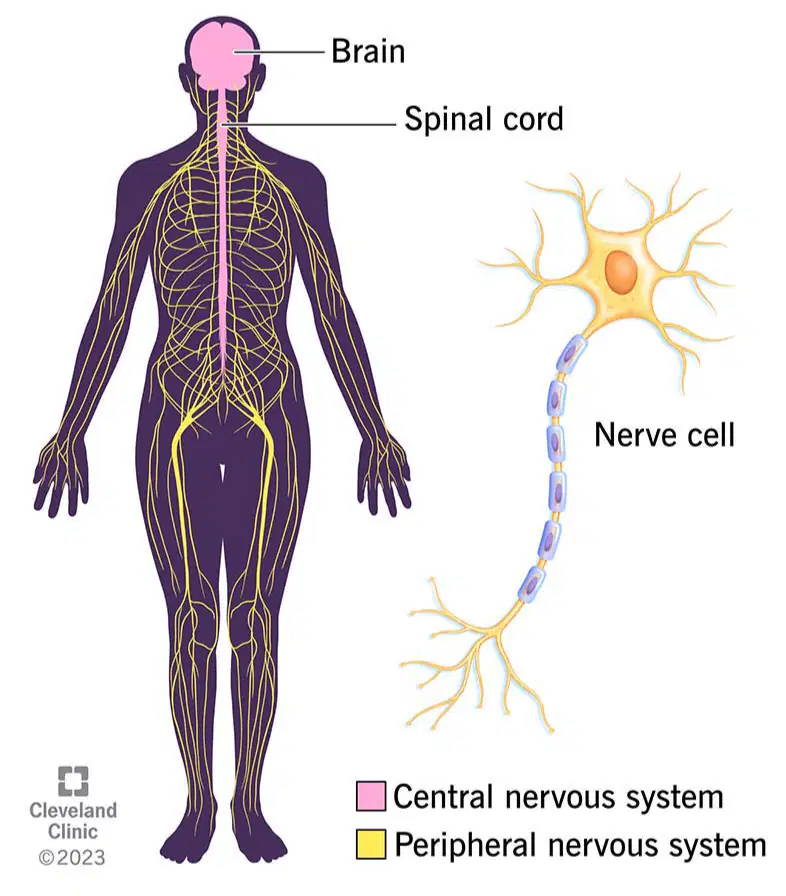
This is an image of the
Nervous system
Muscular system
Skeletal system
This is the nervous systems largest organ, the main control center
heart
pituituary gland
brain
endocrine
The nervous system is made up of these three parts:
Brain, heart and trachea
nerves, arteries and veins
Brain, spinal cord and nerves
Nerves, liver and heart
The brain creates connections BETWEEN these cells:
neurons
salivary glands
hairs
The __________ is in charge of sending messages from our brain to the rest of our body.
Brain
The Spinal Cord
Amygdala

A nerve cell is called a
cardiac cell
neurons

An example of voluntary movement would be:
Dancing
heart beat
digestion
breathing

Select all that apply: The function of the nervous system is to control
voluntary movement
our senses (sight, hearing, touch, taste..)
our memories and thoughts
Involuntary actions likes breathing and heart beat
The digestive process starts in the:
Mouth
Stomach
Liver

What is this organ?
Large intestine
Small intestine
Stomach

What is this organ?
Small intestine
Oesophagus
Large intestine

What is this organ?
Small intestine
Oesophagus
Large intestine

What does the stomach segregate?
Saliva
Gastric juices
Food

What is the function of the Small intestine?
takes the nutrients from the food.
takes the nutrients and the water
segregates gastric juices

What is the function of the Large intestine?
takes the nutrients from the food.
takes the nutrients and the water
segregates gastric juices

It is a TUBE where the food passes.
Stomach
Small intestine
Large intestine
Oesophagus
Which of these is NOT a function of the digestive system?
breaks down food
absorbs nutrients
eliminates waste
takes oxygen to body cells
The process of breaking down food into nutrient rich molecules.
absorption
digestion
peristalsis
villi
produces enzymes that break down food
liver
pancreas
gall bladder
stomach
Which organ produces bile that breaks down food?
pancreas
liver
gall bladder
stomach
Why do we eat?
To get the nutrients we need to survive.
So we can gain weight.
Because we enjoy it.
To get carbon dioxide and oxygen.

_____ is the part of food the body does not need.
grow
waste
nutrients
Bile is made in the ___________?
liver
large intestine
stomach
all of the above

The circulatory system consists on:
the heart, which is a muscular pumping device.
the heart, which is a muscular pumping device, and a closed system of vessels called arteries and capillaries.
the heart, which is a muscular pumping device, and a closed system of vessels called arteries, veins, and capillaries.

Arteries are...
blood vessels responsible for carrying oxygen-rich blood away from the heart to the body.
blood vessels that carry blood low in oxygen from the body back to the heart for reoxygenation.

Veins are...
two of the body's main type of blood vessels.
blood vessels that carry blood low in oxygen from the body back to the heart for reoxygenation.

The main organ of the circulatory system is...
veins and arteries.
the heart.
the blood.

The color of the veins is...
blue.
red
green

The color of the arteries is...
blue
red
green
Which list correctly names the major parts of the circulatory system?
Heart, blood vessels, blood, bones
Heart, blood, blood vessels
Heart, blood vessels, bone marrow, blood
Heart, blood vessels, bone marrow
Which carries oxygen-rich blood away from the heart?
Arteries
Veins
Capillaries
Marrow
Which carries oxygen-poor blood back to the heart?
Arteries
Veins
Capillaries
Platelets
What does your heart do?
pumps blood through your body
protects your body
helps your exercize
We breathe in carbon dioxide and breathe out oxygen
True
False
When we breath in the diaphragm...
Contracts
Relaxes
When we breathe out the diaphragm...
Contracts
Relaxes
Which are the main organs in the respiratory system?
Heart
Stomach
Lungs
Nose

The respiratory system takes in oxygen and gives out _____
Carbon dioxide
More oxygen
Air and nutrients
The trachea is a tube that divides into two smaller tubes called _____
Bronchi
Nostrils
Lungs
The ____ are two sacks that are protected by our ribs
Lungs
Trachea
Octopuses
What muscle that moves air in and out of the lungs?
diaphragm
ribs
lungs
heart
What does your body need from the air around you?
Nitrogen
Oxygen
Carbon Dioxide
Argon
It´s main function is to provide oxygen to all parts of your body: inhaling oxygen-rich air and exhaling air filled with carbon dioxide.
This is the....
Respiratory system
Muscular system
Digestive system

