
 Worksheets
Unit 4: Rocks, Minerals, and Weathering
Total questions: 51
Worksheet time: 40mins
Which of the following is an example of a chemical reaction that alters the mineral composition of rocks?
Melting
Freezing
Acid rain
Wind erosion
What is physical weathering?
The chemical breakdown of rocks
The mechanical breakdown of rocks into smaller pieces without changing their chemical composition
The process of rocks melting
The biological breakdown of rocks.
What is Hydrolysis in chemical weathering?
Reaction with oxygen
Reaction with water
Reaction with carbon dioxide
Reaction with nitrogen
Oxidation in chemical weathering often affects ______-bearing minerals.
copper
iron
gold
silver
Which type of chemical weathering involves the formation of rust?
Hydrolysis
Oxidation
Carbonation
Sublimation
What is the result of Carbonation in chemical weathering?
Formation of rust
Formation of carbonic acid
Formation of sulfuric acid
Formation of nitric acid
Oxidation affects minerals that contain which element?
Copper
Iron
Zinc
Lead
Carbonation in chemical weathering involves a reaction with carbon dioxide to form ______.
sulfuric acid
nitric acid
carbonic acid
hydrochloric acid
What is Frost Wedging?
A) Water freezes in rock cracks, expanding and causing fragmentation.
B) Rocks and sediments grind against each other, wearing down surfaces.
C) Temperature changes cause rocks to expand and contract, leading to cracks.
Which factor affecting weathering involves the movement of water?
Wind Velocity
Water Velocity
Temperature
Ice
Glacial Movement involves glaciers grinding down surfaces through intense ______ and friction.
heat
pressure
light
sound
Carbon dioxide in rainwater dissolves limestone
Chemical weathering
Mechanical weathering
The iron in the stones of the Grand Canyon turn the color of red
Mechanical Weathering
Chemical Weathering
A metal statue slowly turning green after years of being outside is an example of:
mechanical weathering
chemical weathering
Wind, water, and ice breaking down rock is called
Erosion
Deposition
Compaction
Weathering
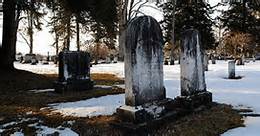
These gravestones have slowly broken down and turned a blackish color due to the action of:
ice wedging
abrasion
acid rain
mechanical weathering
Which type of rock is formed when magma or lava cools and solidifies?
Igneous rock
Granite
Metamorphic rock
Sedimentary rock
Which type of rocks are created when other rocks are changed through heat and/or pressure?
Igneous rocks
Metamorphic rocks
Sedimentary rocks
Volcanic rocks
How are sedimentary rocks formed?
Sedimentary rocks are formed from the accumulation and lithification of sediment.
Sedimentary rocks are formed through the process of metamorphism.
Sedimentary rocks are formed by the cooling of magma.
Sedimentary rocks are formed from volcanic activity.
Which of the following minerals is a silicate?
Calcite (CaCO3)
Gypsum (CaSO4)
Halite (NaCl)
Quartz (SiO2)

What type of rock is pictured?
Extrusive Igneous Rock
Foliated Metamorphic Rock
Nonfoliated Metamorphic Rock
Sedimentary Rock
the science that deals with the dynamics and physical history of the Earth, the rocks of which it is composed, and the physical, chemical, and biological changes that the Earth has undergone or is undergoing
(a)
Rocks consist of one or more (a) .
Which type of sedimentary rock is composed of compacted broken rocks?
Clastic
Organic
non-clastic
chemical
Rocks form the Earth's ______________________.
crust
mantle
core
atmosphere
Which of the following are types of igneous rocks? Check ALL that apply.
plutonic
intrusive
extrusive
foliated
volcanic
Which of the following are types of metamorphic rocks? Check ALL that apply.
foliated
plutonic
non-foliated
clastic
non-clastic
Which of the following are types of sedimentary rocks? Check ALL that apply.
clastic
non-clastic
volcanic
chemical
organic
Match the following.
formed from slow magma cooling
plutonic igneous rocks
formed from rapid lava cooling
volcanic igneous rocks
formed from compacted broken rocks
clastic sedimentary rocks
formed when rocks undergo transformation due to pressure
foliated metamorphic rocks
formed when rocks undergo transformation due to heat
non-foliated metamorphic rocks
Which of the following is a halide?
Silver (Ag)
Acanthite (Ag2S)
Quartz (SiO₂)
Bromyrite (AgBr)
Which of the following is a native element?
Galena (PbS)
Bismuth (Bi)
Hematite (Fe2O3)
Feldspar (KAlSi3O8)
Which of the following is a carbonate?
Witherite (BaCO3)
Celestine (SrSO4)
Brucite (Mg(OH)2)
Cassiterite (SnO2)
Which of the following is a hydroxide?
Witherite (BaCO3)
Celestine (SrSO4)
Brucite (Mg(OH)2)
Cassiterite (SnO2)
If the mineral's chemical formula is BaSO4 which mineral group is the mineral in?
silicates
carbonates
halides
sulfates
If the mineral's chemical formula is CaCO3, what group is the mineral in?
silicates
carbonates
sulfates
oxides
If the mineral's chemical formula is Al2O3 , what mineral group is the mineral in?
oxides
halides
carbonates
silicates
If the mineral's chemical formula is CaF2, what mineral group is the mineral in?
halides
oxides
sulfates
carbonates
If the mineral's chemical formula is (Fe, Mg)2SiO4 what mineral group is it in?
silicates
oxides
carbonates
sulfates
Which of the following is a sulfate?
Iodargyrite (AgI)
Olivine ((Mg,Fe)2SiO4)
Aragonite (CaCO3)
Thenardite (Na2SO4)
Which of the following is a native element?
Goethite (FeO(OH))
Bromyrite (AgBr)
Selenium (Se)
Molybdenite (MoS2)
Which of the following is a halide?
Goethite (FeO(OH))
Bromyrite (AgBr)
Selenium (Se)
Molybdenite (MoS2)
Which of the following is a sulfide?
Feldspar (KAlSi3O8)
Smithsonite (ZnCO3)
Barite (BaSO4)
Galena (PbS)
Which of the following is a hydroxide?
Zircon (ZrSiO4)
Brucite (Mg(OH)2)
Thenardite (Na2SO4)
Rhodochrosite (MnCO3)
Which of the following is a silicate?
Zircon (ZrSiO4)
Brucite (Mg(OH)2)
Thenardite (Na2SO4)
Rhodochrosite (MnCO3)
Which of the following is a carbonate?
Bauxite (Al(OH)3)
Siderite (FeCO3)
Celestine (SrSO4)
Quartz (SiO₂)
Which of the following is a silicate?
Bauxite (Al(OH)3)
Siderite (FeCO3)
Celestine (SrSO4)
Quartz (SiO₂)
Which of the following is a sulfate?
Stibnite (Sb2S3)
Rutile (TiO₂)
Goethite (FeO(OH))
Celestine (SrSO4)
Which of the following is an oxide?
Diamond (C)
Acanthite (Ag2S)
Sphalerite (ZnS)
Cassiterite (SnO₂)
Which type of rock is formed from the accumulation and compaction of mineral and organic particles?
Igneous rock
Metamorphic rock
Sedimentary rock
Volcanic rock
Which of the following is an oxide mineral?
Hematite (Fe2O3)
Galena (PbS)
Calcite (CaCO3)
Gypsum (CaSO4)
What process involves the breakdown of rocks through physical forces without changing their chemical composition?
Chemical weathering
Physical weathering
Biological weathering
Thermal weathering

