
 Worksheets
Bellwork 11/7 organelles and transport
Total questions: 11
Worksheet time: 7mins
A phospholipid has two parts. What are they called?
Hydrophilic Head, Hydrophobic Tail
Hydrophobic Head, Hydrophilic Tail
Which term describes the relatively constant internal physical conditions of an organism?
cell specialization
homeostasis
permeability
unicellularity
During diffusion, molecules tend to move
up the concentration gradient
from an area of lower concentration to an area of higher concentration
in a direction that doesn’t depend on concentration
down the concentration gradient
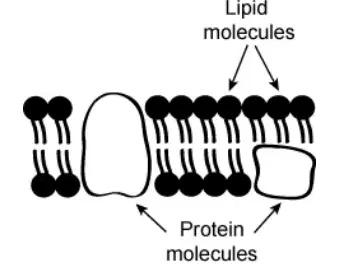
Which structure is the key player in Facilitated Diffusion?
Proteins
Lipids
Carbohydrates
Nucleic Acids

What type of transport is shown in the diagram?
Ion pump
Facilitated diffusion
Endocytosis
Exocytosis

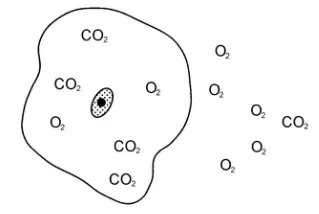
Which molecule will move and in what direction?
O2 will exit the cell.
CO2 and O2 will move equally in and out of the cell.
O2, it will enter the cell.
CO2, it will enter the cell.
What is the role of the smooth endoplasmic reticulum (smooth ER)?
It is involved in cell division by forming spindle fibers.
It produces proteins for the cell.
It stores and transports lipids and carbohydrates.
It synthesizes ATP in the process of aerobic respiration.

