wayground logo

Free Printable Worksheets

Font size

S
M
L
XL
Worksheets

Chapter 11 Overview of the Dentitions

Total questions: 55

Worksheet time: 35mins
Name
Class
Date
1.
Dentin is the strongest layer of our teeth?
a)
True
b)
False
2.
What age does primary dentition occur?
4 lines
3.
What age does mixed dentition occur?
4 lines
4.
What age does permanent dentition occur?
4 lines
5.
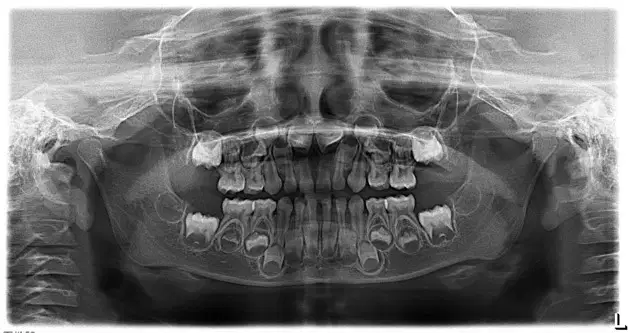
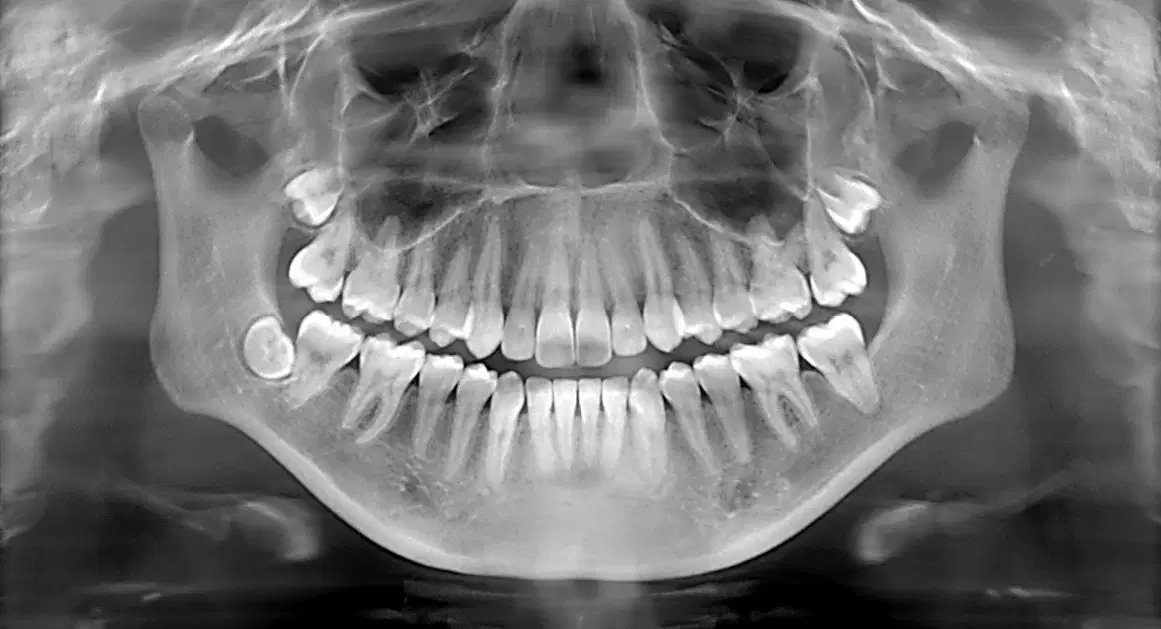
What type of dentition is this?
a)
Mixed
b)
Permanent
c)
Primary
6.
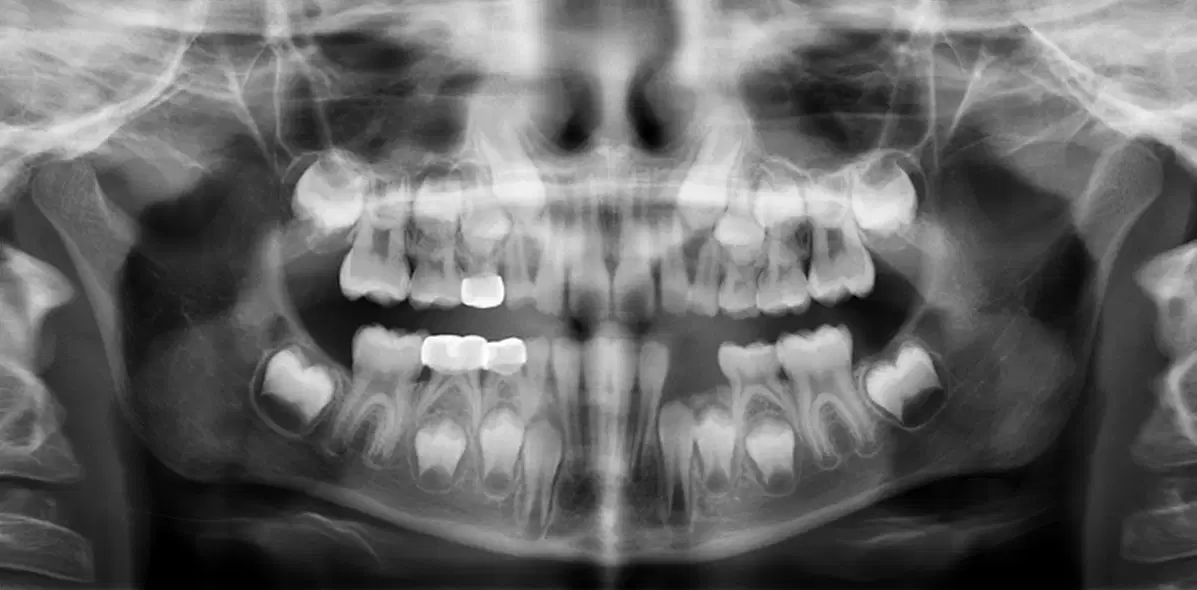
What type of dentition is this?
a)
Permanent
b)
Mixed
c)
Primary
7.
What type of dentition is this?
a)
mixed
b)
Permanent
c)
Primary
8.
In ONE quadrant of permanent dentition how list how many MOLARS, PREMOLARS, CANINES, and INCISORS there are.
4 lines
9.
Which teeth are considered posterior?
a)
Canine to canine
b)
molar to molar
c)
pre molar and molars
10.
What types of teeth have occlusal biting surfaces?
a)
canines
b)
incisors
c)
molars
d)
pre molars
e)
Both C and D
11.
What is the function of Incisors?
a)
Chew or grind food
b)
Cut or tear food without applying heavy forces
c)
Both
12.
Canines are the ______________ teeth and considered the __________________ _______ ______ ________________
4 lines
13.
What is the function of pre molars?
a)
cutting or tearing food
b)
Chewing and grinding food
c)
both
14.
What is the function of Molars?
a)
cutting or tearing food
b)
Chewing and grinding food
c)
both
15.
What does Occlusion mean?
4 lines
16.
What does malocclusion mean?
4 lines
17.
what number is your Maxillary right second molar?
a)
15
b)
3
c)
2
18.
What number is your Mandibular left Canine?
a)
27
b)
6
c)
22
19.
What number is your Maxillary left first Premolar?
a)
12
b)
13
c)
28
20.
What number is your mandibular left first molar
a)
30
b)
14
c)
19
21.
What two Incisors separate the midline on the Maxillary Arch?
a)
5 and 6
b)
26 and 27
c)
8 and 9
22.
What numbers separate the midline on the mandibular arch?
a)
8 and 9
b)
24 and 25
c)
27 and 26
23.
There are _____ incisor teeth in the primary dentition.
a)
12
b)
8
c)
4
d)
0
24.
_______ are the longest teeth in the human dentition and are used for cutting and tearing.
a)
Molars
b)
Incisors
c)
Premolars
d)
Canines
25.
Which of the following is the preferred term for bicuspid?
a)
Molar
b)
Canine
c)
Premolar
d)
Incisor
26.
Which of the following surfaces of the maxillary anterior teeth do you mainly see when someone smiles?
a)
Facial
b)
Mesial
c)
Lingual
d)
Distal
27.
The area where the mesial or distal surfaces of the tooth touch the adjacent tooth in the arch is the
a)
embrasure.
b)
line angle.
c)
contact area.
d)
point angle.
28.
The relationship between the maxillary and mandibular teeth during biting and chewing movements is
a)
occlusion.
b)
interproximal.
c)
closure.
d)
functional occlusion.
29.
Which of the following describes the maximal stable contact between the occluding surfaces of the maxillary and mandibular teeth?
a)
Functional occlusion
b)
Basic occlusion
c)
Malocclusion
d)
Centric occlusion
30.
The tooth numbering system most often used in the United States is the ______ system.
a)
Palmer Notation
b)
International Standards Organization
c)
Universal/National
d)
Fédération Dentaire Internationale
31.
Which of the following describes the natural teeth in the dental arch?
a)
Deciduous
b)
Embrasure
c)
Dentition
d)
Succedaneous
32.
Which of the following terms describes the permanent teeth that replace primary teeth?
a)
Deciduous
b)
Embrasure
c)
Dentition
d)
Succedaneous
33.
Permanent _____ are nonsuccedaneous teeth.
a)
incisors
b)
premolars
c)
cuspids
d)
molars
34.
Incisors
a)
are posterior teeth.
b)
have multiple roots.
c)
exist only in the primary dentition.
d)
have shovel-shaped lingual surfaces.
35.
Which of the following anatomic features of the teeth help to maintain their position in the dental arch and protect the tissues during chewing?
a)
Pulp tissue
b)
Contours, contacts, and embrasures
c)
Dentin
d)
Enamel epithelium
36.
The ______ is the exact spot where adjacent teeth actually touch each other.
a)
contour
b)
contact area
c)
height of contour
d)
contact point
37.
A proper contact between adjacent teeth stabilizes the dental arches by
a)
preventing food from being trapped between the teeth.
b)
protecting the interproximal gingival tissue from trauma during chewing.
c)
holding teeth in positive contact with each other.
d)
stretching the periodontal ligament fibers.
38.
Define the following: MESIAL, DISTAL, OCCLUSAL, INCISAL, FACIAL, BUCCAL, LINGUAL
4 lines
39.

The teeth in the upper arch are set in the

a)

zygomatic.

b)

maxilla.

c)

mandible.

d)

mentalis.

40.

The temporomandibular joint permits movement of the

a)

mandible.

b)
  • maxilla.

c)

gomphosis.

d)

cartilaginous joint.

41.
Identify the parts of the tooth structure.
42.

Label the following tooth surfaces

43.

Match the following

a)

Incisors

1.

Chewing and Cutting

b)

Canines

2.

Tearing and Holding

c)

Premolars

3.

Crushing and Grinding

d)

Molars

4.

Grinding and Crushing

44.

Order the types of teeth from Posterior to Anterior

a)

Molars

b)

Pre Molars

c)

Canines

d)

Lateral Incisor

e)

Central Incisor

1)
2)
3)
4)
5)
45.

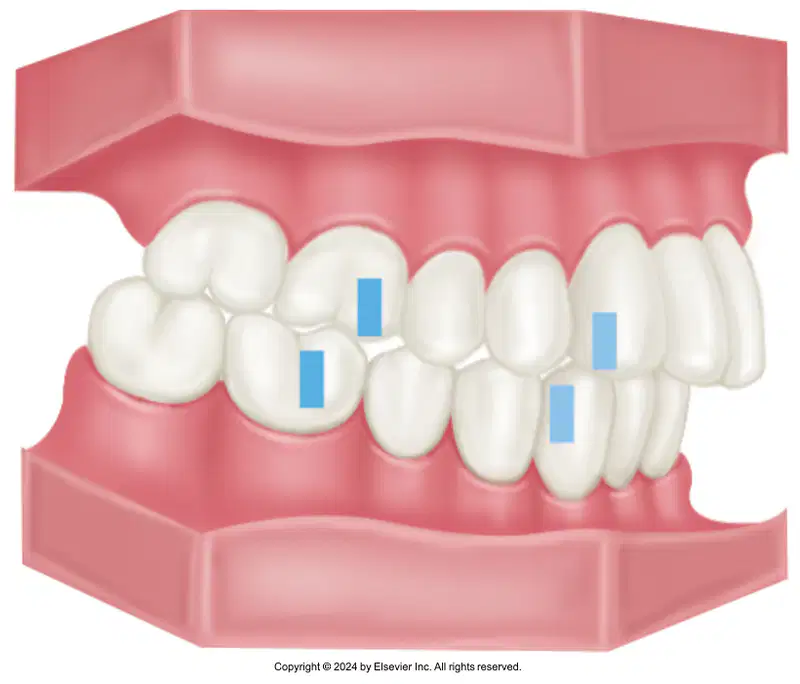
Match the Type of occlusion with the pictures shown
a)

1.

Class III (Mesioclusion)

b)

2.

Class II (distoclusion)

c)

3.

Centric Oclusion

46.

Label the following teeth numbers

47.

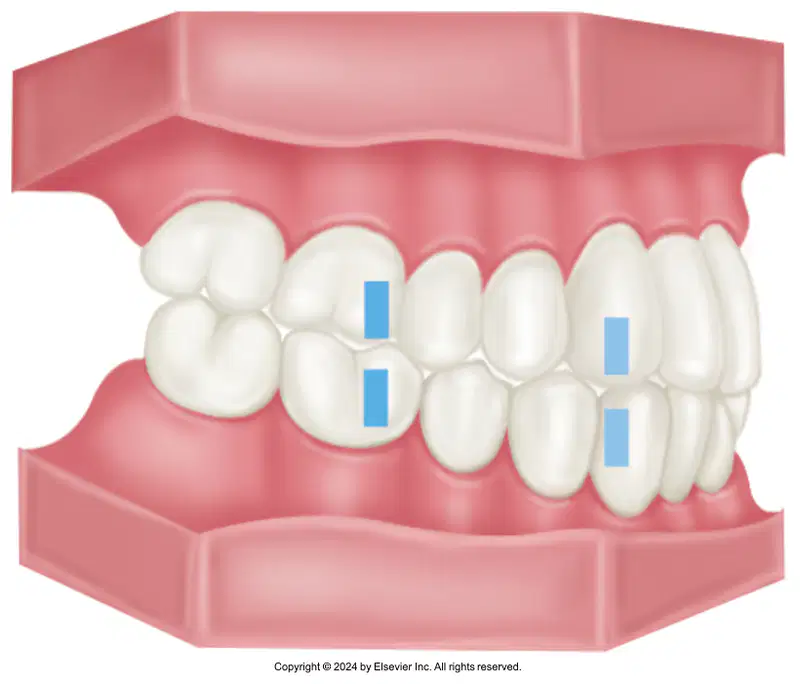
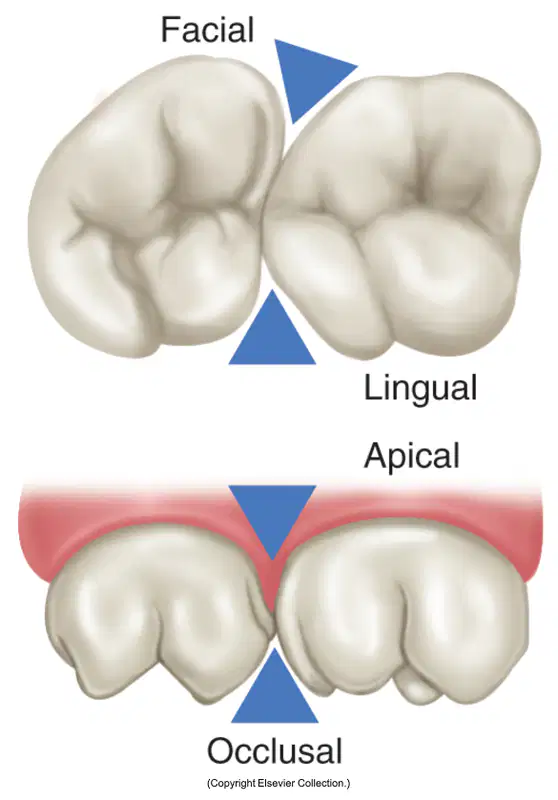
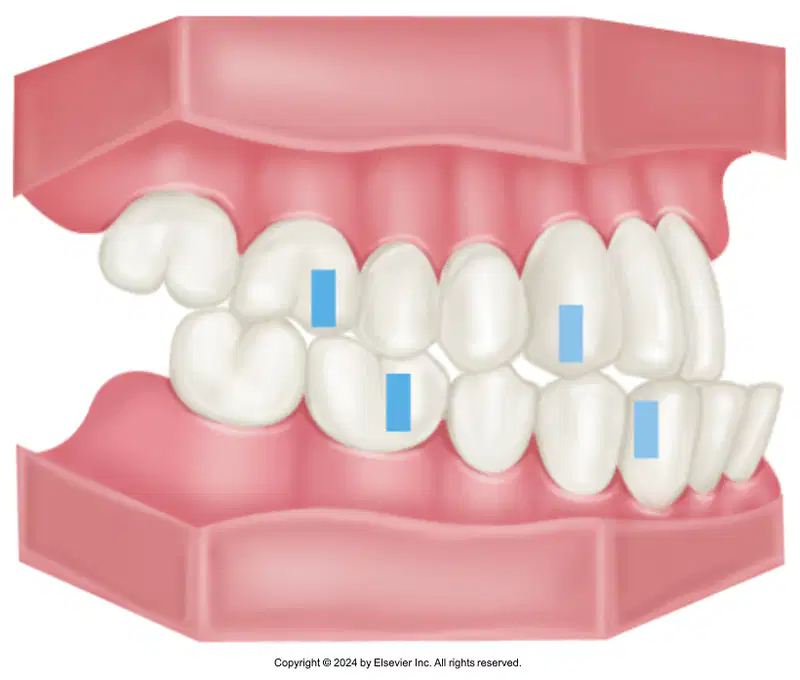
What are the blue arrows pointing to?

a)

contact areas

b)

interproximal space

c)

embrasures

d)

contours

48.

What tooth number is you Maxillary right 2nd molar

a)

2

b)

3

c)

13

d)

15

49.

What tooth number is your Mandibular left canine

a)

21

b)

22

c)

27

d)

28

50.

What tooth number is your mandibular right 1st premolar

a)

29

b)

20

c)

28

d)

22

51.

What tooth number is your maxillary left 1st molar

a)

16

b)

3

c)

13

d)

14

52.

What tooth number is your maxillary right Lateral incisor

a)

7

b)

8

c)

9

d)

10

53.

What tooth number is your mandibular left central incisor

a)

24

b)

25

c)

26

d)

23

54.

Reorder the following from closest to the root to furthest away

a)

Cementum

b)

Periodontal ligament

c)

Alveolar bone

1)
2)
3)
55.

What teeth numbers are our wisdom teeth?

a)

1,16,17,32

b)

2,15,18,31

c)

1,17,18,32

d)

1,15,16,32