
Font size
 Worksheets
Exam 3 replacement
Total questions: 19
Worksheet time: 18mins
Part of the DNA is not duplciated or is lost during DNA replication
inversion
deletion
duplication
translocation
A piece of a chromosome breaks off and re-attaches to a nonhomologous chromosome
inversion
deletion
duplication
translocation
An extra copy of a region in the DNA is produced, which can be in the normal part of the chromosome or in a different part.
deletion
inversion
duplication
translocation
A portion of the chromosome is flipped )reversed) and gets inserted back into the chromosome
inversion
deletion
duplication
translocation

The diagram represents which type of chromosomal mutation?
deletion
duplication
inversion
translocation
The statements below describe the type of mutation illustrated above. Select TWO correct answers that describe the action and/or effects of this type of mutation.
A chromosome breaks and the fragmented pieces re-attach to different chromosomes
this type of mutation is due to incorrect copying of the second chromosome of a matched pair
since the same genes are present, although rearranged, this type of mutation is usually non-harmful
mutations of this type usually result in cancerous cell division
the effects depend on which chromosomes break, and at which points. Normal gene function can be disrupted.
A (a) is a specific sequence of DNA that contains the instructions for making a protein. (b) occurs when the DNA sequence is copied into an mRNA molecule. mRNA then moves into the cytoplasm and looks for a (c) . (d) is where the information in the mRNA is used to assemble an amino acid into a polypeptide chain.
Reorder the followingA child is born with developmental delays and learning disabilities. After genetic testing, it is determined that the child has chromosomes in which a few have longer or shorter sections than normal. It is learned that the DNA in the gametes underwent a rearrangement/reattaching that led to these developmental issues. Click the type of genetic mutation in the diagram below that this situation describes.

deletion

duplication

inversion

translocation
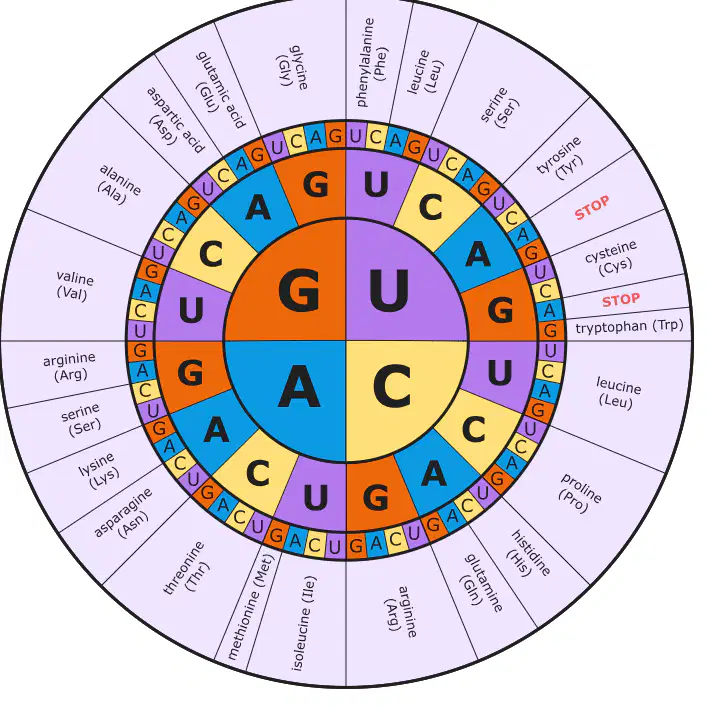
Use the codon chart to answer the question:
A mutation causes the following change in DNA.
Original DNA sequence:
TACTAATGGAAT
DNA sequence after mutation:
TACGAATGGAAT
Which amino acid substitution will result from this point mutation?
His is replaced by Ala
Iso is replaced by Leu
Try is replaced by Thr
Alg is replaced by Met
Label the diagram with the correct DNA mutation demonstrated
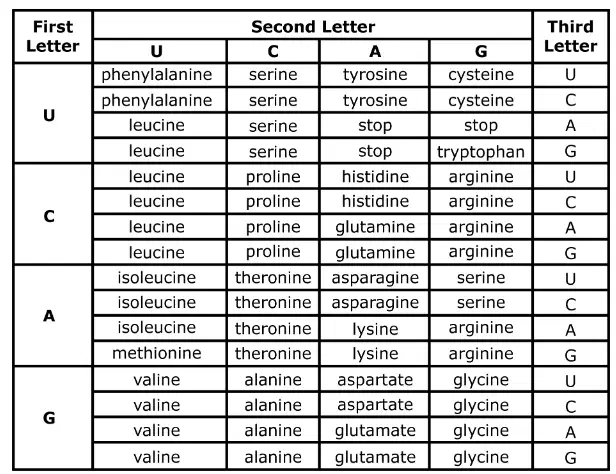
Use the above chart to answer the following question.
Which of the following shows a mutation that does not change the shape or the chemical nature of the protein so that it still functions normally?
UCC to GAC
UCC to UAA
UCC to UGC
UCA to AGC
Mutations within the DNA sequence of an organism can-
result only in alterations that are harmful to an organism
result only in alterations that are helpful to an organism
all result in alterations that do not effect the organism
results in alterations that can be both helpful and harmful
A very small portion of a DNA strand has a codon that reads TATGCT. The DNA first has to be transcribed by a special type of RNA called messenger RNA (mRNA).
Select the areas that show the TWO possible amino acids produced from mRNA.
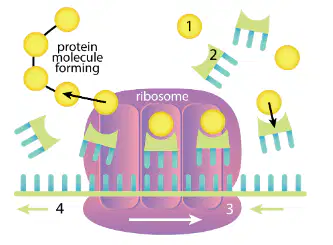
The diagram shows the process of translation. What is represented by the structure labeled 1?
amino acid
ribosome
tRNA
mRNA
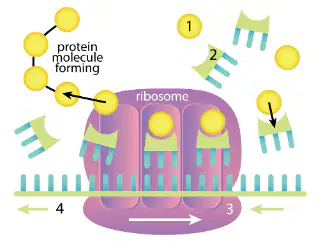
The diagram shows the process of translation. What is represented by the structure labeled 4?
amino acid
ribosome
tRNA
mRNA

What process is identified by number 1 in the diagram?
replication
transcription
translation
transmutation
Study the sentences describing the steps of protein synthesis. Which sequence places the steps in the correct order?
A single strand of DNA serves as a template for making mRNA
Messenger RNA carries the sequence of nucleotides to the ribosomes
Transfer RNA picks up individual amino acids and carries them to the ribosome
Ribosomal RNA bonds mRNA and tRNA
A protein is synthesized
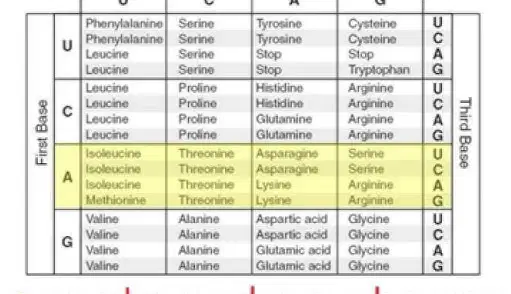
Use the following codon chart to see what amino acid chain would come from this mRNA strand:
5' AUGAUACAAUUA 3'
Methionine - Tyrosine - Asparagine - Leucine
Leucine - Glutamine - Isoleucine - Methionine
Methionine - Isoleucine - Glutamine - Leucine
Isoleucine -Methionine - Glutamate - Leucine

Which process is identified by number 2 in the diagram?
replication
transcription
translation
transmutation

