
 Worksheets
LF Economics Review
Total questions: 35
Worksheet time: 18mins
Name
Class
Date
1.
The gap between demand and the resources available to meet them is called what?
a)
Opportunity Costs
b)
Equilibrium
c)
Surpluses
d)
Scarcity
2.
Shelter is an example of which?
a)
NEED
b)
WANT
3.
Your phone is an example of which of the following?
a)
NEED
b)
WANT
4.
Wants are necessary for survival and needs are not.
a)
TRUE
b)
FALSE
5.
Water is a an example of which of the following?
a)
NEED
b)
WANT
6.
Giving money for a product is called which of the following?
a)
Economy
b)
Capital
c)
Price
d)
Exchange
7.
The way a country meets the unlimited wants and needs of its population is which of the following?
a)
Economy
b)
Capital
c)
Price
d)
Exchange
8.
If price goes up demand goes down is which of the following?
a)
Law of Supply
b)
Law of Demand
9.
If you buy something for a higher price because you perceive it to be of a higher quality what is this?
a)
Economy
b)
Competition
c)
Non-price competition
d)
Scarcity
10.
There are 5 Factors of Production.
a)
TRUE
b)
FALSE
11.
Which factor of production includes all of the people who work in an economic system?
a)
Land
b)
Labor
c)
Capital
d)
Demand
e)
Entrepreneurship
12.
A tractor that a farmer uses to plow his fields is an example of which factor of production?
a)
Land
b)
Labor
c)
Capital
d)
Demand
e)
Entrepreneurship
13.
Which factor of production includes all of the items that come from the earth to be used in making products and fulfilling demand.
a)
Land
b)
Labor
c)
Capital
d)
Demand
e)
Entrepreneurship
14.
Which factor of production includes money and equipment utilized in starting and operating a business?
a)
Land
b)
Labor
c)
Capital
d)
Demand
e)
Entrepreneurship
15.
A doctor could potentially be two different factors of production. Mark those two.
a)
Land
b)
Labor
c)
Capital
d)
Demand
e)
Entrepreneurship
16.
Which factor of production includes people like Steve Jobs, Walt Disney, Truett Kathy, Etc.
a)
Land
b)
Labor
c)
Capital
d)
Demand
e)
Entrepreneurship
17.
Factors of production and resources are the same thing.
a)
TRUE
b)
FALSE
18.
A building that a business runs out of, is which factor of production?
a)
Land
b)
Labor
c)
Capital
d)
Demand
e)
Entrepreneurship
19.
An economic system answers which of the following questions. Mark ALL that apply.
a)
What to produce.
b)
What is demand?
c)
How to produce.
d)
What is supply?
e)
For Whom to Produce
20.
There is an unlimited amount of resources available.
a)
TRUE
b)
FALSE
21.
Supply and Demand are representations of what people need and want as well as an economic systems purpose.
a)
TRUE
b)
FALSE
22.
Economic systems are identified by how they answer the 4 economic questions.
a)
TRUE
b)
FALSE
23.
Which type of economic system is the United States?
a)
MARKET
b)
MIXED
c)
TRADITIONAL
d)
COMMAND
24.
TRUE OR FALSE: Mixed economic systems have combinations of more than one economic system like some government regulation on business.
a)
TRUE
b)
FALSE
25.
Which type of economic system allows business to answer the three economic questions?
a)
MARKET
b)
MIXED
c)
TRADITIONAL
d)
COMMAND
26.
North Korea and Cuba are examples of which type of economic system where the government answers the three economic questions.
a)
MARKET
b)
MIXED
c)
TRADITIONAL
d)
COMMAND
27.
All of those that are willing and able to purchase something are considered which of the following?
a)
Supply
b)
Demand
c)
Equilibrium
d)
Entrepreneurs
e)
For Whom to Produce
28.
Needs and wants are what create the demand in an economic system.
a)
TRUE
b)
FALSE
29.
The amount of something that is available to meet demand is called what?
a)
Supply
b)
Demand
c)
Equilibrium
d)
Entrepreneurs
e)
For Whom to Produce
30.
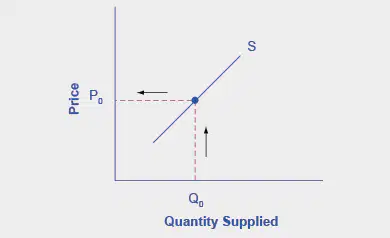
This curve slopes upward.
a)
Supply
b)
Demand
c)
Equilibrium
d)
Entrepreneurs
e)
For Whom to Produce
31.
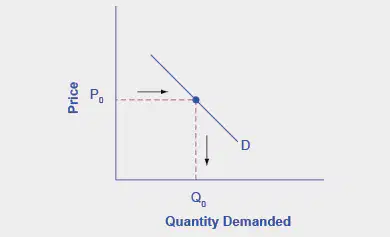
This curve slopes downward.
a)
Supply
b)
Demand
c)
Equilibrium
d)
Entrepreneurs
e)
For Whom to Produce
32.
When price goes up what happens to demand?
a)
Goes Up
b)
Goes Down
c)
Stays the Same
33.
When price goes up what happens to supply?
a)
Goes Up
b)
Goes Down
c)
Stays the Same
34.
If there is a shortage of something, what would happen to the price?
a)
Goes Up
b)
Goes Down
c)
Stays the Same
35.
If there is a surplus of something, what would happen to the price?
a)
Goes Up
b)
Goes Down
c)
Stays the Same
100 %

