
 Worksheets
Packet Check Inside Earth 25
Total questions: 63
Worksheet time: 2hrs 6mins
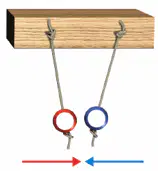
What does this image show
North pole to North pole
South pole to south pole
North pole to south pole
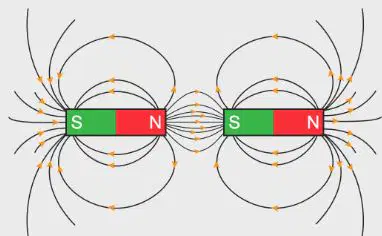
These magnets are
Attracting
Reppelling
Neutral
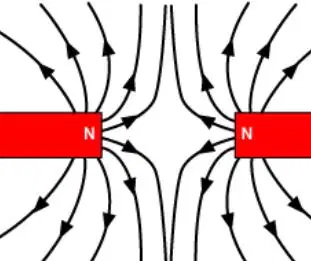
These magnets are
Attracting
Reppelling
Neutral
Magnetic field lines help us to (Choose all that apply)
Visualize magnetic forces
Predict how magnets will interact
Measure temperature
Predict the gravitational field
What are the Laws of magnetism?
Every particle attracts every other particle
An object at rest stays at rest and an object in motion stays in motion
For every action, there is an equal and opposite reaction.
Like poles repeal each other and unlike poles attract each other
How do animals use Earth's magnetic field
The earth's geographic north pole is which magnetic pole?
The earth's magnetic field is evidence for what?
The liquid metal in Earth's outer core.
What is the formula for density?
What is the formula for volume?
Volume = length × width × height
What are the units for volume?
Cubic inches
Cubic centimeters (cm³), liters (L) or milliliters (ml)
What is the unit for mass?
Inches (in)
gram (g)
What is the unit for density?
Grams per milliliters g/ml
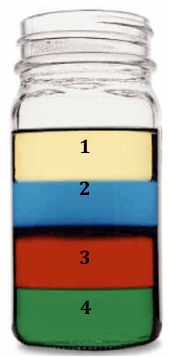
How does density affect the movement of seismic waves?
Which wave(s) can pass through the crust?
s-wave
P-wave
Which wave(s) can pass through the mantle?
s-wave
P-wave
Which wave(s) can pass through the outer core?
s-wave
P-wave
Which wave(s) can pass through the inner core?
s-wave
P-wave
P-waves CAN pass through the shadow zone.
True
False
S-waves CANNOT pass through the shadow zone.
True
False
The moho Discontinuity has which of the following properties? Choose all that apply.
Waves speed up when they reach the more dense areas
Waves speed up when they reach the less dense areas
Waves slow down when they reach the more dense areas
Waves slow down when they reach the less dense areas
What is true about the shadow zone?
All Waves pass
No Waves pass
Light Waves pass
The earth passes through the moons shadow
How do waves travel through the earth?
straight through the layers
They bend as they go through the layers
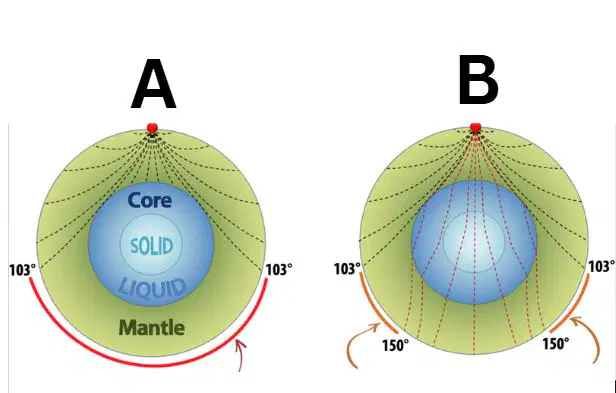
Which image represents s-wave shadow zone?
A
B
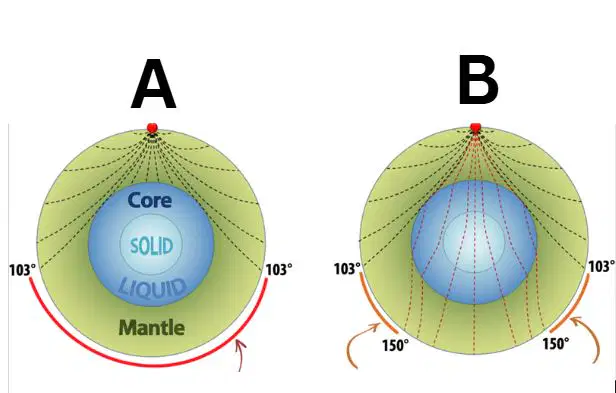
Which image represents p-wave shadow zone?
A
B
What evidence do we have to help understand layers we cannot directly observe?
Seismic wave behavior
Earth’s magnetic field
Core travel
pictures
There is a boundary between the crust and the mantle that was discovered by the data from seismic waves. This boundary marks a change in composition, which in turn affects density. The speed of P waves and S waves increases at this boundary. Which statement best describes the difference between the crust and the mantle?
The crust is denser than the mantle.
The crust is liquid and the mantle is solid.
The crust is solid and the mantle is liquid.
The crust is less dense than the mantle.

Identify the layers of the Earth shown in the diagram. from A-D
inner core, outer core, mantle, crust
crust, mantle, inner core, outer core
crust inner core, outer core, mantle
mantle, crust, inner core, outer core
What is the matter through which a wave travels called?
Fluid
Medium
Solid
Gas
Do particles travel with the wave?
Yes, they travel with the wave.
No, only energy travels with the wave.
Yes, they travel faster than the wave.
No, they remain stationary.
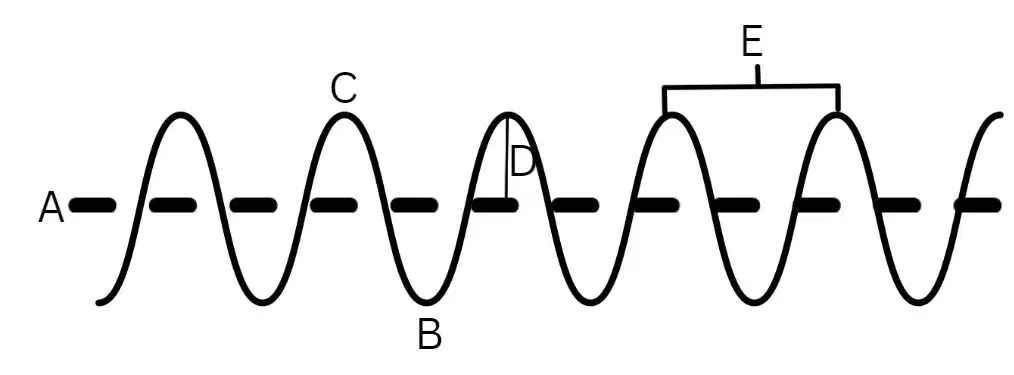
Rest
A
B
C
D
Crest
A
B
C
D
Trough
A
B
C
D
Amplitude
A
B
C
D
E is
wave
wavelength
amplitude
crest
Surface waves are a type of wave that occurs when wave energy meets:
A single medium
Two mediums
Three mediums
No medium
What is a key characteristic of surface waves?
They travel through solid objects
They occur at the interface of two different mediums
They are invisible
They only occur in space
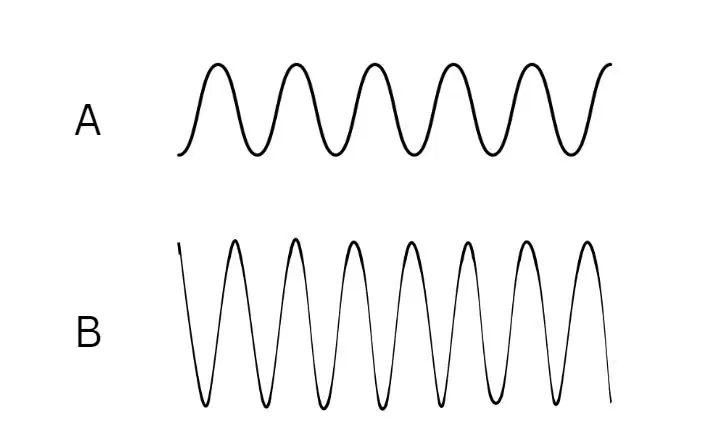
Which wave has a higher frequency?
A
B
What is the unit for frequency?
hz
km
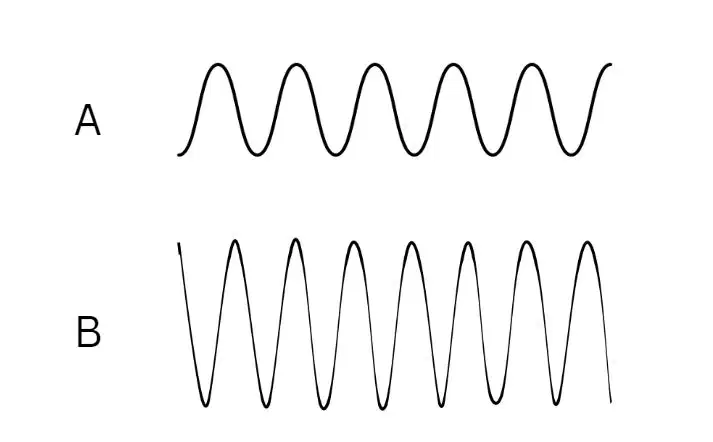
Choose all that apply
A has a frequency of 5.5 hz
B has a frequency of 5.5 hz
A has a frequency of 7.5 hz
B has a frequency of 7.5 hz
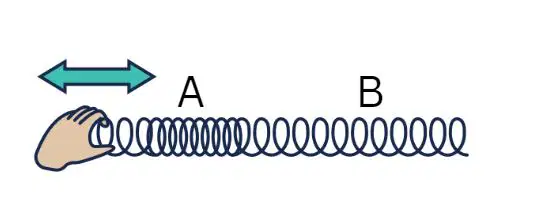
A
Compression
Rarefaction
B
Compression
Rarefaction
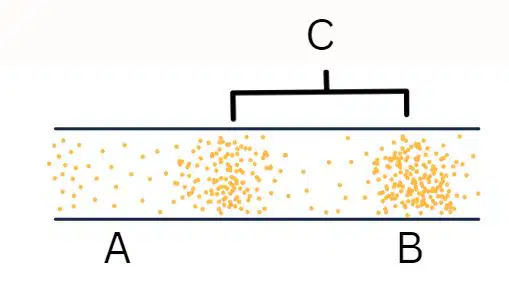
A
Compression
Rarefaction
Wavelength
C
Compression
Rarefaction
Wavelength
Fluid in science is (choose all that apply)
Solid
Liquid
Gas
which statement is true?
The focus is below the surface where the earthquake starts and the epicenter is on the surface above the focus
The Epicenter is below the surface where the earthquake starts and the focus is on the surface above the epicenter
Both the focus and epicenter are below the surface
________ are the slowest seismic waves and last to arrive.
Which is true
Granite is more dense and basalt is less dense
Granite is less dense and basalt is more dense
Granite and basalt have the same density
Granite is the most common rock _________
Crust
Oceanic crust
Continental crust
Mantle
Basalt is the most common rock _________
Crust
Oceanic crust
Continental crust
Mantle
Crust
Rigid rock, dirt, soil
Solid rock
Liquid Metal
Solid Metal
Mantle
Rigid rock, dirt, soil
Solid rock
Liquid Metal
Solid Metal
Outer core
Rigid rock, dirt, soil
Solid rock
Liquid Metal
Solid Metal
Inner core
Rigid rock, dirt, soil
Solid rock
Liquid Metal
Solid Metal
Crust and upper mantle
Asthenosphere
Mesosphere
Lithosphere

What kind of wave is pictured? Choose 2
S-wave
P-wave

What kind of wave is pictured? Choose 2
S-wave
P-wave
What are the 2 mediums of a seismic surface wave traveling along oceanic crust?
Geosphere
Atmosphere
Hydrosphere
What are the 2 mediums of a seismic surface wave traveling along continental crust?
Geosphere
Atmosphere
Hydrosphere
Describe your answers on page 7

