
NEW
Font size
 Worksheets
Teaching as a Profession Final Exam
Total questions: 70
Worksheet time: 1hrs 10mins
How should a teacher manage student behavior?
Lash out and raise your voice
Setting clear expectations, creating positive reinforcements and communicating with parents
Ignore behavior
Taking away recess time
A good teacher should be?
Loving and Supportive
Dismissive
Judgemental
Insensitive
Which of the following is NOT a place that teachers work as a part of the field of education?
Department Stores
Literacy Programs
Schools
Technical Colleges
What is NOT considered an ethical use of social media in the classroom for teaching and
learning?
(Digital Ethics: Responsible Social Media Practices for Educators, 2018)
Friending or adding students on personal accounts
Practice digital citizenship
Maintain respectful identify online
Occupational Safety Health Administration helps workers be safe on their jobs.
True
False
The creation of OSHA provided this important right to workers:
The right to equal employment opportunities.
The right to privacy.
The right to pension benefits.
The right to a safe and healthful workplace.
Which of the following could be the reason for the teacher’s suspension from the practice of the teaching profession?
Immoral, unprofessional or dishonorable conduct
Observing proper procedures in obtaining a certificate of registration
Faithfulness to the code of ethical and professional standards for professional teachers
Willingness to attend seminars, workshops, conferences and the like or the continuing education program prescribed by the Board and the Commission
Which of the following is NOT an ethical behavior?
Collaboration
Punctuality
Appropriate technology use
Misrepresentation
Teachers should not reveal _________information concerning students, unless disclosure serves lawful professional purposes or is required by law.
factual
ethics
students
confidential
Which of the following is an example of a right that workers should expect to have in the workplace:
Freedom from discrimination
Flexible work schedule
Unlimited personal time
Access to company information
What is community service?
Getting paid to do a job.
volunteering to do something for your family.
Volunteering to do free work to benefit your community.
Getting compensated to do work.
You can develop skills by doing community service.
True
False
When working where materials are stored overhead or where overhead cranes are being used, what safety equipment should be worn?
Hard hat
Steel-toed shoes
Protective clothing
Gloves
What emotion might you feel when a child doesn't understand something obvious to you?
Joy
Frustration
Indifference
Amusement
What is a common reason children may not understand something being explained to them?
They are not paying attention.
They are not capable of understanding the concept yet.
They are being naughty.
They are not interested.
Who is mentioned as a famous psychologist influential in cognitive development?
Sigmund Freud
Jean Piaget
B.F. Skinner
Carl Jung
What was Jean Piaget's main contribution to psychology?
Development of psychoanalysis
Observations of children's cognitive development
Creation of the first IQ test
Study of adult behavior
What did Piaget notice about children of certain ages?
They excelled in mathematics
They gave the same types of incorrect answers
They had superior memory skills
They were more creative
According to Piaget, what is the first stage of cognitive development?
Sensorimotor stage (0-2 years old)
Preoperational stage (2-7 years old)
Concrete operational stage (7-11 years old)
Formal operational stage (11 years old through adulthood)
What age range does the preoperational stage cover in Piaget's theory?
0-2 years old
2-7 years old
7-11 years old
11 years old through adulthood
Which stage in Piaget's theory is characterized by logical thinking about concrete events?
Sensorimotor stage
Preoperational stage
Concrete operational stage
Formal operational stage
At what stage does Piaget suggest individuals begin to think abstractly and reason logically?
Sensorimotor stage
Preoperational stage
Concrete operational stage
Formal operational stage
At what age do tertiary circular reactions occur in the sensorimotor stage?
0-2 months
4-8 months
12-18 months
18-24 months
Which substage involves infants becoming more object-oriented and repeating interesting acts?
First habits, primary circular reactions
Secondary circular reactions
Tertiary circular reactions, novelty, & curiosity
Internalization of schemes
During which substage do infants experiment with new behaviors and show curiosity?
Simple reflexes
Coordination of secondary circular reactions
Tertiary circular reactions, novelty, & curiosity
Internalization of schemes
What ability do infants develop during the "Internalization of schemes" substage?
Coordination of sensations and reflexes
Use of primitive symbols and forming lasting mental images
Repeating pleasurable acts
Coordination of vision and touch
What is the main purpose of playing peek-a-boo with children in the sensorimotor stage?
To teach them language skills
To develop object permanence
To improve their motor skills
To enhance their social skills
At what age do children enter the preoperational stage?
One year
Two years
Three years
Four years
During the preoperational stage, children understand that items and people remain the same even if they look different. This is known as understanding what?
Conservation
Identity
Reversibility
Classification
In the preoperational stage, children start to understand numbers and quantity. Which concept is an example of this understanding?
Speed
Weight
More or bigger
Temperature
At what age does the concrete operational stage typically begin?
Five
Seven
Nine
Eleven
Which of the following abilities improve during the concrete operational stage?
Language abilities
Categorization abilities
Musical abilities
Artistic abilities
What type of abilities allow children to perform more complicated mathematical operations during the concrete operational stage?
Verbal abilities
Numerical abilities
Physical abilities
Social abilities
During the concrete operational stage, children become better at estimating which of the following?
Colors and shapes
Time and distance
Sounds and rhythms
Textures and patterns
What cognitive ability allows children to understand that items can be returned to their original states?
Decentering
Identity
Reversibility
Conservation
At what age do children enter the formal operational stage?
9
11
13
15
What characterizes the formal operational stage?
Concrete thought
Abstract thought
Sensory exploration
Physical coordination
How do children in the formal operational stage approach problems compared to younger children?
Haphazardly
Systematically and logically
Emotionally
Randomly
How can parents and caregivers help PREVENT toxic stress in children:
provide a nurturing, safe and stable environment
argue excessively in front of the children
meet the children's physical and emotional needs once a week
ignore children when they are behaving well
ACEs are traumatic events that occur before the age of:
birth
three
eighteen
twelve
Examples of household dysfunction are:
incarceration
loving parents
all needs being met
support from adults
Which of the following statements are ways parents can provide an atmosphere that PREVENTS toxic stress?
encourage children to hold their negative feelings inside
help children learn to cope with adversity
see parents drinking excessively and stealing items from Walmart
help children learn to get in to disagreements at school with their teachers
Which of the following situations could leave a child with ACEs?
peacefully arguing among parents
siblings fussing with each other daily
domestic violence
attending church on Sundays
An example of a classroom procedure would be
Coming in and getting started on bell work
No talking
Being tardy to class
Lunch Detention
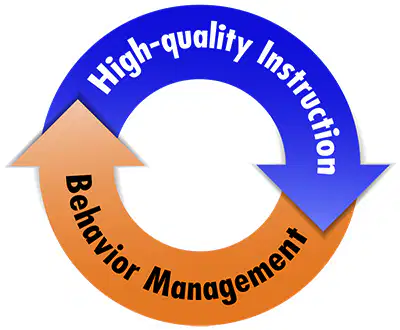
Disruptive behaviors can result in:
Lost instructional time (according to some sources, up to 50%)
Decreased student engagement and motivation
Heightened teacher stress and frustration
All of the them are correct.

Although rules vary across classrooms, they often address a common set of expected behaviors:
Be respectful
Be ready
Be responsible
Be safe
all of the answers.
You cannot teach behavior, it is inherited.
True, behavior must only be punished.
False, there are a few behaviors that can be learned
True, students act like their parents.
False, a majority of behavior is learned.
How can parents and teachers establish trust and mutual respect?
By actively listening, being open and honest in communication, setting clear expectations and boundaries, showing empathy and understanding, and collaborating in decision-making processes.
By ignoring the concerns and opinions of children and students.
By being secretive and withholding information.
By imposing strict rules and punishments without explanation.
What are some strategies for maintaining open and ongoing communication?
Weekly meetings, avoiding conflict, and one-way communication.
Active listening, transparency, clear language, regular updates, and encouraging feedback.
Ignoring feedback, using technical jargon, and infrequent updates.
Closed-door policy, lack of transparency, and poor listening skills.
What are some potential benefits of involving parents in the classroom?
Improved student performance, increased parent satisfaction and engagement, better communication between home and school, and a stronger sense of community.
No impact on student performance, decreased parent satisfaction and engagement, limited communication between home and school, and a lack of community.
Increased student performance, decreased parent satisfaction and engagement, limited communication between home and school, and a weaker sense of community.
Decreased student performance, decreased parent satisfaction and engagement, poor communication between home and school, and a weaker sense of community.
What is a good trait of working in a group?
Teamwork
Working Alone
Not Helping
Doing all the work yourself
A leader should:
Be bossy
Make all of the decision
Show respect and communicate
Do all of the work
Poor communication...
has little effect on teams.
is one of the main reasons a team fails.
is easily corrected.
does not matter.
An example of a classroom procedure would be
Coming in and getting started on bell work
No talking
Being tardy to class
Lunch Detention
Which of the following is a benefit of effective classroom management?
Promotes respect
Increases homework load
Reduces teacher workload
Decreases student engagement
Which of the following is a way teachers can create a positive learning environment?
Strictly enforcing rules without any flexibility
Encouraging competition among students
Building relationships with students
Limiting student participation
Classroom management should prioritize:
Punishment over guidance.
Silence over communication.
Respect and mutual understanding.
Teacher convenience over student needs.
Lesson plans
Document what is being taught
Better prepare teachers to teach the class
Help teachers think through what they will teach
All of the above
The following are NOT examples of summative assessments:
written exams
final essays
final projects
In-class discussions
What is the purpose of creating learning objectives in lesson planning?
To confuse students with unnecessary information
To make the lesson plan longer and more complicated
To give students too much work to do
To clarify what students should know, understand, and be able to do as a result of the lesson.
What are some effective strategies for engaging students in the learning process during lesson planning?
By using only lecture-based teaching methods
By incorporating interactive activities, real-world applications, and student-centered learning experiences.
By assigning excessive amounts of homework
By ignoring student feedback and interests

