
 Worksheets
Static Electricity & Electric Circuits
Total questions: 74
Worksheet time: 1hrs 9mins

the positively charged particle in an atom, never leaves the nucleus, determines the element
proton
neutron
electron
the negatively charged particle in an atom, moves freely, can be released, shared, or “stolen” from an atom
proton
neutron
electron
The difference between attraction and repulsion is that to attract is to pull something closer and repel is to push something away.
True
False
An object that is neutral contains the same number of electrons and protons.
True
False
What is the major difference between static electricity and current electricity?
Current electricity involves a continuous flow of elecrons; static electricity is a sudden transfer of protons
Current electricity can be deadly; static electricity is almost always safe
In current electricity, there's a single transfer of electrons; in static electricity, there's a steady flow of electrons
Current electricity involves a flow of electrons; static electricity involves a single transfer of electrons
During a lab a balloon was rubbed with a wooly fabric. This is an example of which type of charging?
conduction
friction
induction
the charging of an object by the contact of a charged object to a neutral object (like touching a door knob)
induction
conduction
friction
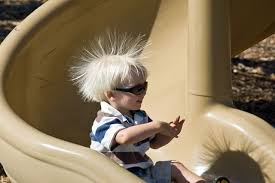

If the balloon has a negative charge, the hair must have what charge?
negative
positive
neutral
For an object to have a positive charge, it must ____.
lose electrons
gain electrons
lose protons
gain protons
Select all that describe insulators.
allow charges to flow easily
do not allow charges to flow easily
plastic
metal
surround a wire

The image illustrate the concept of
Friction
Indaction
Induction
Static shock


A complete, unbroken path that charges can flow through is called an __________________.
conductor
electric circuit
electric current
insulator


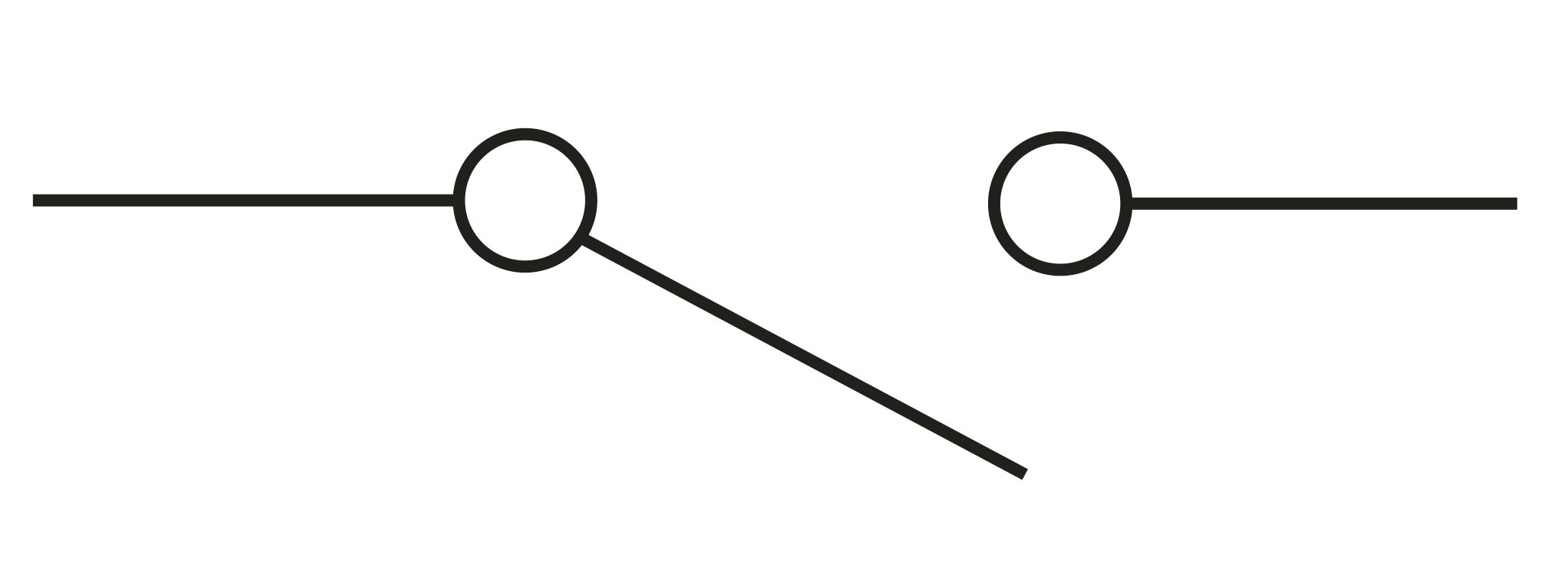

This is an example of a ______ circuit
Series
Parallel
Open
Dihexihedral
The continuous flow of electric charges through a material
electric current
electric circuit
voltage
parallel circuit
Which equation can be rearranged to calculate the the electric current given?
I = Q ÷ t
Q = It
I = Qt
I = t ÷Q
if 2 C are passing in the circuit in 2 seconds the current is:
2 A
4 A
1 A
4C
If too much electric current passes through a circuit, the wires can
make batteries
cool down
conductor
overheat

Most circuits include a device that opens and closes the circuit. This device allows you to turn a light bulb on and off. This device is a
computer
wire
switch
flashlight
What unit is used to measure voltage?
Ohms
Omega
Volts
Amps
Calculate current if a charge of 10 Coulombs flows past a point in 5 seconds
2 Amps
50 Amps
0.5 Amps
Calculate the charge that passes a point in 20 seconds if 500mA flows for this time.
10 000 Coulombs
25 Coulombs
10 Coulombs
0.025 Coulombs
The correct symbol equation is:
Q = I / t
I = Q x t
t = I / Q
Q = I x t
To measure current we use
an ampmeter
a voltmeter
a geiger counter
an ammeter

What is a series circuit?
A series circuit is a circuit in which the components are connected in a single loop, so the current flows through each component in sequence.
A series circuit is a circuit in which the components are connected in a random order, so the current flows in unpredictable paths.
A series circuit is a circuit in which the components are not connected to each other, so the current does not flow.
A series circuit is a circuit in which the components are connected in parallel, so the current flows through each component simultaneously.

What is a parallel circuit?
An electrical circuit that has no path for the current to flow.
An electrical circuit that has only one path for the current to flow.
An electrical circuit that has multiple paths for the current to flow.
An electrical circuit that has multiple sources of current.

What is an open circuit?
A circuit that allows current to flow freely without any resistance.
A circuit that is closed and allows current to flow continuously.
A circuit that has a break or gap in the path of current flow.
A circuit that has a high voltage and can cause electric shock.

What is a closed circuit?
A closed circuit is a complete and unbroken path for an electric current to flow.
A closed circuit is a circuit that does not allow any current to flow.
A closed circuit is a circuit that only allows direct current to flow.
A closed circuit is a path that is open and broken for an electric current to flow.

In a series circuit, what happens to the current if one bulb goes out?
The current increases.
The current stops flowing.
The current decreases.
The current remains the same.
Circuit is now open.

What is the symbol for a battery in a circuit diagram?

Circle with a plus sign (+) inside

Square with a plus sign (+) inside

Triangle with a plus sign (+) inside

Long line with a shorter line parallel to it and a plus sign (+) at the end
Which of the following are NOT symbols of a lamp (Bulb) in electrical circuits?


What is the symbol for a switch in a circuit diagram?


What components are in this schematic diagram?
battery, switch, bulb, wire
switch, switch, bulb
battery, switch, bulb, motor

Which schematic circuit matches this circuit picture?


This is the symbol for a
meter
ammeter
voltmeter
magnetising coil

This is the
A.C. power supply
Ammeter
Temperature sensor
LED


What makes up an electric circuit?
Bulb and battery
Bulb, battery and switch
Bulb, battery and wire

Why is a battery important in an electrical circuit?
As a source of energy.
As a path for electricity to flow through.
As a connector to connect all parts of a circuit.

Why must parts of a circuit be properly connected before the bulb can light up?
To ensure that the bulb can light up.
To ensure that the battery can produce light in a closed circuit.
To ensure that electric current can flow through the closed circuit.

Look at the diagram. Why did the bulb not light up?
The bulb was fused.
The battery had not enough electric current to light up the bulb.
The switch was opened and prevented electric current from flowing through the circuit.

The diagram shows a complete circuit but the bulb did not light up. Why?
The plastic spoon is an insulator of electricity and prevented electric current from flowing through the circuit.
The plastic spoon is not connected properly and prevented electric current from flowing through the circuit.
The plastic spoon is a conductor of electricity and prevented electric current from flowing through the circuit.

What kind of circuit is this?
series
parallel

What kind of circuit is this?
series
parallel

Are the currents at A1 and A2 same?
Yes, they are same
No, they are different
When you remove a bulb from a three bulb circuit, and the other two bulbs go off, then the bulbs must have been connected in parallel.
true
false
What is the main difference between parallel and series circuits?
in series circuit, charges flow one path; charges in parallel circuit flow in multiple paths
in series circuit, charges flow multiple paths; charges in parallel circuit flow in one path
in parallel circuit, several lamps work separately; in series circuit, several lamps work independently
in parallel circuit, if one lamp breaks then the other lamps will also off; in series circuit, if one lamp breaks then the other lamps still works

