
 Worksheets
Exploring Chemical Reactions
Total questions: 36
Worksheet time: 1hrs 12mins
How do you balance the equation H2 + O2 → H2O?
H2 + 2 O2 → H2O
H2 + O2 → H2O
2 H2 + O2 → 2 H2O
2 H2 + 2 O2 → 2 H2O
Identify the type of reaction: 2Na + Cl2 → 2NaCl.
Decomposition reaction
Synthesis reaction
Double displacement reaction
Single displacement reaction
Wich one is a decomposition reaction?
Mg2O --> Mg + O2
2HCl <-- H2 + Cl2
2LiBr + K2S --> Li2S + 2KBr
Na2O + H2 --> 2Na + H2O
Wich one is a double replacement reaction?
Mg2O --> Mg + O2
2HCl <-- H2 + Cl2
2LiBr + K2S --> Li2S + 2KBr
Na2O + H2 --> 2Na + H2O
What is the difference between an ionic bond and a covalent bond?
Ionic bonds are formed only in metals, while covalent bonds are formed in metaloids.
Ionic bonds involve sharing electrons, while covalent bonds involve attraction between charged particles.
Ionic bonds involve electron transfer and attraction between ions, while covalent bonds involve electron sharing between atoms.
Which type of bond ocurrs between one metal and one non metal?
Metallic bond
Hydrogen bond
Covalent bond
Ionic bond
What is a synthesis reaction? Provide an example.
A synthesis reaction occurs when two substances are mixed without any chemical change.
An example of a synthesis reaction is the combustion of methane: CH₄ + 2O₂ → CO₂ + 2H₂O.
A decomposition reaction is the breakdown of water: 2H₂O → 2H₂ + O₂.
An example of a synthesis reaction is the formation of water: 2H₂ + O₂ → 2H₂O.
What is the law of conservation of mass in relation to chemical reactions?
Mass can be created or destroyed in reactions.
The total mass increases during chemical reactions.
Mass is irrelevant in chemical reactions.
The total mass remains constant in chemical reactions.
What is an example of a single replacement reaction?
Fe + CuSO4 → FeSO4 + Cu
H2 + O2 → 2H2O
Ca + 2H2O → Ca(OH)2 + H2
Zn + 2HCl → ZnCl2 + H2
What is a chemical reaction?
A chemical reaction is a process that only occurs in living organisms.
A chemical reaction is a process where substances (reactants) are transformed into different substances (products) through the rearrangement of atoms.
A chemical reaction is when substances are combined to form a mixture.
A chemical reaction is the mixing of two substances without any change.
Which of the following is an example of an element?
Water
Carbon
Salt
Sugar
Which of the following is a decomposition reaction?
2H2+O2→2H2O
2Na2O→4Na+O2
CH4+2O2→CO2+2H2O
Na+Cl2→NaCl
What is the main difference between elements and compounds?
Elements are made of atoms, compounds are made of molecules
Elements are pure substances, compounds are mixtures
Elements cannot be broken down into simpler substances, compounds can
Elements are always gases, compounds are always solids
Which of the following is an example of a compound?
Oxygen
Water
Hydrogen
Nitrogen
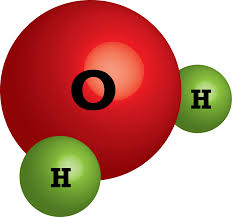
How many atoms of Hydrogen are in this compound?
1
2
3
4

In this chemical equation, the elements in red are the_______.
Products
Reactants
Subscripts
Coefficients
What does the Law of Conservation of Mass state?
Matter cannot be created or destroyed in a chemical reaction.
Matter can only be destroyed in a chemical reaction.
Matter can only be created in a chemical reaction.
Matter can be created and destroyed in a chemical reaction.
2H2 + O2 --> 2H2O
2H2 + O2 --> 2H2O
Example: H2
Al + O2 --> 2Al2O3
Ex: 2H2 + O2 --> 2H2O
Mg + __HCl ---> MgCl2 + H2
2C2H2 + 5O2 --> 4CO2 + 2H2O
The coefficient in 3H2O is
6
5
2
3
How many Hydrogen are in 4 H2O?
6
8
2
4
Balance this equation
_Al +_HCl --> _H2 +_AlCl3
2,6,3,2
it's already balanced
4,12,3,4
2,1,4,5
three hydrogen (H)
one sulfur (S)
four oxygen (O)

Number seven (7) is indicating ____ of the equation.
reactants
products
equation
formulas

The three (3) indicates which part?
reactants
products
equation
formulas
Predict the products for the this Double Replacement reaction:
Ag3N+ KCl →
AgCl + K3N
AgK + ClN3
KAg + N3Cl
ClAg + NK3
Predict the product of this synthesis reaction:
Al+3 + S-2 →
AlS
AlS5
Al2S
Al2S3
Predict the products for the decomposition of aluminum oxide, Al2O3 →
Al + O2
O + Al2
O3Al2
Al + H2O
Predict the products for the this Single Replacement reaction: (Copper has a charge of 1+)
Mg + CuCl →
MgCl2 + Cu
Mg + Cu
MgCu + Cl2
MgCl + Cu2
Predict the products of this single replacement reaction: Na + MgBr2 →
Br2Na + H2
NaBr + Mg
NaMg + Br2
NaMgBr2

