
NEW
Font size
 Worksheets
Test Review
Total questions: 20
Worksheet time: 24mins
What is the formula for Boyle's Law?
P1V1=P2V2
P1V1/P2V2
P1V2=P2V1
P1/V1=P2/V2
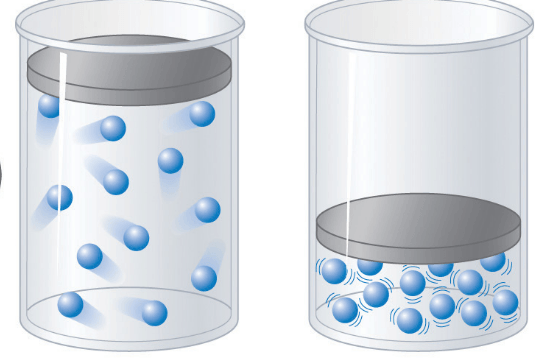

Charles's Law relates which 2 variables?
pressure and volume
temperature and pressure
temperature and volume
amount and volume
Which quantity is a measure of temperature?
1.5 atm
344 K
17 L
28 mol
What units for temperature must be used in gas law equations?
T
Celsius
Liters
Kelvin

The equation shown relates volume and temperature. What must be constant?
volume
pressure
temperature
molar mass

When solving a gas law problem using this equation, what must remain constant?
amount of gas
volume
pressure
temperature
How do the particles move in diffusion?
From a region of low concentration to a region of high concentration
From a region of high concentration to a region of low concentration
From a region of low concentration to a region of low concentration
From a region of high concentration to a region of high concentration
How long does diffusion last?
Until the concentration of particles in the system is equal
(Select this answer and I swear i'll make it harder for you in the assessment task)
Until a region in the system has a greater concentration of particles than the other
Until the particles disappear from the system
What does a 'region with high concentration' mean?
An area with a SMALL number of particles
An area with a LARGE number of particles
An area with an UNEVEN number of particles
An area with no particles
The movement of particles is __________, resulting in the particles being spread throughout the container
Structured
In a straight line
Random
In curved, way motions

