
 Worksheets
Astro 1500 Nov 12, 2024 Trivia - Exam 3 Review (Lects. 15-21)
Total questions: 23
Worksheet time: 12mins

What happens to a star IMMEDIATELY after running out of H?
The core contracts
The star begins to expand
The star goes super novae
The star begins fussing helium

Why are white dwarfs so hot?
White dwarfs are condensely packed and fuse hydrogen at a faster rate
White dwarfs are stars that have run out of hydrogen fuel and are burning heavier elements
White dwarfs produce radiation through electron degeneracy pressure
White dwarfs are stellar cores, which were the hottest part of the star

White dwarfs are not fusing anymore elements, so why don't white dwarfs collapse?
Electron Degeneracy Pressure
Blackbody Radiation
Hydrostatic Equillibrium
Gravity is much weaker and thus can't collapse a white dwarf
True or False: Merging Neutron Stars ALWAYS form a black hole
True
False

Which of the following stars CANNOT go supernovae?
A singular star with a solar mass of 8 Suns
A singular star with a solar mass of 7 Suns
A star in a binary system with a solar mass of 5 Suns
A singular star with solar mass of 10 Suns

Which of the following elements cannot be fused in a star?
Lithium
Silicon
Sodium
Iron

Which of the following is NOT a possible way for a black hole to form?
A neutron star merges with another neutron star
A singular star with a solar mass of 20 Suns goes supernovae
A singular star with a solar mass of 25 Suns goes supernovae
A white dwarf consumes mass from a nearby star
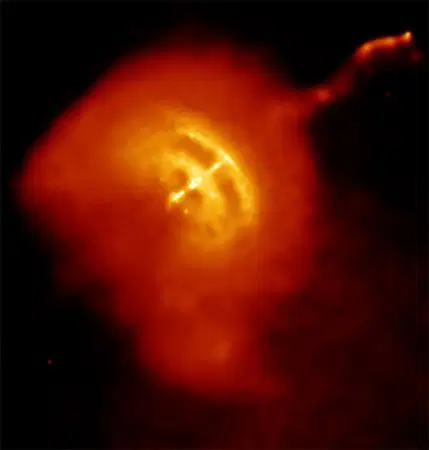
Which of the following is false about Pulsars?
Pulsars are used to find stellar distances
Pulsars produce a beam of light by motion of e- in magnetic field
Pulsars are rotating neutron stars
Pulsars typically start rotating a tens of ms
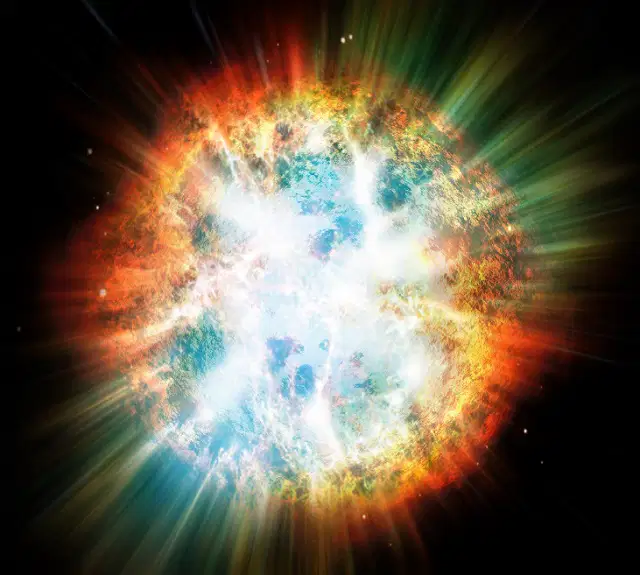
Which of the following is true about Short GRB's and Long GRB's?
Short GRB's are produced by hypernovas, while Long GRB's are produced by kilonovas
Short GRB's fade quicker than Long GRB's
Short GRB's and Long GRB's always come from black holes
Short GRB's and Long GRB's are used to find stellar distances

True or false: Pulsars rotate the same speed their whole life.
True
False
Pulsars are used to measure which of the following?
Magnetic Fields
Stellar Distances
Velocity of Gravitational Waves
Blackhole Radiation

This is the most recent image of the Milky Way Galaxy
True
False - There are newer images
False - This isn't the Milky Way
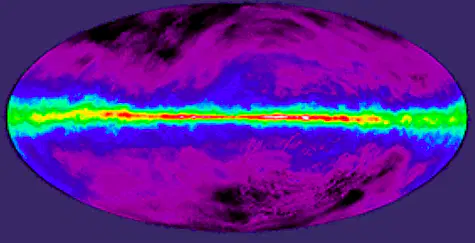
What can we use to find the structure of the Milky Way (3 correct answers)?
21 cm hydrogen line
Stellar parallax
Pulsar timing variation
Doppler shifting
Type Ia supernovae
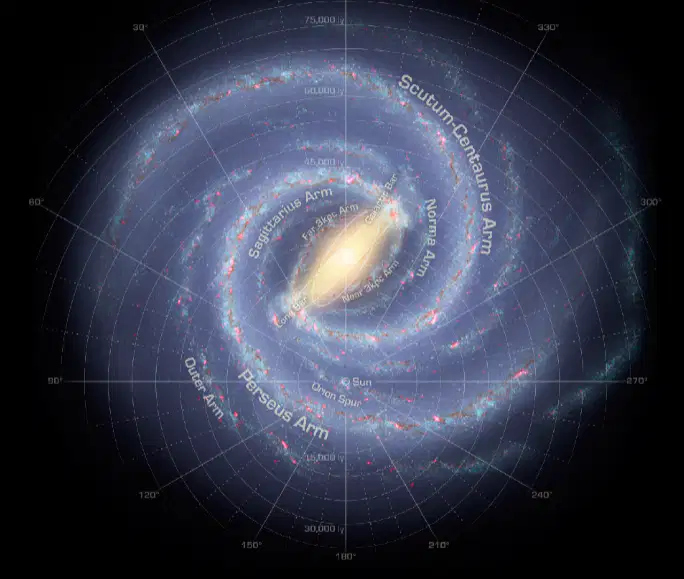
Choose the correct combinations:
Population I stars are younger and are found in the Galactic disk
Population II stars are younger and are found in the Galactic disk
Population I stars are older and are found in the halo
Population II stars are older and are found in the halo
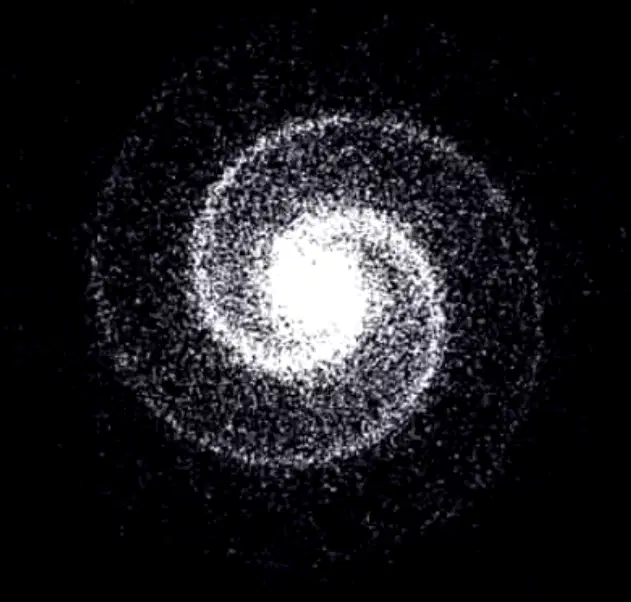
How do the Galaxy's spiral arms form?
They formed with the Galaxy
From differential (uneven) rotation
From a traffic jam of gas clouds
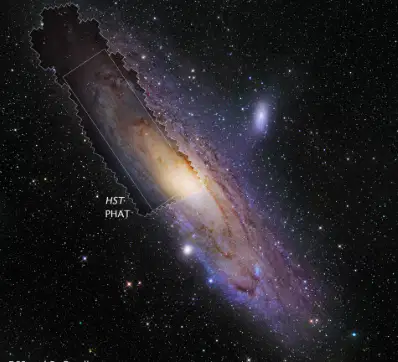
Which of these parts of the Galaxy rotates the fastest?
The core
The middle spiral arms
The outer spiral arms
They all rotate at about the same speed
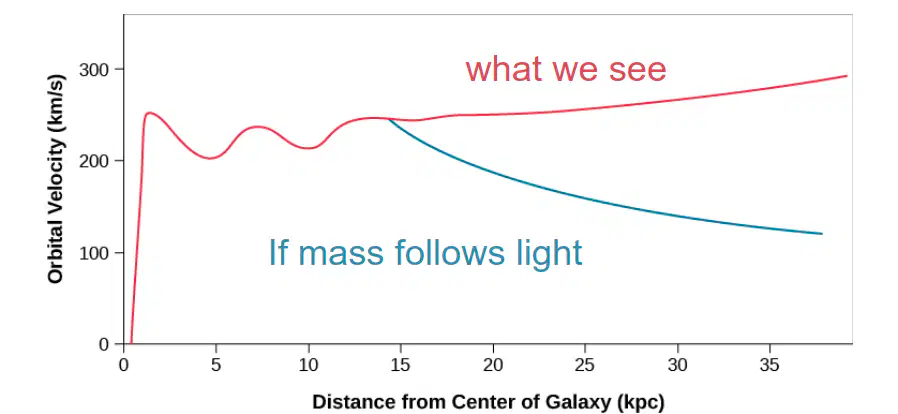
How come all parts of the Galaxy rotate at about the same speed?
Kepler's Third Law
95% of the Galaxy's mass is dark matter
Physics gets weird at large scales
It's an illusion due to the Sun's position

How do giant elliptical galaxies TYPICALLY form?
Mergers of smaller galaxies
Collapse of enormous gas clouds
We don't know
Their black holes keep grabbing more matter

Why do galaxies collide, but not the stars in them?
Gas clouds from each galaxy tug stars away from each other
The stars are very far apart
The stars actually do collide often
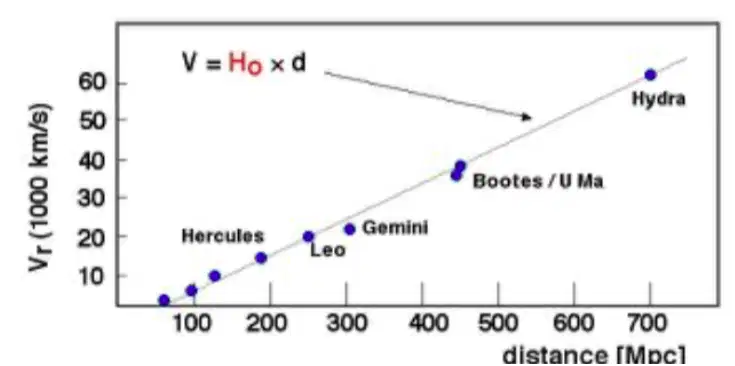
Hubble Expansion means that galaxies that are farthest away from ours move away from us very quickly. How can we tell?
Distant galaxies have large redshift
We can see the distance to those galaxies change between observations
Things moved faster in the ancient Universe
Social tension leads to some disdain between far galaxies and ours
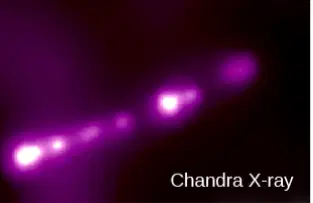
Why are quasars so luminous?
Extreme events of fusion
Matter tangled in magnetic fields
They're made of dense clumps of stars
Gravitational infall

There are different kinds of AGN. What determines the kind of AGN we observe?
Different ages of the galaxies
Different sizes of the SMBH
Different inclinations of the AGN
Different luminosities of the AGN
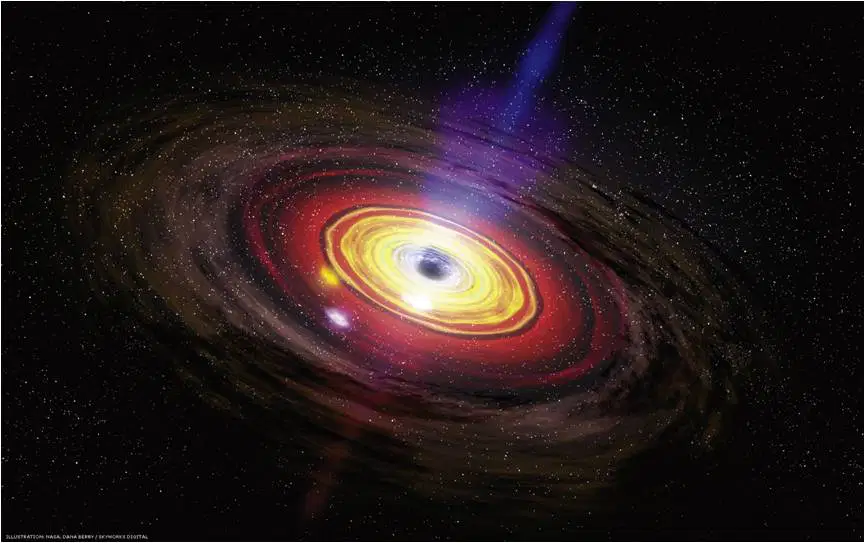
Why aren't there many active galactic nuclei (AGN) that are nearby?
There are nearby AGN, but their light is not in visible wavelengths
Nearby galaxies haven't had time to get AGN
Only the oldest galaxies have black holes large enough to become AGN
Black holes are accreting less in recent history

