
Font size
 Worksheets
Unit 4 Test Review (Pre AP World)
Total questions: 90
Worksheet time: 57mins
The Muslim leader of Mali who supported education, spread Islam, and made a famous pilgrimage to Mecca was
Sundiata
Mansa Musa
Askia the Great
Sunni Ali

Which of the following is NOT a reason why salt was a very important trade item?
Salt was used to preserve food.
Salt was used to make bland food tasty.
People need salt in their diet.
Salt is used to make explosives.

What is the name of the desert that goes across northern Africa?
Sahara
Gobi
Mohave
Kalahari
What Northern European writer wrote Utopia?
William Shakespeare
Petrarch
Erasmus
Sir Thomas More
Many ideas of the European Renaissance were based on the cultures of ancient -
Greece and Egypt
Greece and Rome
Greece and China
Greece and India
Which of these Renaissance artists is correctly paired with their famous work?
Michelangelo - The Last Supper
Rafael - Sculpture of David
Leonardo da Vinci - Mona Lisa
Rafael - Sistine Chapel
Increased trade between Europe and the Muslim and Byzantine empires was stimulated by:
Muslim expansion into southern Europe
The repeal of a ban on non-Christian trade by the Pope
The Crusades
A trade alliance between the Byzantine empire and the Holy Roman Empire
The Renaissance means (1) ____ and is when their is renewed interest in (2) ____ culture.
(1) Rebirth; (2) Greco-Roman
(1) Religious; (2) Byzantine
(1) Secularism; (2) Religious
The Renaissance artist known for The David and the ceiling of the Sistine Chapel.
Petrarch
Leonardo da Vinci
Michelangelo
Machiavelli
The Renaissance artist known for the Mona Lisa and The Last Supper.
Leonardo da Vinci
Michelangelo
Machiavelli
Sir Thomas More
The movement associated with the Renaissance in which the focus is on the individual with an emphasis on Greek and Roman literature and culture.
Humansim
Gothic
Realism
The name for a wealthy trading/banking individual who would sponsor artists to create beautiful pieces of art work.
patron
helot
plebeian
Which one of these groups would NOT benefit from the changes of the medieval period?
Serfs
Scholars
Merchants
Church Leaders
Based on the new monarchies in Spain, France, and England during the 1400s, what was one of the developments?
Each country was achieving great military victories.
The Catholic Church was gaining influence across Europe.
People were beginning to develop a sense of national identity.
The Black Death was damaging all ways of life during the Middle Ages.
What does the following have in common, The Great Schism, The Great Famine and the Black Death?
The Rise of the Holy Roman Empire
Efforts to Destroy Western Civilization
The Restoration of the Catholic Church
Factors that Weakened the Feudal System
What does the following describe? Keeping the city clear of filth, preservation of health, and an act of humble prayer.
The invasion of the Vikings
The onset of the Black Death
The start of the Hundred Years War
The drought that caused the Great Famine
In Western Civilization what influence did the Magna Carta have?
It created the first constitutional democracy in Europe.
It preserved Justinian’s Code for use in future constitutions.
It created guidelines for how citizens should behave around a king.
It established the concept of individual liberties and due process of law.


Who is the founder of Mughal Dynasty?
Babur
Humayun
Akbar
Jahangir
Which factor was instrumental in causing the drastic decline of Buddhism as a major religion in India?
the growing influence of Confucianism
the emperor’s rejection of Akbar’s tolerant policies
the growing influence of Sikhism
the Muslim conquest of northern India
Q1. Mughal means ____________?
muslim
mongol
Ghenghis Khan
Empire
Q9. Why did Shah Jahan built the Taj Mahal?
As a palace for his wife
As a tomb for his wife
To honor the common people of the Mughal Empire
To match the accomplishments of his father
He was the ruler of the Mughal Empire during its best period.
Akbar
Aurangzeb
Shah Jahan
What is the correct location of the Mughal Empire


The largest continent in the world is...
Asia
Africa
China
Europe

Before the Tang Dynasty, China was previously united by...
The Song Dynasty
The Han Dynasty
The Ming Dynasty
China had never been united before

A bureaucracy is a type of government with many ___ that are each led by an appointed ___.
people, leader
departments, emperor
departments, official
laws, leader

Passing the Civil Service Exam allowed one to...
Become a military leader
Be in the military
Work in the government
Become a government leader

In a merit system, people are hired and promoted based on...
Their talent and skills
Who they were related to
Who they were friends with
Their social status

This Dynasty developed paper money.
Han
Tang
Sui
Song
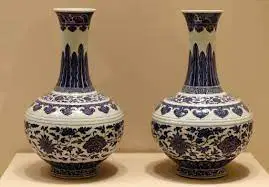
Porcelain is a very fine type of ___.
vase
pottery
sculpture
building

What religion did the Ottoman Empire help spread throughout their empire?
Buddhism
Christianity
Shintoism
Islam
____ were an elite guard of Ottoman soldiers.
sinans
ulema
pashas
janissaries
What city did the Ottoman Empire conquer in 1453 putting an end to the Byzantium Empire?
Rome
Constantinople
Athens
Vienna
Which technology, first developed by the Chinese, enabled the Ottoman Empire to expand militarily into western Asia, Europe, and northern Africa?
woodblock printing
wheelbarrow
gunpowder
magnetic compass
Suleman was known to westerners as the Magnificent, but to many others he was known as the
Gravedigger
Enlightened
Lawgiver
Peace Maker
True or False
The Ottoman Empire was comprised of different religions and ethnicities.
True, several different ethnicities and religions co-existed in the empire.
False, everyone in the empire was the same religion and ethnicity.
Islam was the dominant religion of the Ottoman Empire, which two other religions were also prominent.
Christianity and Buddhism
Buddhism and Hinduism
Hinduism and Judaism
Judaism and Christianity
Where was the Ottoman Empire located?
Frankfurt, Germany
Anatolia (Present day Turkey)
Rome, Italy
Columbus, Ga
This Sultan Conquered Constantinople
Tamerlane
Mehmed II
Osman I
Murad II
Constantinople was renamed to what after capture
Macon
Istanbul
Eygpt
Rome
Which three continents was the Ottoman Empire located in?
Africa, Asia, North America
Europe, Russia, Asia
Asia, Europe, Africa
Arabia, Asia, Africa
Why was Constantinople considered the "center of the world"
It was the center of trade
It was far below sea level, so it was closest to the center of the Earth
There was a big globe in the city center
It was in the middle of Asia
Under the Ottoman Empire, non-Muslims ____.
were executed if they did not convert to Islam
had to convert to Islam or leave the empire
had to pay a tax but could continue to practice their religion
had to give their oldest child to the sultan
The city of Jerusalem is important to what three major religions?
Buddhism, Hinduism, and Islam
Islam, Christianity, and Hinduism
Islam, Christianity, and Judaism
Why did people join in the Crusades?
They thought it would help them gain land
They thought it would help them get rich.
They thought it would help them get into heaven.
All of these answers
What was the symbol of the Crusaders?
A blue sword
A yellow lion
A red cross
What religious leader from the Catholic Church helped to organize the First Crusade?
Stephen Harding
Pope Urban II
Saint Benedict
The crusaders were from which place?
Europe
The Middle East
The Holy Land
Which general led the Muslims?
Saladin
Pope Urban II
Why did so many men volunteer for the Crusades?
they were paid generously
the Church granted forgiveness and salvation to anyone who went or died on the Crusades
Because they were forced to go
because they loved Asia
What was one cause of the Hundred Years' War?
Demand for Arabic texts increased competition between universities.
There were questions about the legitimate heir to the English throne.
Feudal ties caused English nobles to owe loyalty to the French king.
France and England competed for control over the Holy Land.

What does this image reveal about Joan of Arc?
She became the leader of Orléans.
She was an important military leader
She came from a poor peasant family.
She followed the guidance of the pope.
How did the spread of the Black Death (Bubonic Plague) impact the society economically?
It increased the population density
It led to shortage of labor causing a rise in wages
It boosted the agricultural output
It caused a drastic decrease in prices due to lesser demand
Who was Joan of Arc in the context of the Hundred Years' War?
A heroic figure who played a major role in ending the war
A king who initiated the war
A historian who documented the war
A peasant who was unaffected by the war
What were the effects of the Hundred Years’ War?
Select the two correct answers
It led to lower taxes for peasants.
It improved trade between nations.
It reduced the size of the middle class in Europe.
It left the French king in control of almost all of France.
It resulted in increased nationalism in France and England.
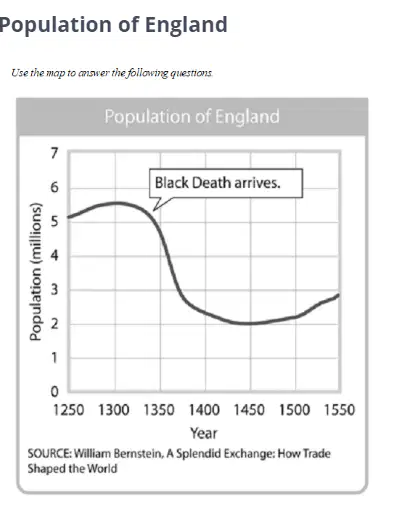
How did the population of England change between 1300 and 1400?
It increased
It decreased
There was little to no change
You cannot find that information from this chart
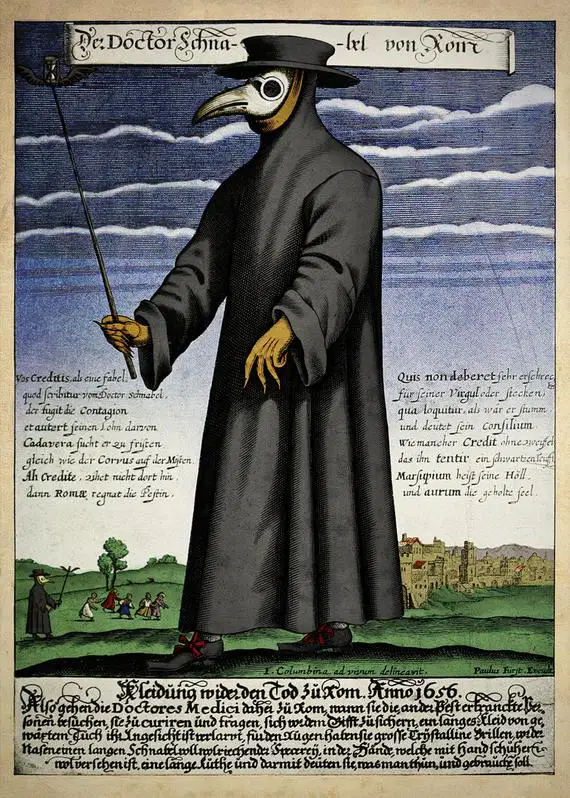
What is one reason plague doctors dressed in this way?
They believed the disease was carried by bad smells
They thought germs entered through the skin
They had few methods of sanitation
They wanted to avoid touching rats
Where did the plague begin?
Northern Europe
Western Europe
Africa
Asia
In the feudal system, everyone is a __________________ to someone else
slave
servant
vassal
lord


A social and political system that provided protection through a stable social pyramid.
I am loyal. I am allowed to carry a weapon. I am "those who serve". Who am I?
Emperor
Samurai
Artisan
Peasant
I am the lowest class but have wealth. I am given the least respect. I buy and sell things. Who am I?
Emperor
Shogun
Peasants
Merchants
I have the most respect but not really much power. I perform religious ceremonies and have lots of time to pursue my hobbies. Who am I?
Shogun
Emperor
Artisans
Daimyo
I live a simple life. I work hard. I am given some respect but have no power. Who am I?
Emperor
Samurai
Peasants
Merchants
Samurai were...
Military leaders
warriors
landowners
farmers
Daimyo were...
Land owners, nobles
warriors
farmers
military leaders
Feudalism is...
electing officials to important government jobs
the exchange of land for labor and loyalty
how much money someone has
a traditional religion

What group of people are considered the lowest classes in Feudal Japan?
Shoguns
Samurai
Merchants/Peasants
Daimyos

Who is considered the most powerful person in Feudal Japan?
Shogun
Samurai
Emperor
Daimyo
What was the main purpose of feudalism?
To ensure equal distribution of wealth among the population.
To promote trade and economic growth.
To create a system of government based on hereditary monarchy.
To establish a social and economic system based on land exchange for military service and protection.
What was the role of serfs in the feudal system?
Serfs were wealthy landowners who controlled the peasants.
Serfs were warriors who fought for the lord in battles.
Serfs were peasants who worked for the lord in exchange for protection and the right to live on the land.
Serfs were slaves who had no rights and were owned by the lord.

