
 Worksheets
CHEMISTRY TEST TERM 3
Total questions: 118
Worksheet time: 2hrs 17mins


Water is a polar molecule because?
It is only found at the Earth's poles
The hydrogen atoms have a slight positive charge and the oxygen a slight negative charge.
The hydrogen atoms have a slight negative charge and the oxygen a slight positive charge.
It has no overall charge.

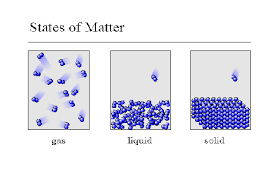


What is the difference between water vapour and steam?
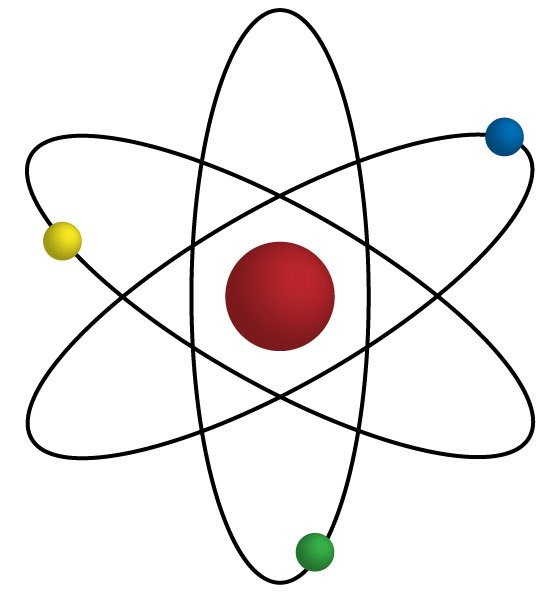
Objects with like charges (a)
Objects with unlike charges (a)
Water molecules are attracted to each because
the oxygen is slightly negative and attracts the slightly positive hydrogen atom
the oxygen is slightly positive and attracts the slightly positive hydrogen atom
the oxygen is slightly negative and attracts the slightly negative hydrogen atom
the oxygen is slightly positive and attracts the slightly negative hydrogen atom

Which state of matter has no definite shape and no definite volume?
Gas
Solid
Liquids and Gases
Liquid
Liquids have the ability to flow because
There are strong forces of attraction between the particles
Their particles are arranged in a regular pattern
Their particles can slide over each other
Their particles are very far apart
Evaporation is the change in state of a
gas to a liquid
gas to a solid
solid to a liquid
liquid to a gas
Which one of the following is not a property of a solid?
Definite color
Definite mass
Definite volume
Definite shape

The boiling point of a substance is the temperature at which it changes from
a liquid to a gas
a liquid to a solid
a gas to a solid
a solid to a liquid

Which one of the following is not a property of gases?
They have a definite mass
They have no definite shape
They have a definite volume
They can diffuse

In which state are the distances between the particles greatest?
Both gas and liquid
Liquid
Gas
Solid
Which one of the following is a state of matter?
Liquid
Creature
Particle
Air
The process of gathering information about our world is
data
observation
science
The ability to do work is
efficiency
energy
power
The study of matter and energy is not
Physical Science
Physics
Chemistry
Earth Science
Biology
Air is made up of a number of gases. Name the gas found in air that is useful for the process of respiration.
nitrogen
oxygen
water vapor
carbon dioxide
Nitrogen is a gas found in air. What percentage of the air is made up of nitrogen?
78 %
21%
0.04%
0.06%

Which property of air is demonstrated by the following diagram?
Air takes up space
Air exerts pressure
Air has mass
A colorless and odorless gas is captured and contained in a test tube. Which item or items is used to test this unknown gas for oxygen?
a cup, water and a piece of cardboard
marble chips and hydrochloric acid
a glass straw and lime water
a glowing splint

Which number shows decomposition?
1
2
5
6
Which process removes carbon dioxide out of the air?
combustion
decomposition
photosynthesis
respiration
Which of the choices below are uses of nitrogen?
moisture
produces protein
photosynthesis
fertilizers
Which gas DOES NOT support combustion?
nitrogen
oxygen
carbon dioxide
water vapor
Carbon dioxide is a:
compound
element
mixture
molecule
Which is a use of carbon dioxide
used in respiration
used for life support
used in fire extinguishers
used to make fertilizers
how many atoms make up a molecule of carbon dioxide ( CO2)?
1
2
3
4
Which two substances are combined to make carbon dioxide in the lab?
hydrochloric acid and calcium carbonate
hydrochloric acid and calcium chloride
water and calcium chloride
water and carbon dioxide
What happens when salty water is boiled?
The salt becomes a new compound and water evaporates as it has a low boiling point
The water evaporates and the salt remains in the beaker as it has a high melting point
The water becomes a new compound and evaporates while salt remains in the beaker
The water will disappear and the salt remains in the beaker as it is a solid
The process used to separate heterogeneous mixtures of solids and liquids is called
filtration
crystallization
distillation
chromatography
Complete the sentence:
___________ allows to separate the fine flour particles from bigger impurities (lumps).
Filtration
Decantation
Sieving
Magnetism
Which of the following mixtures can be separated by Evaporation?


Linda is cooking rice for dinner. Her mother asked her to washed the rice grain before she put it into fire. What separation of mixtures she should use?
Evaporation
Distillation
Chromatography
Decantation
Which of the following mixtures can be separated using Decantation?


Which can be separated using Magnetism?


What is the difference between filtration and Sieving?
Filtration is separating liquid from solid components while sieving is separating solid mixtures with different particle size.
Filtration is separating solid mixtures with different sizes while sieving is separating liquid from solid components.
Filtration is separating magnetic from non-magnetic substances while sieving is separating immiscible from non-miscible mixtures.
Filtration is separating liquids with different boiling points while sieving is separating liquid from solid substances using filter.
A mixture is a combination of elements where no ___________ reaction takes place
physical
chemical
What is an example of a homogeneous mixture?
A mixture of oil and water
A mixture of sand and water
A mixture of iron filings and sulfur
A solution of salt and water
Give an example of a heterogeneous mixture.
Milk
Pure water
Sugar
Salad
What are the properties of homogeneous mixtures?
Visible boundaries between the substances
Non-uniform composition
The properties of homogeneous mixtures include uniform composition, even distribution of components, and no visible boundaries between the substances.
Uneven distribution of components
List the properties of heterogeneous mixtures.
Heterogeneous mixtures are always in a gaseous state
The properties of heterogeneous mixtures include the ability to be separated by physical means, such as filtration or settling, and the components do not have a uniform composition throughout the mixture.
The components of heterogeneous mixtures have a uniform composition throughout the mixture
Heterogeneous mixtures cannot be separated by physical means
Name a common homogeneous mixture found in households.
Saltwater
Pepperjuice
Sugarmilk
Mudwater
Identify a heterogeneous mixture commonly found in nature.
Soil
Pure water
Iron
Air
How do the particles in a homogeneous mixture distribute?
Evenly throughout the mixture
Only at the bottom of the mixture
Only at the top of the mixture
In random clumps within the mixture
Explain the distribution of particles in a heterogeneous mixture.
Particles in a heterogeneous mixture are only found in the top layer and cannot be separated by physical means.
Particles in a heterogeneous mixture are evenly distributed and can only be separated by chemical means.
Particles in a heterogeneous mixture are unevenly distributed and can be separated by physical means.
Particles in a heterogeneous mixture are evenly distributed and cannot be separated by physical means.
What are the characteristics of a homogeneous mixture?
Uniform composition and properties throughout
Uneven distribution of substances
Varied appearance and texture
Different composition and properties throughout
Describe the characteristics of a heterogeneous mixture.
A heterogeneous mixture contains only one type of substance and cannot be separated by physical means.
A heterogeneous mixture has no visible differences between substances or phases and cannot be separated by physical means.
A heterogeneous mixture has uniform composition and cannot be separated by physical means.
A heterogeneous mixture has visibly different substances or phases and can be separated by physical means.
What are the physical properties of a homogeneous mixture?
Different composition and inconsistent physical properties throughout the mixture.
Visible separation of components and varying physical properties.
Uniform composition and consistent physical properties throughout the mixture.
Unpredictable composition and unstable physical properties.
What are the physical properties of a heterogeneous mixture?
The physical properties of a heterogeneous mixture are uniform throughout the sample
All substances in a heterogeneous mixture are evenly distributed
Heterogeneous mixtures have consistent color, texture, and density
The physical properties of a heterogeneous mixture can vary throughout the sample, such as different colors, textures, and densities.
Provide an example of a homogeneous mixture in the field of chemistry.
Sand and water
Iron filings and sulfur
Sugar and sand
Salt water
Vinegar and oil
Give an example of a heterogeneous mixture in the field of biology.
Milk
Blood
Salad
Air
How can you separate the components of a homogeneous mixture?
Adding more components to the mixture
Shaking the mixture vigorously
Using a hammer to break the mixture into pieces
Using techniques such as filtration, distillation, chromatography, or evaporation.
The term pollution has been derived from the Latin word (a)
Does smoke from factories cause air pollution ?
Yes
No
When carbon monoxide mixes with haemoglobin present in our blood , it forms :
carbon haemoglobin
carbony haemoglobin
carboxy haemoglobin
none of the above
Acid rain affects
minerals in soil
statues made up of marbles
aquatic life
gold ornaments
Which gas is produced while Coal is burnt as a domestic fuel ?
(a)
Name the gas :
It is mainly produced by combustion of petrol or gasoline in automobiles.
(a)
What is smog made up of ?
only smoke
only fog
both smoke and fog
neither smoke nor fog
Carbon monoxide is formed by
combustion of paper
complete combustion of fuels
incomplete combustion of fuels
all of the above
All substances that contaminates air are called air pollution.
True
False
Vanmohatsav is celebrated in the month of -
September
August
July
June
According to the World Health Organization (WHO), how many people die every year from air pollution?
Ten million
Five million
Seven million
Twelve million
What is one of the steps suggested to improve air quality?
Use more air conditioners
Reduce driving
Increase driving
Burn more wood
What is the greenhouse effect caused by?
Methane
Wildfires
Dust storms
Carbon monoxide
Where do harmful chemicals contributing to air pollution come from?
All of the above
Coal power plants
Manufacturing plants
Cars and trucks
What is one way to reduce the amount of waste going into landfills?
Composting food waste
Burning more trash
Throwing everything in the trash
Not recycling
What is the second most common greenhouse gas emitted from landfills?
Methane
Sulfur dioxide
Carbon monoxide
Nitrogen dioxide
What is the main source of carbon monoxide emissions in the United States?
Air conditioners
Cars and trucks
Factories
Landfills
What is one suggestion to reduce pollution from burning wood for heat?
Use propane instead
Burn more wood
Use kerosene lamps
Burn leaves
What is the percentage of gases from landfills made up of carbon monoxide?
25%
50%
75%
100%
What is one way to extend the life of items and reduce landfill waste?
Not reusing items
Recycling
Throwing items away
Burning items
What is the most common greenhouse gas emitted from landfills?
Methane
Sulfur dioxide
Carbon monoxide
Nitrogen dioxide
Which of the following is a major contributor to indoor air pollution?
Cleaning products
Outdoor air
Plants
Windows
What is the primary source of pollution in urban areas?
Factories
Forests
Rivers
Mountains
The contamination of air due to the presence or introduction of a dangerous substance describes:
Water Pollution
Primary Pollutant
Air Pollution
Point Source Pollution
Where does most of the air pollution come from?
Solar and Wind energy
Forest Fires and Cities
Planting trees and Agriculture
Vehicles and Industry
Which of the following is an example of a primary pollutant?
Oxygen
Helium
Carbon Dioxide
Ozone
______________ is a pollutant that forms in the atmosphere by chemical reactions with primary air pollutants.
Primary Pollutant
Secondary Pollutant
Point Source Pollution
Nonpoint Source Pollution
TRUE or FALSE: Air Pollution is a problem for humans and the environment.
True
False
TRUE or FALSE: Air Pollution is a problem for humans and the environment.
True
False
The contamination of water, usually as a result of human activities is which of the following?
Air Pollution
Water Pollution
Nonpoint Source Pollution
Primary Pollutant
All of the following are examples of causes for water pollution except:
Household Waste
Industrial Waste
Oil Spill
Solar Energy
All of the following are effects of water pollution except:
Clean water
Animals and Plants dying
Contamination of drinking water
Destruction of ecosystems

In the picture, which of the following is an example of Point source pollution?
City Streets
Rural Homes
Cropland
Factory
How would you describe Nonpoint source pollution?
Pollution in the air
Pollution from one place
Pollution from many places
Pollution of the water

Water pollution occurs when:
Harmful substances enter a water supply
Industries dispose of waste safely and correctly.
Industries cut costs with waste disposal.
None of the above.
too much phosphate in water is what category of water pollution?
organic
inorganic
nutrient
heat
which is a category of water pollution?
sediment
medical
food
dihydrogen monoxide
Why do algae blooms happen?
there are too many nutrients in the water
there are too many fish in the water
there is not enough turbidity in the water
all of these options
what is true about eutrophication in lakes and other bodies of water?
it is always natural
it is always artificial
it can cause too much algae to grow
none of these are true

A rapid growth of algae could lead to:
A reduction of oxygen levels in the water.
Water that can support more life.
Waters that are devoid of life.
An increase in oxygen levels.
There is nothing we can do to stop water pollution.
True
False

We can prevent water pollution by:
Reduce the use of plastic.
Properly dispose of chemicals.
Clean up after your animals.
All of the above
Who pollutes the ocean the most?
Marine Animals
Humans
Land Animals
How does plastic end up reaching and entering the ocean from land?
Littering in towns and cities
Dumpsites near waterways and oceans
People littering on beaches
All of the above
What happens to plastic waste?
Sinks to the bottom and gets buried under the sand
It never fully goes away, it just breaks into little pieces
Dissolves and decomposes in the water
It is dumped in the ocean for fish to eat
Which of the following is an effect of an oil spill?
Many plants and animals die.
The fishing industry improves.
Plant life increases.
The oil cleans the beaches.

