
 Worksheets
Physics Revision
Total questions: 117
Worksheet time: 2hrs 40mins

What is the best description of an opaque material?
no light passes through the material
some light passes through the material
all light passes through the material

What is the best description of a transparent material?
no light passes through the material
some light passes through the material
all light passes through the material

What is the best description of a translucent material?
no light passes through the material
some light passes through the material
all light passes through the material
Which pictures shows a translucent image?
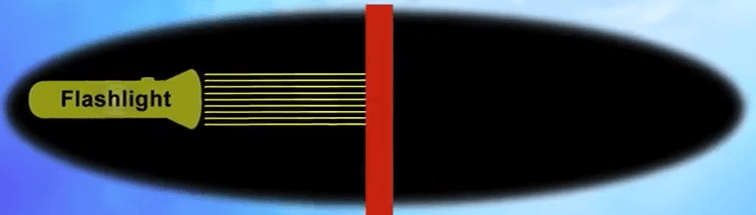
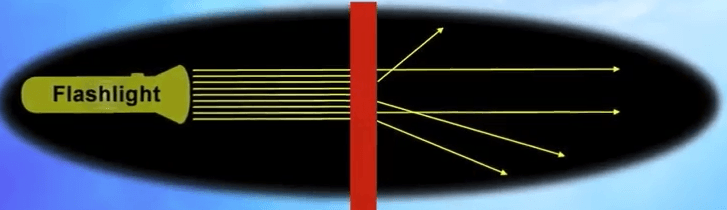
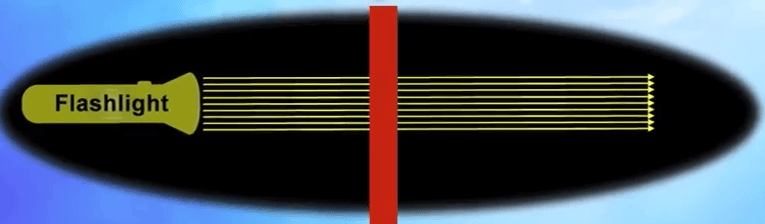
Which pictures shows a transparent image?
Which pictures shows a translucent image?

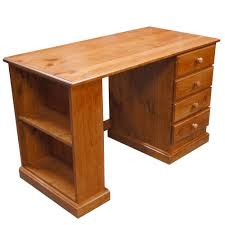
What type of object is shown in the picture?
opaque
transparent
translucent

What type of object is the glass in the glasses considered?
opaque
transparent
translucent

What type of object is a mirror considered?
opaque
transparent
translucent
What type of object is the black rim around the glasses considered?
opaque
transparent
translucent

What type of object is the polarized lens in the sunglasses considered?
opaque
transparent
translucent
_____ is a wave
sound
light
both
_____ moves slower in a denser medium
sound
light
both
_____ moves faster in a denser medium
sound
light
both
_____ is a transverse wave
sound
light
both
_____ can refract
sound
light
both
_____ is a longitudinal wave
sound
light
both
_____ can absorb
sound
light
both
_____ can reflect
sound
light
both
_____ can transmit
sound
light
both
_____ moves in a parallel motion
sound
light
both
_____ moves in a perpendicular motion
sound
light
both
_____ is an electromagnetic wave
sound
light
both
_____ is an mechanical wave
sound
light
both
_____ travels faster
sound
light
both
The 3 well-known phenomena's of a light ray are:
Scattering
Reflection
Absorbtion
Refraction
When a light ray hits a smooth surface, it bounces off that surface.
Reflection
Diffraction
Scattering
Refraction
When a light ray bounces off a rough surface, it reflects all over the place
Diffraction
Reverberation
Scattering
Transmission
When this occurs, light rays pass from one transparent medium to another transparent medium.
Absorbtion
Transmission
Relfection
Refraction
The amount of bending, or (a) , of the light wave depends on how much the material slows down the light.
Write three materials that would cause scattering
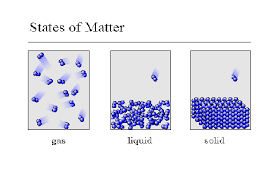

Freezing
Solid to gas
Liquid to solid
Gas to solid

Boiling
liquid to gas
gas to solid
gas to liquid

The state of matter that has no definite size or shape is
Solid
Liquid
Gas

Particles in a ______________________ move quickly and are far apart.
gas
solid
liquid
Solid to Gas
Deposition
Sublimation
Evaporation
The slower the particles in a substance move,
the colder it is.
the warmer it is.
the more energy it has.
Liquid to Gas
Condensation
Evaporation
Sublimation
Particles move relative to each other, but remain in contact with each other.
solid
liquid
gas
Basic state of matter with the greatest amount of energy.
solid
liquid
gas
What happens to particles when their temperature increases?
The particles move slower
The particles move faster
The particles lose mass
The particles gain mass
The amount of space something takes up is its...
Mass
Volume
Thermal Energy
Temperature
The energy of MOTION is...
chemical energy
radiant energy
potential energy
kinetic energy

TRUE or FALSE: In order to change the state of matter, you need increase or decrease the energy (heat).
TRUE
FALSE

TRUE or FALSE: The particles in solids move around a lot and spread out.
TRUE
FALSE

TRUE or FALSE: Liquids have a fixed volume but not a fixed shape.
TRUE
FALSE

TRUE or FALSE: Gases have the least kinetic energy out all 3 states of matter.
TRUE
FALSE

Phase change from liquid to gas is called:
Freezing
Condensation
Vaporization
Sublimation
Phase change from solid to gas is called:
Freezing
Condensation
Vaporization
Sublimation
Phase change from liquid to solid is called:
Melting
Freezing
Deposition
Condensation
Phase change from gas to liquid is called:
Melting
Freezing
Deposition
Condensation
Phase change from gas to solid is called:
Sublimation
Freezing
Deposition
Vaporization

When changing a substance from liquid to solid, the energy has to...
INCREASE
DECREASE
When changing a substance from gas to liquid, the energy has to...
INCREASE
DECREASE
When changing a substance from liquid to gas, the energy has to...
INCREASE
DECREASE

Which of the following statements is NOT true about gases?
Gases do not have fixed shape or volume
Gas particles do not move much, but vibrate
Gas particles have a lot of free space
Unlike solids, gases can be compressed

Which of the following statements is true about liquids?
Particles do not move around much, but vibrate
Particles have a lot of free space and spread out
Liquids have fixed shape & volume
Particles are less closely packed than solids

Which of the following statements is true about phase changes?
Solid turning into liquid is called freezing
When ice melts, the kinetic energy is decreased
Liquid turning into gas is called condensing
When water boils, the kinetic energy is increased

Which of the following statements is true about solids?
Particles do not move around much, but vibrate
Particles have a lot of free space and spread out
Solids have fixed shape but not volume.
Particles are less closely packed than gas.

Look at the picture. Which state of matter is in beaker C?
Solid
Liquid
Gas
Blue thingys
Look at the picture. Which state of matter is in beaker A?
Solid
Liquid
Gas
Blue thingys

What is melting? (Definition)
When liquid turns in solid.
When solid turns into gas.
When gas turns into liquid.
When solid turns into liquid.

What is sublimation? (Definition)
When liquid turns in solid.
When solid turns into gas.
When gas turns into solid.
When solid turns into liquid.
What is Brownian motion?
Brownian motion movement of particles not suspended in a liquid or gas or the mathematical model used to describe such random movements is often called a particle theory.
movement of particles suspended in a liquid or gas or the mathematical that has modeled model used to describe such random movements, often called a particle theory.
Brownian motion movement of particles suspended in a liquid or gas or the mathematical model used to describe such random movements is often called a particle theory.
movement of particles suspended in a liquid or gas or the mathematical model
Pollen grains suspended in water exhibit Brownian motion. How does a particle undergoing Brownian motion move?
In smooth curves
Randomly
Orderly with a pattern
In straight lines with no change of direction
Diffusion is...
It is the random movement of particles.
It is when particles move from a place of higher concentration to a place with lower concentration.
It is when particles move when being mixed together.
It is when the particles hit the sides of their container.
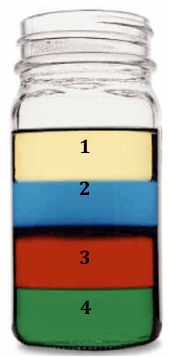


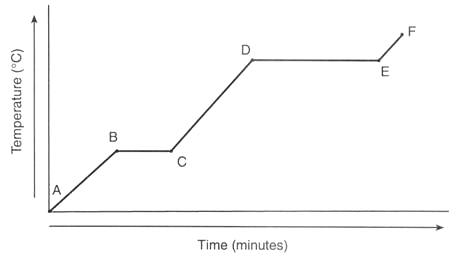
What state/phase is the object likely from points A to B?
Solid
Liquid
Gas
Plasma
What happens to the density of a material when heated?
Expands and density increases
Contracts and density decreases
Expands and density decreases
Contracts and density increases
What should engineers keep in mind while building?
What is the SI unit of pressure?
Kg/m3
Pa
kg m-3
N m2
What is the formula for pressure?
P = F / A
P = F A
P = A / F
F = P / A
The pressure resulting from a force of 50 N exerted over an area of 5 m2 is
10 Nm2
0.1 Nm2
10 N m-2
0.1 Pa
When force increases...
pressure increases
pressure decreases
pressure stays the same
pressure increases then decreases
When area increases...
pressure increases
pressure decreases
pressure stays the same
pressure increases then decreases
Any substance that can easily flows and therefore can easily change shape.
Fluid
Liquid
Gas
Solid
Fluids flow
only when warmed up.
from regions of low pressure to regions of high pressure.
until evenly spread out.
from high to low pressure.
If an object has a density of 3.6 g/mL and you put it into water (density =1.0g/mL,) will it sink or float?
sink
float
partially sink
partially float
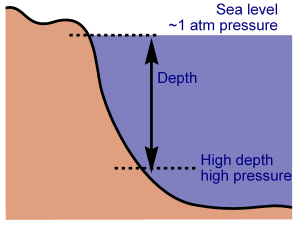
When you increase your depth under water, the water pressure on your body
increases
decreases
stays the same
What pressure does a 4000N force exert on the ground if the area is 10 cm2?
4 N m-2
4000 N m-2
400 N m-2
40 N m-2
Which two forces act on an object in water?
gravity
friction
weight
upthrust
What happens if the weight of an object is equal to or less than the upthrust?
It floats
It sinks
It spins
It explodes!
What is the scientific word for 'floating'
levitating
suspended
buoyancy
hovering
What happens if the weight of an object is greater than the upthrust?
it floats
it sinks
it bounces
it vibrates
Where would you find the largest pressure?
At the bottom of the ocean
At the top of Mt Everest
Close to ground in Cuckfield
In a rockpool on the Great Barrier Reef

What are 3 types of drag and how can you reduce them?

