
 Worksheets
6th Quizizz Review
Total questions: 116
Worksheet time: 1hrs 16mins
Name
Class
Date
1.

At which point is potential energy greatest?
a)
W
b)
X
c)
Y
d)
Z
2.
Conduction can only occur between two objects when –
a)
one object is less dense than the other.
b)
both objects are in physical contact with each other.
c)
one of the objects is made of a metal.
d)
both objects are exactly the same temperature.
3.

Which was the most effective at preventing heat transfer from the water to the environment?
a)
Container P
b)
Container Q
c)
Container R
d)
Container S
4.

What two kinds of heat transfer are represented?
a)
stove→pot=radiation pot→egg=conduction
b)
stove→pot=conduction pot→egg=radiation
c)
stove→pot=convection pot→egg=conduction
d)
stove→pot=conduction pot→egg=convection
5.
Which of following is a conductor?
a)
Wooden Stick
b)
Styrofoam Cooler
c)
Metal Pot
d)
Plastic Container
6.

This is an example of a(n)
a)
conductor of heat
b)
insulator
7.
What happens to particles as they cool down?
a)
They slow down
b)
Nothing
c)
They don't move
d)
They speed up
8.
Hot objects begin to cool as-
a)
cooler air is transferred to the hot object.
b)
thermal energy in the object is transferred to the surrounding air.
c)
atoms in the object react with the oxygen in the air.
d)
thermal energy in the object cancels out energy in the air
9.
Why does a diver wear a wet suit?
a)
To keep in thermal energy.
b)
To keep from getting cuts.
c)
To keep from sinking.
d)
To keep out cold.
10.
Which of the following is the smallest unit of life that can carry out all life functions?
a)
the mitochondria
b)
the vacuoles
c)
the nucleus
d)
the cell
11.
Which structures are found in every living cell?
a)
cell membrane and cytoplasm
b)
chloroplasts and mitochondria
c)
a cell wall and nucleus
d)
chloroplasts and cell wall
12.
Which cell structure is found in plant and animals cells and controls what can come into or leave a cell?
a)
cell membrane
b)
cytoplasm
c)
nucleus
d)
vacuole
13.
What is the function of the cell nucleus found in both plant and animal cells?
a)
to produce energy
b)
to control cell activity
c)
to remove waste products
d)
to allow molecules to enter the cell
14.
Cell organelles that are responsible for digesting food, worn out organelles and other cellular wastes are called ___________________.
a)
Mitochondria
b)
Vacuoles
c)
Lysosomes
d)
Chlororplasts
15.
What is one basic function of the vacuoles?
a)
circulating oxygen
b)
producing food
c)
controlling cell processes
d)
storing water
16.
All cells need energy to function. Which cell organelle is responsible for producing energy in the cell?
a)
chloroplasts
b)
mitochondria
c)
nucleus
d)
vacuoles
17.
What is the function of a cell wall?
a)
to protect and support the cell
b)
to perform different functions in each cell
c)
to prevent water from passing through it
d)
to prevent oxygen from entering the cell
18.
In what part of the plant cell does the process of photosynthesis take place?
a)
nucleus
b)
mitochondria
c)
chloroplasts
d)
vacuoles
19.
Cells with a nucleus and membrane-bound organelles are called ____________________.
a)
prokaryotes
b)
eukaryotes
c)
bacteria
d)
protists
20.

Directs all cell activities through the DNA located there.
a)
Lysosomes
b)
Nucleus
c)
ribosomes
d)
Mitochondria
21.
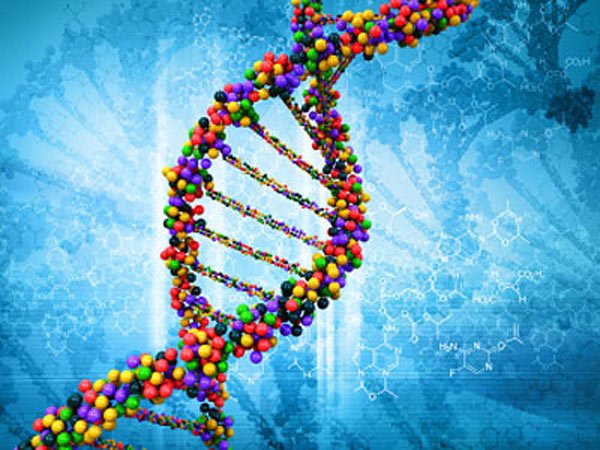
What is the name of the genetic material that is inside the nucleus?
a)
ER
b)
ATP
c)
YOLO
d)
DNA
22.

I am the outer most layer of an animal cell. What am I?
a)
cell wall
b)
nucleus
c)
cell membrane
d)
cell skin
23.
A group of tissues that work together to perform a similar function is called_____. (Examples include the heart, lungs or stomach)
a)
cells
b)
tissues
c)
organs
d)
organ system
24.
Organs that work together to perform a related function is called _____________?
a)
cells
b)
tissues
c)
organ system
d)
organs
25.
When many organ systems work together it can form...
a)
organ
b)
cells
c)
organ system
d)
organism
26.
Which organelle is in a plant cell but not in an animal cell?
a)
cytoplasm
b)
chloroplast
c)
mitochondrion
d)
cell membrane
27.
The most abundant greenhouse gas is _____.
a)
carbon dioxide
b)
water vapor
c)
nitrogen
d)
methane
28.
Changes in orbit can affect earth's ____________.
a)
temperature
b)
rotation
c)
abundance of gases
d)
tilt
29.
A city near the coast will experience ______ winters and _______ summers than inland areas.
a)
warmer, warmer
b)
cooler, cooler
c)
warmer, cooler
d)
cooler, warmer
30.
El Nino ____________________.
a)
reverses the directions of trade winds
b)
occurs every 15 years
c)
has no impact on climate
31.
The burning of coal, gas, and oil which are all fossil fuels releases __________.
a)
Oxygen
b)
Methane
c)
Carbon Dioxide
d)
Nitrogen
32.
Which effect is a meteorite impact likely to NOT have on global climate processes?
a)
firestorms
b)
acid rain
c)
temperature decrease, leading to next ice age
d)
release gas and dust into atmosphere, blocking out sunlight
33.
We help reduce global warming when we ________.
a)
conserve energy
b)
remove trees
c)
burn coal
d)
produce methane
34.
changing climate zones can lead to a shift in ____________.
a)
weather patterns
b)
gases
c)
temperature patterns
d)
environmental hazards
35.
What has contributed to almost 1/3 of the rising sea levels?
a)
rivers/streams emptying into oceans
b)
human water consumption
c)
oceans warming
d)
glaciers melting
36.
The level of CO2 in our atmosphere has ______________ in recent decades.
a)
risen
b)
decreased slightly
c)
stayed the same
d)
decreased significantly
37.
What is the most likely cause of the increase of CO2 levels in our atmosphere?
a)
increased use of fossil fuels by human activity
b)
using energy efficient materials
c)
smoke/gas from volcanic eruptions
d)
lack of photosynthesis from vegetation
38.
The temperature on earth has been ___________ over the past 150 years.
a)
decreasing slightly
b)
rising slightly
c)
making no change
39.
A person who studies climate is _______________.
a)
meteorologist
b)
climatologist
c)
forecaster
d)
weather man
40.
______________is the force exerted by the gases pushing on an object.
a)
ozone pressure
b)
cloud pressure
c)
air pressure
d)
stratus pressure
41.
Air pressure ______________ through the layers farther out from the surface as Earth’s pull of______________ decreases.
a)
decreases; gravity
b)
increases; gravity
c)
decreases; ozone
d)
decreases; exosphere
42.
________________ are made of water vapor that condenses in the troposphere.
a)
dew
b)
clouds
c)
evaporation
d)
transpiration
43.
________________ is formed when water vapor condenses directly onto surfaces.
a)
dew
b)
clouds
c)
frost
d)
transpiration
44.
________ is formed when water vapor changes from gas to ice crystals.
a)
dew
b)
clouds
c)
frost
d)
transpiration
45.
________ is when precipitation that falls on land surfaces attempts to move back toward sea level as surface-water flow or groundwater flow.
a)
flood
b)
run-off
c)
mud
d)
tar
46.
________ ________ are huge bodies of air that form over water or land in tropical or polarregions.
a)
air masses
b)
cloud masses
c)
air pressure
d)
tropical storms
47.
As air masses move and collide with each other, ________ form at the boundaries between them.
a)
air masses
b)
fronts
c)
hurricanes
d)
tropical storms
48.
When neither a cold air mass nor a warm air mass moves at a frontal boundary, the result is a__________ _______ and may produce long periods of ____________
a)
warm front; precipiation
b)
stationary front; precipitation
c)
cold front; precipitation
d)
occluded front; precipitation
49.
______ are a rapidly moving funnel-shaped cloud that extends down from a storm cloud.
a)
storms
b)
tornadoes
c)
thunderstorms
d)
hurricanes
50.
________ is a condition of Earth’s atmosphere at any time.
a)
weather
b)
air pressure
c)
ozone
d)
rain
51.
The source for heating the Earth and circulating Earth’s atmosphere comes from the______________.
a)
sun
b)
moon
c)
earth
d)
ocean
52.
The _____ heats up and releases its heat fairly quickly, but the ______ needs to absorb lots of solar energy to warm up.
a)
land; water
b)
ocean; sea
c)
mountain; valley
d)
trees; land
53.
These two conditions describe an air mass.
a)
temperature and precipitation
b)
wind speed and heavy rain
c)
temperature and humidity
d)
direction and air pressure
54.
Where are colder air masses usually formed?
a)
over oceans
b)
over the North or South poles
c)
over the equator
d)
out in space
55.
What should you do if a severe weather warning is issued for your area?
a)
seek safe shelter
b)
have a party
c)
go out and look for the severe weather
d)
ignore the warning
56.
Climate is
a)
the further you get from the equator
b)
the higher you go, the colder it gets
c)
the conditions of the atmosphere at a certain place and time.
d)
the average weather conditions of an area over a long period of time.
57.
How does higher altitude affect climate?
a)
the higher you go above sea level, the colder it gets.
b)
The further you get from the equator, the colder it gets.
c)
The closer you get to the equator, the hotter it gets.
d)
The process by which heat from the sun is trapped near Earth's surface.
58.
Which describes the processes involved in causing rain?
a)
Warm air moves in below cool air, pushing the cool air up, which causes clouds to form and rain to fall
b)
Cool air moves in above warm air, pushing the warm air down, which causes clouds. The water eventually falls as rain
c)
As warm air rises, it cools, causing water to condense on dust particles and form clouds. The water eventually falls as rain
d)
As cool air rises, it warms, causing water to condense and form clouds. The water molecules will eventually fall as rain
59.

What is B?
a)
Solid
b)
Liquid
c)
Gas
60.

What is B?
a)
Evaporation
b)
Condensation
c)
Precipitation
d)
Runoff
61.
The supply of freshwater under the Earth's surface.
a)
watershed
b)
mouth
c)
headwaters
d)
groundwater
62.
Which source of freshwater is not easily available for human use?
a)
oceans
b)
freshwater lakes
c)
rivers
d)
icecaps/glaciers
63.
On which kind of day would you expect the most evaporation from the surface of a pond?
a)
warm, sunny
b)
cold, sunny
c)
warm, rainy
d)
cold, rainy
64.
Oil
a)
Energy from the Sun; renewable energy source
b)
Fossil fuel; non renewable energy source; made from decomposed plants and animals
c)
Renewable energy from moving water
d)
Energy from deep within the Earth; renewable energy
65.
Solar Energy
a)
Energy from the Sun; renewable energy source
b)
Fossil fuel; non renewable energy source; made from decomposed plants and animals
c)
Renewable energy from moving water
d)
Energy from deep within the Earth; renewable energy
66.
The movement of wind is kinetic energy that spins a turbine to create electricity
a)
Wind Energy
b)
Oil, coal, natural gas. When burned they produce carbon dioxide
c)
Organisms that eat the fish could become endangered due to starvation.
d)
The destruction of forests in order to make the land available for other uses.
67.
Deforestation
a)
Wind Energy
b)
Oil, coal, natural gas. When burned they produce carbon dioxide
c)
Organisms that eat the fish could become endangered due to starvation.
d)
The destruction of forests in order to make the land available for other uses.
68.
Overfishing
a)
Wind Energy
b)
Oil, coal, natural gas. When burned they produce carbon dioxide
c)
Organisms that eat the fish could become endangered due to starvation.
d)
The destruction of forests in order to make the land available for other uses.
69.
The main human activity that releases greenhouse gases is
a)
using bottled water
b)
burning fossil fuels
c)
texting on cellphones
d)
eating meat
70.
What are some consequences of deforestation?
a)
increased population in cities
b)
building of more infrastructure
c)
soil erosion, loss of biodiversity, loss of ability to remove CO2
d)
more mercury and cyanide released into rivers
71.

What is Carrying Capacity?
a)
A type of limiting factor.
b)
The maximum number of individuals that a species can support.
c)
The type of species.
d)
A kind of rabbit.
72.
What is biodiversity?
a)
The variety of species used for food sources
b)
The variety of exotic species
c)
The variety of extinct species
d)
the variety of life in the world or in a particular habitat or ecosystem.
73.
In an energy pyramid, energy_______ as you move up the pyramid.
a)
Increases
b)
Decreases
c)
Stays the same
d)
Changes up and down
74.

If there is 1000 Kcal available in the producers in trophic level 1, how much energy is available in the herbivores in trophic level 2?
a)
10 Kcal
b)
1 Kcal
c)
100 Kcal
d)
1000 Kcal
75.
Humans often change ecosystems as a result of population growth, consumption, and technology. Which of the following exemplifies a way in which humans modify ecosystems?
a)
factory and automotive emissions causing acid rain
b)
redirecting and storing freshwater behind dams
c)
cutting down trees to build new buildings and roads
d)
all of these
76.

A flowering plant with leaves that have parallel veins.
a)
gymnosperms
b)
angiosperms
c)
dicot
d)
monocot
77.
Small grains that contain a plant's male reproductive cells.
a)
stamen
b)
pollen
c)
anther
d)
stigma
78.
The stalks in a flower that produce the male reproductive cells
a)
pistil
b)
stamen
c)
filament
d)
stigma
79.
Synonym for not active.
a)
dormant
b)
sterile
c)
spry
d)
mobile
80.
Any seed plant that has no woody stem.
a)
monocot
b)
dicot
c)
herbaceous
d)
gymnosperm
81.

Plants that have their seeds in pods.
a)
legumes
b)
angiosperms
c)
gymnosperms
d)
dicots
82.
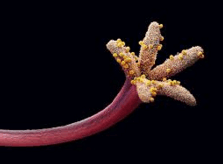
The part of the flower on which the pollen grains land.
a)
pistil
b)
stamen
c)
style
d)
stigma
83.
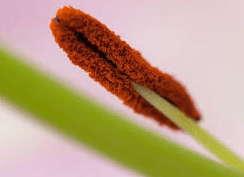
The part of a flower that produces the male reproductive cells.
a)
anther
b)
style
c)
stigma
d)
filament
84.

When a seed sprouts and begins the early growth of a young plant.
a)
germination
b)
pollination
c)
seed dispersal
d)
fertilization
85.
Which of the following is NOT a function of the stem of a plant?
a)
Hold the leaves toward the sun
b)
Hold the petals up for pollinators
c)
Provide a way for xylem to transport food
d)
Support the plant
86.
What anchor plants to the ground and absorb water and nutrients?
a)
Roots
b)
Stem
c)
Xylem
d)
Leaves
87.
Which of the following statements best describes phloem's function in the plant?
a)
transpports water and minerals up from the roots to the rest of the plant
b)
transports food down from the leaves to the rest of the plant
c)
transports water and minerals down from the roots to the rest of the plant
d)
transports food up from the leaves to the rest of the plant
88.
What is the part of the flower that is brightly colored to attract pollinators?
a)
Petals
b)
Stamen
c)
Pistil
d)
Sepals
89.
What part of the flower turns into the fruit?
a)
Seeds
b)
Ovary
c)
Stamen
d)
Sepals
90.
What is the function of the cuticle on a leaf?
a)
to keep water from entering the leaf
b)
to keep water from leaving the leaf
c)
to keep bacteria out of the leaf
d)
to keep oxygen in the leaf
91.
When a starfish grows a new body off a broken arm, what kind of reproduction is this?
a)
Sexual
b)
Differentiation
c)
Asexual
d)
Specialization
92.
Where does an off spring get its traits in asexual reproduction?
a)
From both parents
b)
From only one parent
c)
From neither parent
d)
There are no traits handed down
93.
What percentage of chromosomes are handed down by a sperm cell?
a)
75%
b)
25%
c)
50%
d)
100%
94.
Sexual reproduction requires _____ parents and asexual reproduction requires ___ parents
a)
1,1
b)
2,2
c)
2,1
d)
1,2
95.
What is an advantage of sexual reproduction?
a)
Allows genetic variation
b)
Only needs one parent
c)
Happens very quickly
d)
Offspring are exact copies of parent
96.
What is one disadvantage of sexual reproduction?
a)
Only one parent needed
b)
Off spring are exact copies of parents
c)
Happens very quickly
d)
Needs two parents
97.
Which is a type of Asexual Reproduction
a)
Sexual
b)
Binary fission
c)
Cells
d)
organism
98.
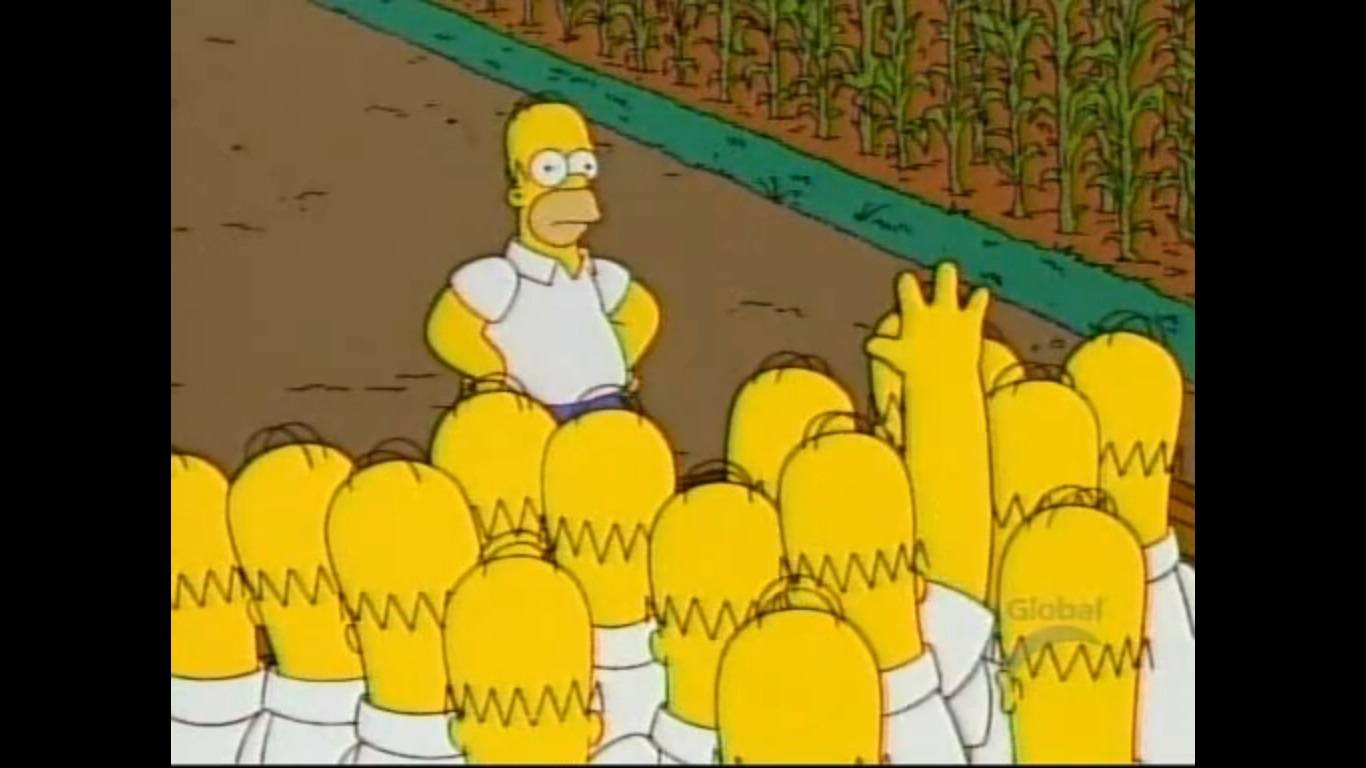
All of the offspring of an organism have the same genetic material, which is identical to the parent organism. From this, we can conclude that this organism -
a)
makes its own food
b)
is unicellular
c)
live in a marine habitat
d)
reproduces asexually
99.
Plants need ________ for photosynthesis
a)
oxygen
b)
soil
c)
carbon dioxide
d)
sugar
100.
What are the products of photosynthesis?
a)
water and carbon dioxide
b)
oxygen and glucose
c)
oxygen and carbon dioxide
d)
oxygen and water
101.
What molecule absorbs sunlight for photosynthesis?
a)
chloroplast
b)
thylakoid
c)
grana
d)
chlorophyll
102.
What are the products of photosynthesis?
a)
Carbon dioxide and water
b)
Carbon dioxide and oxygen
c)
Glucose and oxygen
d)
Glucose and water
103.
Which statement about photosynthesis is correct?
a)
Plants get the energy they need for photosynthesis from water.
b)
Plants get the energy they need for photosynthesis from soil.
c)
Plants get the energy they need for photosynthesis from sunlight.
d)
Plants do not require energy to perform photosynthesis.
104.
The raw materials or reactants of photosynthesis are
a)
sugar and water.
b)
sugar and oxygen.
c)
carbon dioxide and water.
d)
carbon dioxide and oxygen.
105.
The main source of energy for all life comes from ____.
a)
the Earth
b)
the moon
c)
the sun
d)
the food we eat/make
106.
Where does photosynthesis occur?
a)
mitochondria
b)
stomata
c)
xylem
d)
chloroplast
107.
Why do we eat food?
a)
to provide energy/fuel
b)
to eliminate waste products
c)
to prevent diseases
d)
to kill pathogens
108.
Which of the following is the correct equation for PHOTOSYNTHESIS?
a)
6CO2 + 6H2O --> 6O2 + C6H12O6
b)
6CO2 + C6H12O6 + 6H2O --> O2
c)
6O2 + 6H2O --> 6CO2 + C6H12O6
d)
C6H12O6 + 6O2 ---> 6H2O + 6CO2
109.
Which of the following best describes photosynthesis?
a)
Photosynthesis converts radiant energy into chemical energy.
b)
Photosynthesis produces carbohydrates.
c)
Plants need sunlight, carbon dioxide, water, nutrients, and chlorophyll to complete photosynthesis.
d)
Plants use chlorophyll, water, and carbon dioxide to make sugar.
110.
What chemical reaction has almost the same products and reactants as cellular respiration but reversed?
a)
Rusting
b)
Photosynthesis
c)
Combustion
d)
Symphonies
111.
Where does cellular respiration take place in the cell?
a)
Cell Membrane
b)
Nucleus
c)
Mitochondria
d)
Vacuole
112.
What is the purpose of cellular respiration?
a)
to break down food
b)
to create energy in the body
c)
to release energy from food
d)
there is none; it's a waste of time
113.

What does the picture show?
a)
carbon dioxide molecule
b)
oxygen molecule
c)
water molecule
d)
glucose molecule
114.
What happens to the process of photosynthesis at night?
a)
the process slows down / stops
b)
the process speeds up
c)
the process still continues at regular speed
115.

What is the name of this process?
a)
cellular respiration
b)
photosynthesis
c)
glycolysis
d)
stomata
116.
The leaves in plants change color in the fall because...
a)
there is not enough sunlight
b)
there is a reduced water supply
c)
the temperature is cooler
d)
all of the above are correct
100 %

