
 Worksheets
Year8_Chemistry_Shields
Total questions: 111
Worksheet time: 1hrs 16mins
Na2CO3
Name the ionic compound, CaCO3
calcium carbide
calcium carbon trioxide
calcium carbon oxide
calcium carbonate
H2O - name?
hydrooxic acid
hydroxic acid
water
hydrogen oxide
Name the following compound:
CO2
monocarbon dioxide
carbon oxide
carbon dioxide
oxygen carbonide
Which element is Fe
Fire
Fluorine
Ferrnum
Iron


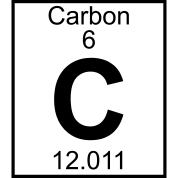

Which is the atomic number?
34.546
29
92.546
63.546
What does the '12' represent?
atomic mass
the amount of neutrons
the amount of protons
number of protons + electrons
Another term for burning is
Rusting
Heat
Combustion
Exploding
A compound that contains only carbon and hydrogen and that produces carbon dioxide and water when burned is called a(n)
acid
carbonate
compound
hydrocarbon
8.7: Combustion is when a __________ reacts with oxygen
petrol
fuel
fire triangle
carbon dioxide

In this chemical reaction, which is the product/s?
Magnesium + Oxygen --> Magnesium oxide
magnesium
magnesium and oxygen
magnesium oxide
oxygen
What does a fuel need in order to burn?
fuel
electricity
oxygen
hydrogen
Hydrocarbons are fuels containing only:
carbon and oxygen
carbon and hydrogen
carbon dioxide and hydrogen
hydrogen and nitrogen
What is the scientific term given when something burns?
a fuel
flammable
combustion
heating
In a word equation, the starting chemicals are called...
reactants
products
ingredients
inputs
What was the chemical name given to Rust ?
Carbon
Iron Oxide
Iron Oxygen
Magnesium Oxide
The combustion of hydrocarbons produces 2 things:
nitrogen and carbon dioxide
water and hydrogen
nitrogen and hydrogen
water and carbon dioxide
The word equation for combustion is:
fuel + oxygen --> water + ..........................................
Carbon dioxide
Limewater
Hydrogen
Nitrogen
A puddle dries up by the process of _____.
evaporation
melting
freezing
condensation
When you open a solid room air freshener, the solid slowly loses mass and volume as the solid turns into a gas as the room freshener's particles escape and mix with the air in the room. This process is known as ______.
sublimation
boiling
freezing
condensation
In which state of matter are particles moving the slowest?
solid
liquid
gas
plasma
Both boiling and evaporation are forms of vaporization. What is the difference between them?
Boiling liquids have intense heat added to it, evaporating liquids take heat from their environment.
Boiling happens quickly, evaporation happens slowly.
Evaporation occurs only at a liquid's surface, boiling occurs throughout the liquid
All of these reasons
What is it called when the state of matter changes from a liquid to a solid?
Vaporisation/boiling
Freezing
Condensation
Melting
What is the boiling point of water?
212°C
100°C
32°C
0°C

On a hot, humid summer day drops of water form on a can of cold soda. What process caused this to happen?
condensation
freezing
vaporization
deposition

Kinetic theory of matter states that...
particles in an object are always moving.
solids can only become liquids.
solids can condense to liquids
particles stay stuck to each other
Anything that has mass and takes up space
gravity
force
matter
volume
Fe(NO3)2
Fe(NO3)2

What is the formula mass of LiCl2?
20
37
42.5
78

What is the mass of Br2?
35
70
80
160

What is the formula mass of MgO?
20
40
28
32

What is the formula mass of C2H6?
60
30
48
110

What is the relative molecular mass of CO2?
12
16
32
44
Subatomic particles with a negative charge
Electrons
Neutrons
Protons
Quarks
An atom is said to be neutral if it has the same number of electrons and ________.
ions
electrons
neutrons
protons

How many protons does one molecule of O2 have?
8
24
16
32

What does the nucleus of an atom contain?
Electrons and neutrons
Protons and neutrons
Neutrinos and positrons
Electrons and megatrons
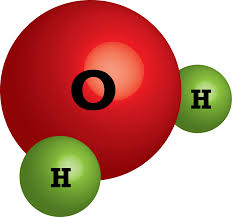
How many atoms are in this molecule?
1
2
3
4


How many electrons does sulfur have
16
32
48
12


You are given the following information: mass = 105 g; volume = 5 mL. What is the density of this substance?
12 g/mL
21 kg/mL
12 g/L
21g/mL
1mL is equal to ...
1000L
1cm3
1000cm3
1L3
The correct unit for density is...
g/mL3
g/cm3
g/mL
either (c) or (d)

