wayground logo

Free Printable Worksheets

Font size

S
M
L
XL
Worksheets

Year 8 Exam Revision

Total questions: 117

Worksheet time: 1hrs 15mins

Name
Class
Date
1.

All matter is made up of tiny _______________

a)

energy

b)

particles (atoms and molecules)

c)

bits

d)

antimatter

2.

All particles in a PURE SUBSTANCE are _________________

a)

the same

b)

different

3.

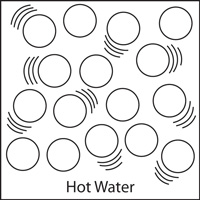
Particles at a higher temperature, move _____________ than those at a lower temperature.

a)

faster

b)

slower

4.

These have a FIXED volume, but NOT a fixed shape, taking the shape of their container.

a)

Solid

b)

Liquid

c)

Gas

5.

In which state of matter will there be the LARGEST space between molecules?

a)

Solid

b)

Liquid

c)

Gas

6.

What is between atoms and molecules

a)

Air

b)

Empty space

c)

Magic

d)

Gas

7.

Which of the following is a correct description for solids?

a)

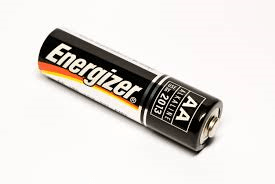
closely arranged and in fixed positions

b)

closely arranged and vibrate in fixed positions

c)

closely arranged and can move around

8.

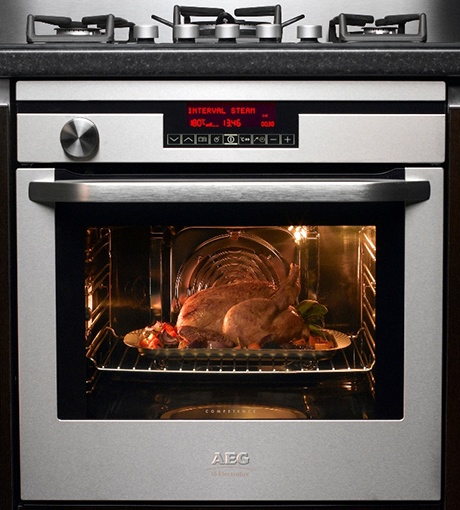
When something goes from gas to liquid, it is called...

a)

Evaporation

b)

Condensation

c)

Deposition

d)

Freezing

9.

Something that goes from liquid to gas is...

a)

Evaporation

b)

Melting

c)

Freezing

d)

Sublimation

10.

Which of the following sentences are true about solids?

a)

Solids are rigid, have a fixed shape but not a fixed volume

b)

Solids are not rigid, have a fixed shape and no fixed volume

c)

Solids are rigid, have a fixed shape and a fixed volume

11.
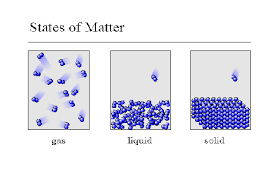
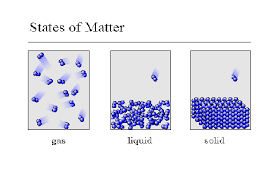
Number 2 represents a ________
a)
solid
b)
liquid
c)
gas
d)
plasma
12.
As particles are exposed to warmer temperatures they __________
a)
speed up
b)
slow down
c)
stay the same
d)
vibrate
13.
As particles are exposed to colder temperatures they _____
a)
speed up
b)
slow down
c)
stay the same
d)
become ions
14.
What is the change of state from a solid straight to a gas called?
a)
melting
b)
evaporating
c)
freezing
d)
sublimation
15.

Gases have no fixed volume.

a)

False

b)

True

16.
What subatomic particles would you find in the nucleus of an atom?
a)
Protons only
b)
Protons and Neutrons
c)
Neutrons and Electrons
d)
Protons and Electrons 
17.
Which subatomic particles contribute the most to the mass of an atom?
a)
Protons, Neutrons, Electrons
b)
Protons only
c)
Protons and Electrons
d)
Protons and Neutrons
18.
What is the number of protons that the element in this image contain?
a)
14
b)
7
c)
15
d)
18
19.
Protons and Electrons balance the charge of an atom.
a)
True
b)
False
20.
If an atom has 12 positively charged subatomic particles, which of the following must it also have to be considered a neutral atom?
a)
12 neutrons
b)
12 electrons
c)
12 protons
d)
24 protons and neutrons
21.
An atom has 10 protons, 15 neutrons and 10 electrons what is its mass number.
a)
20
b)
10
c)
5
d)
25
22.
An element with a mass number of 11 and an atomic number of 5 has how many neutrons?
a)
11
b)
5
c)
6
d)
16
23.
The particles of the atom you can find by knowing the atomic number.
a)
neutrons
b)
protons and electrons
c)
protons and neutrons
d)
atomic mass
24.
The mass of one proton is greater than the mass of one...
a)
neutron
b)
electron
25.
What is the atomic mass of the atom pictured? 
a)
9
b)
10
c)
18
d)
19
26.
What is the atomic number of the atom pictured? 
a)
9
b)
10
c)
18
d)
19
27.
True or False - Protons and Neutrons have about the same mass.
a)
True - They have about the same mass
b)
False - They do not have about the same mass
28.
Which subatomic particle has a negative (-) charge?
a)
Proton
b)
Electron
c)
Neutron
29.
Which subatomic particle has a neutral or no charge?
a)
Proton
b)
Electron
c)
Neutron
30.
In this picture, the Electrons are found in which color?
a)
Blue
b)
Red
c)
Green
31.
At higher temperatures
a)
particles in an object have less energy
b)
particles in an object move faster
c)
a gas contracts
32.
A gas
a)
has a definite shape but no definite volume
b)
has a definite volume but no definite shape
c)
has fast-moving particles
33.
Freezing
a)
Solid to gas
b)
Liquid to solid
c)
Gas to solid
d)
Liquid to gas
34.
Boiling
a)
liquid to gas
b)
gas to solid
c)
gas to liquid
d)
solid to liquid
35.
Which state of matter has tightly packed molecules?
a)
solid
b)
liquid
c)
gas
36.
Which state of matter has a definite shape?
a)
solid
b)
liquid
c)
gas
37.
Define a liquid.
a)
Indefinite shape, indefinite volume
b)
Definite shape, definite volume
c)
Found in stars
d)
Definite volume, indefinite shape
38.
The state of matter that has no definite size or shape is
a)
Solid
b)
Liquid
c)
Gas
39.
Particles (molecules) in a ______________________ have more energy than the other states of matter.
a)
gas
b)
solid
c)
liquid
40.
Particles of a liquid
a)
are tightly packed together and stay in a fixed position.
b)
have no viscosity.
c)
decrease in volume with increasing temperature.
d)
are free to move around one another but still touch.
41.
What term describes a solid changing to a gas?
a)
Deposition
b)
Sublimation
c)
Evaporation
d)
Freezing
42.
Particles (molecules) in a ______________________ have more energy than the other states of matter.
a)
gas
b)
solid
c)
liquid
43.
What is condensation?
a)
gas to solid
b)
gas to liquid
c)
liquid to solid 
d)
solid to liquid 
44.
The speed of the molecules determines the _____.
a)
volume
b)
density
c)
pressure
d)
temperature
45.
Which has a greater distance between particles?
a)
Solid
b)
Liquid
46.
The slower the particles in a substance move,
a)
the colder it is.
b)
the warmer it is.
c)
the more energy it has.
d)
the less energy it has.
47.
Thermal energy is...
a)
heat energy.
b)
the energy of motion
c)
energy of nuclear processes.
d)
an indication of physical change.
48.
A chemical change
a)
doesn't really change much.
b)
creates a new substance
c)
is a change in the state of matter
49.
A physical change is...
a)
a change that doesn't change the identity
b)
a change that makes something new.
c)
a chemical reaction
50.
What is matter?
a)
Anything that has mass and volume
b)
The shape of an object
c)
How much an object weighs
d)
The pull of objects on one another
51.
What are the three states of matter?
a)
 oxygen, hydrogen, nitrogen
B) solid, liquid, gas
C) earth, wind, fire
D) electron, proton, neutron

b)
A) oxygen, hydrogen, nitrogen
electron, proton, neutron
c)
earth, wind, fire
d)
solid, liquid, gas
52.
Evaporation is
a)
Gas changing to a liquid
b)
Solid changing to a liquid
c)
Liquid changing to a solid
d)
Liquid changing to a gas
53.
A solid changing to a liquid is...
a)
melting
b)
freezing
c)
condensing
d)
evaporating
54.
Water vapor cooling and turning into water droplets/steam is an example of......
a)
Condensation
b)
Melting
c)
Freezing
d)
Evaporation
55.
Which of the following statements is NOT true of all different types of matter?
a)
They are made of atoms and molecules
b)
The particles are always in motion
c)
The particles always move at the same speed
d)
They are made of particles that are too small to see
56.
State of matter with no definite shape or volume.
a)
solid
b)
liquid
c)
gas
d)
Mississippi
57.
Change of state from a solid directly to a gas is called
a)
deposition
b)
melting
c)
evaporation
d)
sublimation
58.
What happens when my glass of water is sitting in the sun and disappears into a gas?
a)
evaporation
b)
burning
c)
melting
d)
freezing
59.
How is a gas defined?
a)
no shape, no volume
b)
Definite shape, definite volume
c)
Found in stars
d)
Definite volume, no shape
60.
Particles of a liquid
a)
are tightly packed together and vibrate in place
b)
have no viscosity.
c)
collide with one another
d)
vibrate and slide past each other
61.
Molecules are closest together in a 
a)
Solid
b)
Liquid
c)
Gas
d)
plasma
62.

What is potential energy?

a)

moving energy

b)

stored energy

c)

renewable energy

d)

non renewable energy

63.

What is energy?

a)

moving energy

b)

stored energy

c)

renewable energy

d)

The ability to do work.

64.

What is kinetic energy?

a)

moving energy

b)

potential energy

c)

stored energy

d)

renewable energy

65.

Which of these things is an example of potential energy?

a)

a car motor

b)

firewood

c)

battery

d)

a fan

66.
What is energy changing from one form to another?
a)
energy conservation
b)
energy transformation
c)
energy creation
d)
mechanical energy
67.
Which energy conversion is taking place when you put gasoline in a car?
a)
thermal -> electrical
b)
mechanical -> electrical
c)
chemical -> mechanical
d)
mechanical -> electromagnetic
68.
what type of energy is stored in a battery?
a)
electrical
b)
chemical
c)
thermal
d)
mechanical
69.
Electrical Energy is transferred to _____ Energy.
a)
Thermal
b)
Solar
c)
Electrical
d)
None
70.
Mechanical Energy is transferred to _____ Energy.
a)
Solar
b)
Mechanical
c)
Electrical
d)
Potential
71.
The picture shows a microwave oven. As a microwave oven is operated, electrical energy is transformed into all of the following types of energy EXCEPT —
a)
solar
b)
light
c)
thermal
d)
mechanical
72.
Which energy transformation occurs in a toaster?
a)
chemical to electric
b)
electric to thermal
c)
kinetic to chemical
d)
thermal to potential
73.
Can you create energy?
a)
Yes
b)
No
74.
Can you destroy energy?
a)
Yes
b)
No
75.
Materials that transfer energy easily.
a)
Conductors
b)
Insulators
c)
Heat
d)
Energy
76.
What happens to particles as they heat up?
a)
They slow down
b)
Nothing
c)
They don't move
d)
They speed up
77.
This form of energy could be represented by the movement of electrons within copper wires.
a)
Electrical
b)
Light
c)
Sound
d)
Mechanical
78.

Energy of motion is

a)

potential energy

b)

kinetic energy

c)

elastic energy

d)

chemical energy

79.

______________________ occurs when energy changes from one form to another.

a)

Energy transformation

b)

Energy transfer

c)

Energy balance

d)

Energy equilibrium

80.
The picture shows an electrical circuit. This circuit is a series circuit because: 
a)
It has 3 light bulbs.
b)
The same current flows through all three light bulbs.
c)
It uses a single battery.
d)
The electrical current is divided between the three light bulbs.
81.
Levi is wanting to light a bulb.  What does he need to get the bulb to light?
a)
A battery and a paper clip
b)
A battery and a wire
c)
A paper clip and a wire
d)
A switch and a wire
82.
A series circuit has ____ path(s) that the electric current can take. 
a)
One
b)
Two 
c)
Three 
d)
Four
83.
In a parallel circuit, if one connection is broken, all of the connections stop working.
a)
True
b)
False
84.
An object through which electrons can easily flow is called a(n) ___________.
a)
Conductor
b)
Insulator
85.
Electricity is the flow of _________.
a)
Protons
b)
Neutrons
c)
Electrons
86.
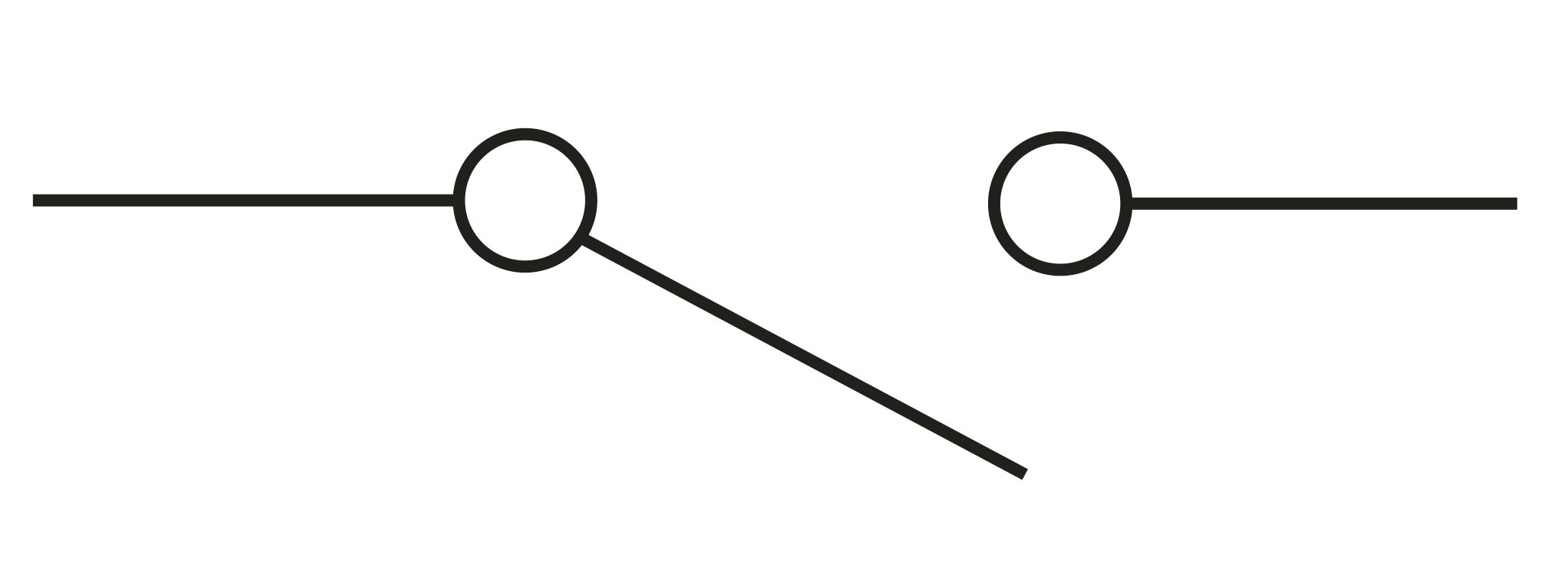
this is the symbol for a _____?
a)
switch
b)
light 
c)
battery
d)
wires
87.
What kind of circuit is this?
a)
Series
b)
Consecutive
c)
Parallel
d)
Training
88.
The force that pushes the electricity through a circuit is called...
a)
resistance
b)
voltage
c)
current
d)
switch
89.
The flow of electricity through a conductor is called...
a)
resistance
b)
voltage
c)
current
d)
source of electric current
90.
The best conductors for electricity are made of...
a)
wood
b)
plastic
c)
rubber
d)
metal
91.
This measures the speed of the current in a circuit
a)
voltage
b)
ammeter
c)
switch
d)
resistance
92.
What slows down the flow of electricity in a circuit?
a)
resistance
b)
voltage
c)
current
d)
source of electric current
93.
Which circuit (s) are parallel?
a)
A
b)
A and B
c)
B and C
d)
C
94.
Which one will still function if one light bulb goes out?
a)
A-Series
b)
B-Parallel
c)
A-Parallel
d)
B-Seriese
95.
Security alarms are made of _______ circuits because they turn on when the circuit is broken.
a)
Parallel
b)
Series 
c)
Fancy 
96.

Why electrical wiring usually are covered with a layer of plastic?

a)

To make it look pretty

b)

To help electricity flow along the wire

c)

To make it safe

d)

To add more energy

97.

Why is electrical wiring usually made from copper?

a)

Because copper is shiny

b)

Because copper conducts electricity

c)

Because copper is not magnetic

d)

Because copper insulate electricity

98.

A material that does NOT let electricity pass through it is called ...

a)

An electrical conductor

b)

An electrical insulator

c)

An electrical source

d)

An electric appliance

99.
This circuit has a battery, buzzer, and switch.
When the switch is closed the buzzer will sound because -
a)
the switch gives energy to the battery
b)
the buzzer is made of special plastic
c)
the wires are cooled by the surrounding air
d)
electricity can flow in a complete path
100.
Which bulbs will light?
a)
1 and 2
b)
2 and 3
c)
3 and 4
d)
4 and 2
101.
What happens to the brightness of the light bulbs in a series circuit when you add more lights.
a)
Each bulb gets dimmer
b)
Each bulb remains the same
c)
Half of the bulbs get dimmer
d)
Each bulb gets brighter
102.
What is the unit for Current
a)
C
b)
Q
c)
I
d)
A
103.
What 'flows' in a wire?
a)
Protons
b)
Neutrons
c)
Atoms
d)
Electrons
104.

What is true about this circuit?

a)

Light 2 is on

b)

This is a series circuit

c)

Both lights are off

d)

This is a parallel circuit

105.
Current is measured in....
a)
Amps 
b)
Volts
c)
Ohms
d)
Coulombs
106.
In which of these two circuits is the current the same at all points? 
a)
A
b)
B
107.
Which of the two circuits would have the brightest bulbs? 
a)
A
b)
B
108.
Voltage is measured in __.
a)
volts.
b)
watts.
c)
coulombs. 
109.
A voltmeter should be placed ........... in a circuit
a)
in parallel
b)
in series
c)
in order
d)
upside down
110.
What would the voltmeter read
a)
1V
b)
2V
c)
3V
d)
6V
111.
Which Voltmeter will give the lowest reading?
a)
V1
b)
V2
c)
V3
112.
How should you put in an Ammeter?
a)
In Parallel
b)
In Series
113.
This is the circuit symbol for ...
a)
an AC current source
b)
a DC current source
c)
an ammeter
d)
a voltmeter
114.
This is the circuit symbol for ...
a)
an AC current source
b)
a DC current source
c)
an ammeter
d)
a voltmeter
115.
This is the symbol for a _____?
a)
Lamp
b)
Water wheel
c)
Loudspeaker
d)
Motor
116.
Atoms may have electrons which carry a...
a)
positive charge
b)
negative charge
c)
neutral or no charge
d)
opposite
117.
Atoms may have protons which carry a...
a)
positive charge
b)
negative charge
c)
neutral or no charge
d)
opposite