wayground logo

Free Printable Worksheets

Font size

S
M
L
XL
Worksheets

Scince quiz 805

Total questions: 122

Worksheet time: 2hrs 29mins

Name
Class
Date
1.

A signal is a ____________ that is communicated through using the senses.

a)

piece of information

b)

electromagnetic wave

c)

code

d)

feeling

2.

A piece of information that is communicated through using the senses.

a)

signal

b)

noise

c)

wave

d)

code

3.

A signals can be stored, encoded, or transmiteted.

a)

True

b)

False

4.

To send a signal, who must understand how the signal was encoded?

a)

just the sender

b)

just the receiver

c)

both the sender and the receiver

d)

neither the sender nor the receiver

5.

Which are examples of an encoded message?

(select ALL that apply)

a)

a pile of rocks on a trail

b)

Morse code

c)

random clapping

d)

street signals

6.

Which are examples of transmitting a signal?

(select ALL that apply)

a)

talking to another person

b)

electromagnetic waves in wires

c)

information stored on a hard drive

d)

an encyclopedia

7.

Which is a disadvantage of using waves to carry signals?

a)

they lose energy as they travel

b)

they move information too fast

c)

it's difficult to decode the information

d)

signals often get lost

8.

As the noise for a signal increases, the information...

a)

increases

b)

deteriorates

c)

becomes clearer

d)

changes into sound waves

9.

How do fiber optics send a signal?

a)

reflection of light

b)

refraction of light

c)

diffraction of light

d)

transmission of electricity

10.

How does increasing the noise of a signal affect the quality of the wave?

a)

it increase the quality

b)

it decreases the quality

c)

the quality is not affected

d)

it only affects it if you are far away

11.
Is music playing from a record an analog or digital signal?
a)
Analog
b)
Digital
12.
Is a video game coded as analog or digital data?
a)
Analog
b)
Digital
13.
The string of 1s and 0s that control a computer is called _____ code.
a)
binary
b)
dichotomous
c)
Morse
d)
two-number
14.
Numbers in a digital code can have _____ values.
a)
any
b)
only high
c)
only low
d)
only set
15.
Numbers in an analog code can have _____ values.
a)
any
b)
only high
c)
only low
d)
only set
16.
Which type(s) of signal(s) can be easily corrected to remove noise?
a)
Analog
b)
Digital
c)
Both
d)
Neither
17.
Analog signals can be converted to digital through a process called _____.
a)
conversion
b)
processing
c)
sampling
d)
translation
18.
How do computer hard drives and USB drives store data?
a)
Binary code
b)
Pictures
c)
Symbols
d)
Words
19.
Which type(s) of signal(s) can be transmitted as radio waves?
a)
Analog
b)
Digital
c)
Both
d)
Neither
20.
Setting the color of each pixel on a computer screen requires a _____ signal.
a)
analog
b)
digital
c)
loud
d)
fast
21.

what is land pollution??

a)

cutting of trees

b)

excessive digging of soil

c)

throwing garbage

d)

all of the above

22.

what causes land pollution?

a)

burning of wastes results in accumulation of ash

b)

dumping of non-decaying products such as plastic and glass into the soil

c)

none of these

d)

both 1 and 2

23.

how can we prevent water pollution?

a)

by not throwing garbage into water bodies

b)

by not washing clothes and utensils near the river banks

c)

by preventing leakage of fuel that is present in motorboaats

d)

all of the above

24.

what is the effect of noise pollution?

a)

it irritates

b)

it disturbs and interferes with our everyday activities like sleeping,talking and reading

c)

None of the above

d)

both 1 and 2

25.

How long does it take for the earth to rotate

a)

day

b)

week

c)

hour

d)

month

26.

How long does it take for the earth to rotate

a)

day

b)

week

c)

hour

d)

month

27.

Which motion involves an object spinning on its axis?

a)

rotation

b)

flotation

c)

revolution

d)

evolution

28.

Which motion involves an object orbiting around another object?

a)

rotation

b)

flotation

c)

revolution

d)

evolution

29.

Earth does a complete revolution every _______

a)

10 years

b)

12 hours

c)

24 hours

d)

365 days

30.
The earth rotates every
a)
24 hours
b)
15 hours
c)
365 days
d)
hour
31.

The Earth's movement (revolution) around the sun causes _________

a)

heating

b)

seasons

c)

atmosphere

d)

years

32.
Spinning of the Earth on its axis is called...
a)
rotation
b)
revolution
c)
orbit
d)
double axis
33.
Earth's rotation on its axis is what causes ______________________________.
a)
seasons
b)
moon phases
c)
day and night
d)
weather
34.

It is ______ on the side of the Earth facing the Sun.

a)

night

b)

day

c)

summer

d)

winter

35.

It is ______ on the side of the Earth facing away from the Sun.

a)

night

b)

day

c)

summer

d)

winter

36.

Completed in 24 hours

a)

Rotation

b)

Revolution

37.

Completed in a year

a)

Rotation

b)

Revolution

38.
When the Northern Hemisphere of Earth is Leaning away from the Sun, What season is the Southern Hemisphere experiencing?
a)
Summer
b)
Winter
c)
Spring
d)
Fall
39.

What season is the northern hemisphere experiencing in the photo?

a)

Fall

b)

Spring

c)

Winter

d)

Summer

40.
What happens when the area in which you live tilts away from the sun?
a)
It is summer.
b)
It is spring.
c)
It is winter.
d)
It is fall.
41.

What is the name of the star closest to Earth

a)

Sun

b)

White Dwarf

c)

Demios

d)

Phobos

42.

What is the name of the force that holds Earth in orbit around the Sun?

a)

rotation

b)

revolution

c)

gravity

d)

motion

43.

The Sun is at the center of the Solar System. Which shape best describes the path Earth takes around the Sun.

a)
b)
c)
d)
44.
About how many days does it take to moon to go through a complete cycle?
a)
7 days
b)
365 days
c)
29 days
d)
20 days
45.
When the visible (lit) portion of the moon is increasing, the moon is:
a)
waning
b)
full
c)
waxing
d)
new
46.
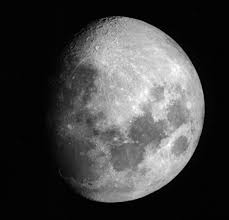
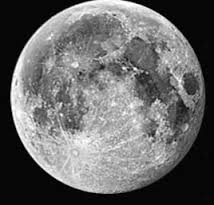
Name the moon phase
a)
Waning Crescent
b)
Waxing Crescent
c)
Waning Gibbous
d)
Waxing Gibbous
47.
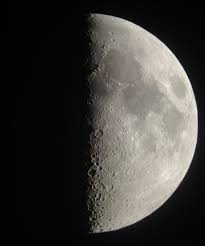
The 1st Quarter moon is lit on the:
a)
Left Side
b)
Right Side
48.
Name the moon phase
a)
waning crescent
b)
waxing crescent
c)
waning gibbous
d)
waxing gibbous
49.
Name the moon phase
a)
waning crescent
b)
waxing crescent
c)
waning gibbous
d)
waxing gibbous
50.
Name the moon phase
a)
First Quarter
b)
Last Quarter
c)
New Moon
d)
Full Moon
51.
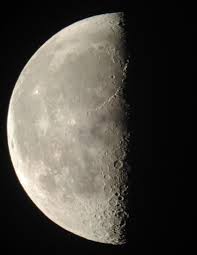
Name the moon phase
a)
First Quarter
b)
Last Quarter
c)
New Moon
d)
Full Moon
52.
Name the moon phase
a)
First Quarter
b)
Last Quarter
c)
New Moon
d)
Full Moon
53.
Name the moon phase
a)
First Quarter
b)
Last Quarter
c)
New Moon
d)
Full Moon
54.
As the moon's shape appears to get smaller, we say that the moon is _.
a)
swelling
b)
waxing
c)
waning
d)
disappearing
55.
Phases of the moon in which the moon appears to be getting larger are referred to as _.
a)
waxing
b)
waning
c)
new
d)
eclipse
56.
How much of the moon is always lit?
a)
can't tell
b)
always changes
c)
half
d)
3/4
57.
Name the moon phase that would come AFTER this moon.
a)
waning crescent
b)
waxing crescent
c)
waning gibbous
d)
waxing gibbous
58.
What moon phase came right BEFORE this one?
a)
First Quarter
b)
Last Quarter
c)
New Moon
d)
Full Moon
59.

The moon ____________ around the Earth.

a)

revolves

b)

rotates

c)

up

d)

down

60.

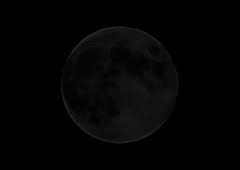
What is the name of this moon phase?

a)

New Moon

b)

Full Moon

c)

Black Moon

d)

This is not a moon

61.

What is the name of this moon phase?

a)

Waxing Gibbous

b)

Waxing Crescent

c)

Waning Crescent

d)

Waning Gibbous

62.
What is the name of this moon phase?
a)
Left Half Moon
b)
3rd Quarter Moon
c)
Right Half Moon
d)
1st Quarter Moon
63.
What is the name of this moon phase?
a)
Waxing Gibbous
b)
Waning Gibbous
c)
Waxing Crescent
d)
Waning Crescent
64.
What is the name of this moon phase?
a)
The Solar Eclipse
b)
New Moon
c)
Full Moon
d)
The Lunar Eclipse
65.
What is the name of this moon phase?
a)
Waning Crescent
b)
Waxing Crescent
c)
Waxing Gibbous
d)
Waning Gibbous
66.
What is the name of this moon phase?
a)
3rd Quarter Moon
b)
1st Quarter Moon
c)
Right Half Moon
d)
Left Half Moon
67.
What is the name of this moon phase?
a)
Waning Crescent
b)
Waxing Crescent
c)
Waning Gibbous
d)
Waxing Gibbous
68.
What does "Waxing" mean?
a)
Appears like the moon is getting larger
b)
Appears like the moon is getting smaller
69.
What does "Waning" mean?
a)
Appears like the moon is getting larger
b)
Appears like the moon is getting smaller
70.

How many different lunar phases are there?

a)

8

b)

4

c)

2

d)

16

71.
How long does it take the moon to make one complete orbit around the Earth?
a)
One month
b)
One year
c)
About 28 days
d)
About 14 days
72.
darkest, innermost part of the shadow
a)
penumbra
b)
umbra
73.
lighter, outer part of the shadow
a)
penumbra
b)
umbra
74.
What type of eclipse occurs when the moon blocks the sun's light and cast a shadow on earth?
a)
solar
b)
lunar
75.
What type of eclipse occurs when the earth's shadow is cast on a full moon?
a)
solar
b)
lunar
76.
What moon phase occurs during a solar eclipse?
a)
Full moon
b)
new moon
c)
1st quarter
d)
waxing gibbous
77.
What moon phase occurs during a lunar eclipse?
a)
full moon
b)
new moon
c)
3rd quarter
d)
waxing crescent
78.
What part of the shadow must I be in to see a total solar eclipse?
a)
umbra
b)
penumbra
79.
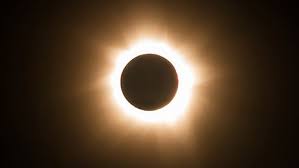
What type of eclipse is this?
a)
Solar eclipse
b)
Lunar eclipse
80.
What type of eclipse is this?
a)
Solar Eclipse
b)
Lunar Eclipse
81.

This image is showing us a.....

a)

solar eclipse

b)

lunar eclipse

c)

phases of the moon

d)

earth eclipse

82.

When the moon passes between the earth and the sun, this results in a.....

a)

Waxing moon

b)

lunar eclipse

c)

solar eclipse

d)

sun rise

83.
What type of eclipse is this?
a)
Solar Eclipse
b)
Lunar Eclipse
84.

This image is showing us a.....

a)

solar eclipse

b)

lunar eclipse

c)

phases of the moon

d)

earth eclipse

85.

This model is showing us a...

a)

lunar eclipse

b)

solar eclipse

c)

phases of the moon

d)

earth eclipse

86.

If you look up at the sky and see this, you are witnessing a....

a)

solar eclipse

b)

total eclipse

c)

lunar eclipse

d)

jupiter

87.

If you are looking up at the sky and see this, you are looking at a....

a)

solar eclipse

b)

total eclipse

c)

lunar eclipse

d)

jupiter

88.
This is a diagram of the moon phases. In which phase would a solar eclipse occur?
a)
New Moon
b)
1st quarter
c)
Full Moon
d)
3rd Quarter
89.
During a solar eclipse...
a)
The sun is blocked by the moon
b)
The Earth is blocked moon
c)
The moon is blocked by the sun
d)
You are blocked
90.
Gravity is which?
a)
attractive force
b)
repulsive force
c)
both attractive and repulsive
91.
Gravity does which?
a)
Pushes objects away
b)
Pulls objects in
c)
Both pushes and pulls
92.
Which correctly shows gravity between the moon and the planet?
a)
A
b)
B
c)
C
93.
As the mass of a star increases the gravity will _________
a)
increase
b)
decrease
c)
stay the same
94.
As the distance between two objects in space increases the gravity will _______________
a)
increase
b)
decrease
c)
stay the same
95.
Small objects have gravitational pull like you and me?
a)
True
b)
False
96.
Which model has greater gravitational attraction (if any)
a)
Model A
b)
Model B
c)
Both Model A and Model B (same gravity)
97.
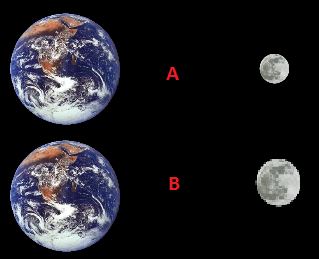
Which system has the greater gravitational attraction between the two objects (if any)?
a)
System A
b)
System B
c)
Same gravitational attraction fro System A and System B
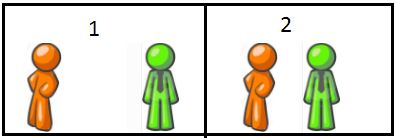
98.
Which System has the greater gravitational pull between the two objects?
a)
System 1
b)
System 2
c)
Same: there is no gravitational attraction between the two objects
99.
Which model has the greater gravitational attraction?
a)
Model 1
b)
Model 2
c)
Neither: there is not gravitational attraction between the two objects
100.
A starship approaches a planet.  As the ship gets closer the gravitational attraction will
a)
Increase between the planet and starship
b)
Decrease between the planet and starship
c)
Stay the same
101.
The ____________ object always orbits the other object
a)
More massive
b)
Less massive
c)
Bigger diameter
d)
Smaller diameter
102.
Gravitational forces cause less massive moons to orbit more massive planets
a)
True
b)
False
103.
The gravitational force of the sun is less than the gravitational forces of the planets surrounding it.
a)
True
b)
False
104.
The gravitational force of the sun causes the planets to orbit around it.
a)
True
b)
False
105.
The gravitational forces from the center of the galaxy cause the stars and solar systems surrounding the galaxy to orbit.
a)
True
b)
False
106.
What keeps galaxies together?
a)
stars
b)
dust
c)
gravity
d)
dark matter
107.
Without gravity the stars in the galaxy would
a)
continue to orbit in a circle
b)
move in a random direction
c)
move in a straight line
108.
Without gravity the moon would
a)
go around the Earth
b)
collide with Earth
c)
move in a straight line
109.

Which is the hottest planet in the Solar System?

a)

Earth

b)

Venus

c)

Mercury

d)

Pluto

110.

Which planet is not a rocky planet?

a)

Mars

b)

Venus

c)

Jupiter

d)

Earth

111.

The sun orbits around the Earth. True or False

a)

True

b)

False

112.

Earth rotates on its axis and causes day and night.

a)

Yes

b)

No

113.

Mars is red because it is

a)

cold

b)

hot

c)

rusty

d)

small

114.

The farthest planet in the Solar System is

a)

Uranus

b)

Saturn

c)

Mercury

d)

Neptune

115.

Pluto is a

a)

rocky planet

b)

dwarf planet

c)

hot planet

d)

moon

116.

The Sun is a

a)

orbit

b)

moon

c)

planet

d)

star

117.

The smallest planet is

a)

Mercury

b)

Venus

c)

Earth

d)

Mars

118.

Planet that can be easily seen from the Earth

a)

Earth

b)

Sun

c)

Saturn

d)

Venus

119.
Our galaxy is called the
a)
Earth Nebula
b)
The Hubble Galaxy
c)
The Milky Way
d)
The Snickers
120.
Galaxies are composed of (best answer)
a)
stars
b)
stars and gas
c)
stars, dust, and gas
d)
stars, dust, and gas held together by gravity
121.
Place these objects in order from smallest to largest.
a)
Planets, solar system, universe, galaxy
b)
Solar system, planets, galaxy, universe
c)
Planets, solar system, galaxy, universe
d)
Galaxy, solar system, planets, universe
122.
Which of the following is the largest?
a)
The Milky Way Galaxy
b)
A red giant star
c)
The moon
d)
Jupiter