
 Worksheets
Muscular System
Total questions: 48
Worksheet time: 31mins
Which type of muscle is striated, branched and involuntarily controlled?
Which types of muscle tissue are cylindrical, multinucleated and voluntarily controlled?

What muscle is highlighted in the picture?
Triceps
Biceps
Quads
Deltoids

What muscle is highlighted in the picture?
Triceps
Biceps
Quads
Deltoids

What muscle is highlighted?
Triceps
Biceps
Quads
Deltoids

What muscles is highlighted?
Deltoid
Trapezius
Tricep
Pectoralis

What muscle is highlighted?
Trapezius
Lats
Pectoralis
Deltoids

What muscle is highlighted?
Lats
Abdominals
Pectoralis
Quads

What muscle is highlighted?
Hamstrings
Quads
Calves
Gluteus

What muscle is highlighted?
Hamstrings
Quads
Calves
Gluteus
What is the characteristic of muscle tissue that allows it to respond to a stimulus?
Contractility
Elasticity
Excitability
Extensibility
What is the role of ATP in muscle contractions?
Regulates body temperature
Transmits nerve impulses to muscle fibers
Allows muscles to slide and prevent bursting
Provides energy for muscle contractions
What happens when muscles don't get enough ATP?
They generate heat
They become fatigued
They become stronger
They contract slowly
How are muscles attached to bones?
By cartilage
By joints
By tendons
By ligaments
Which muscle is responsible for contracting during an action?
All of the above
Prime Mover
Synergist
Antagonist
Which of the following is NOT a major task of the muscular system?
movement for the body
heat production for the body
maintaining posture
making red blood cells
The _________ separate one sarcomere from another?
synapses
m-lines
z-lines (z-discs)
active sites
Which connective tissue surrounds fasicles?
epimysium
endomysium
perimysium
Which connective tissue surrounds the whole muscle?
epimysium
endomysium
perimysium
Which connective tissue surrounds individual muscle fibers?
epimysium
endomysium
perimysium
Skeletal muscles...
Require energy in order to contract
Require energy in order to relax
Relax when calcium ions are transported into the sarcoplasmic reticulum
All of these

Which type of muscle is this?
Smooth
Skeletal
Cardiac

Which type of muscle is this?
Skeletal
Cardiac
Smooth

Which of the following puts the structures of the muscle in order from largest to smallest?
Whole muscle, muscle fiber, actin & myosin, myofibril, muscle fasicle
Whole muscle, muscle fasicle, muscle fiber, myofibril, actin & myosin
Whole muscle, muscle fiber, muscle fasicle, myofibril, actin & myosin
Whole muscle, muscle fasicle, muscle fiber, actin & myosin, myofibril
What is the specific neurotransmitter that stimulates the movement of skeletal muscles?
GABA
Acetylcholine
Serotonin
Dopamine

Name this muscle
Hamstring
Quadriceps
Booty
Gluteus Maximus

Name this muscle
Gastrocnemius
Achilles
Calves
Fibula
Muscles that oppose one another are
synergist
hateful
prime movers
antagonists
Point of origin refers to .......
the place where the muscles attach to the bone, but no movement occurs
the place where the muscles attach the and movement occurs
where a muscle attaches to another muscle
the membrane the covers and supports muscles
What do all muscle types require for contraction?
Na+
Ca2+
K+
Mg2+
What is the role of ATP in muscle contraction?
It binds to actin
It provides energy for the power stroke
It transports calcium ions
It breaks down lactic acid
What is the role of calcium ions in muscle contraction?
They provide energy for contraction
They bind to troponin to expose binding sites on actin
They break down ATP
They transport oxygen to muscles
ability of muscle to shorten and produce tensions at its ends
contractibility
excitability
elasticity
extensibility
The gastrocnemius muscle is the main muscle of the calf of the leg, which flexes the knee and foot. It runs to the Achilles tendon from two heads attached to the femur. Identify the portion of the muscle that attaches to a stationary (not moving) bone.
The end of the muscle that attaches to the more movable bone is known as the:
Origin
Insertion
Belly
Tendon
Your trapezius muscle is attached at the vertebrae and the clavicle. The clavicle is this muscle’s ___________.
insertion
origin
prime mover
antagonist
Which type of cellular respiration makes the most energy for our muscles?
anaerobic
fermentation
aerobic
photosynthesis
Which of the following is true of anaerobic respiration?
It produces lactic acid.
It causes fatigue.
It produces an oxygen debt.
All of the above.
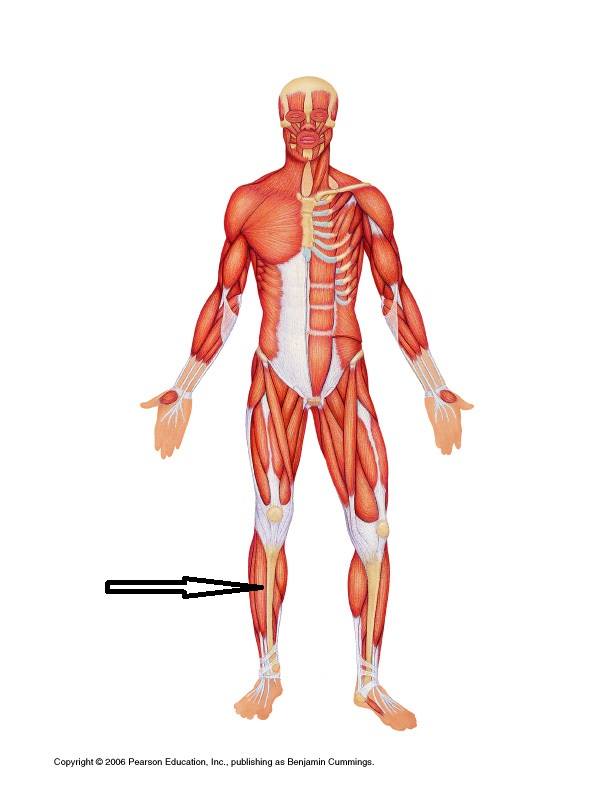
hamstrings
sartorius
tibialis anterior
brachioradialis
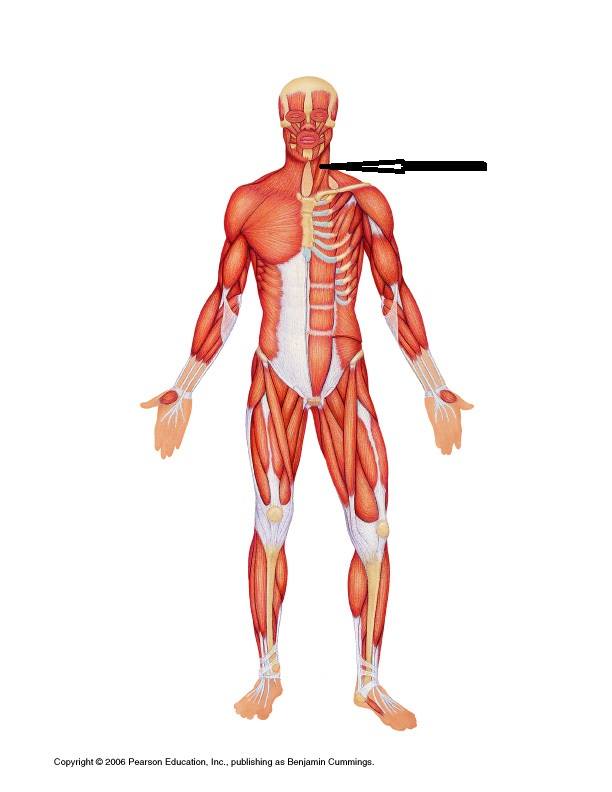
masseter
tibialis anterior
pecotoralis major
sternocleidomastoid
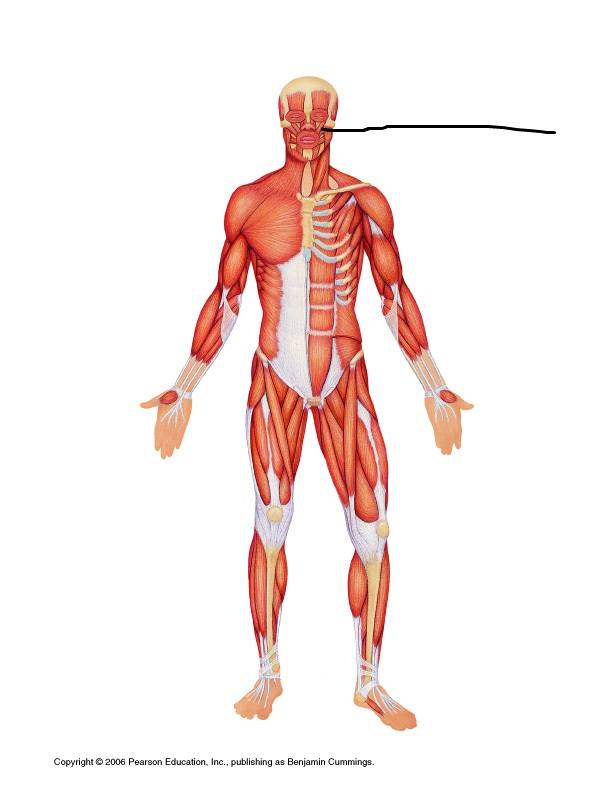
zygomaticus
buccinator
masseter
sternocleidomastoid

