wayground logo

Free Printable Worksheets

Font size

S
M
L
XL
Worksheets

FYUP 1st Semester Class Test, LKC

Total questions: 51

Worksheet time: 2hrs 42mins

Name
Class
Date
1.

The smallest atomic size of the following is ...........

a)

K+K^+  ion

b)

Al+3Al^{+3}  ion

c)

S2S^{-2}  ion

d)

Na+Na^+  ion

2.

Elements whose atomic numbers from 1 : 18 occupy ...... periods in the modern periodic table.

a)

1

b)

2

c)

3

d)

4

3.
Who constructed the most accurate periodic table before modern periodic table? 
a)
Mendeleev
b)
Bohr
c)
Cavendish
d)
Rutherford
4.
Which of the following atoms has the smallest radius?
a)
Na
b)
Mg
c)
Al
d)
Ar
5.
Which of the following atoms has the lowest electronegativity?
a)
Na
b)
Ba
c)
N
d)
F
6.
Which of the following pair of elements can able to make the strongest ionic bond? 
a)
Na and H
b)
K and O
c)
Li and Cl
d)
Rb and F
7.
Which of the following orders is correct decreasing ionization order? 
a)
Na < Li < K
b)
K < Na < Li
c)
O < N < C
d)
C < O < N
8.

How does reactivity change as you move from left to right across Period 3?

a)

Reactivity decreases

b)

Reactivity remains the same

c)

Reactivity increases

d)

Reactivity becomes unpredictable

9.

What is the trend of atomic radius in Period 3?

a)

Remains constant

b)

Sudden increase

c)

Fluctuates randomly

d)

Gradual decrease

10.

What is the trend of ionization energy in Period 3?

a)

Increases from left to right

b)

Stays the same

c)

Increases from top to bottom

d)

Decreases from left to right

11.

Which element in Period 3 has the highest melting point?

a)

Silicon

b)

Oxygen

c)

Phosphorus

d)

Sodium

12.

What is the general trend of atomic radius as you move from left to right across Period 3?

a)

increases

b)

stays the same

c)

fluctuates

d)

decreases

13.
As you move down the periodic table atoms get bigger.  This is because ____________.
a)
The atoms have more mass.
b)
The atoms have more protons.
c)
The atoms have more energy levels
d)
The atoms have more nuetrons
14.
Electronegativity is...
a)
how good an atom is at attracting electrons
b)
the ability of an atom to lose electrons
c)
the energy required to remove an electron from a specific atom
d)
how easy it is to make friends. 
15.

Electronegativity __________ from left to right within a period and __________ from top to bottom within a group.

a)

increases, decreases

b)

increases, increases

16.

Which atom has the largest atomic radius?

a)

Potassium (K)

b)

Rubidium (Rb)

c)

Francium (Fr)

d)

Cesium (Cs)

17.
The element with the largest electronegativity in the halogens is - 
a)
At
b)
F
c)
Cl
d)
Br
18.
The minimum energy required to remove an electron from the ground state of an atom
a)
electron configuration
b)
energy levels
c)
ionization energy
d)
ionic bond
19.
As you move across the periodic table atoms tend to get smaller because, ______________.
a)
the atoms have more mass.
b)
the atoms have less mass
c)
the atoms have more protons.
d)
the atoms have less electrons.
20.

Our modern Periodic Table is organized by increasing....

a)

oxidation numbers

b)

average atomic mass

c)

atomic number

d)

alphabetical order

21.
In which direction of the periodic table does the atomic radius get bigger?
a)
left to right
b)
right to left
22.
VSEPR theory is to
a)
determine the number of bonding and lone pairs electrons
b)
determine the number of ECC
c)
determine the shape and geometry of molecule
d)
determine the lewis structure of molecule
23.
What is the measure of a tetrahedral bond angle?
a)
90 Degrees
b)
109.5 Degrees
c)
120 Degrees
d)
180 Degrees
24.
Which of the following shapes has unshared pairs of electrons on the central atom? 
a)
Bipyramidal
b)
Bent
c)
Trigonal Planar
d)
Tetrahedral
25.
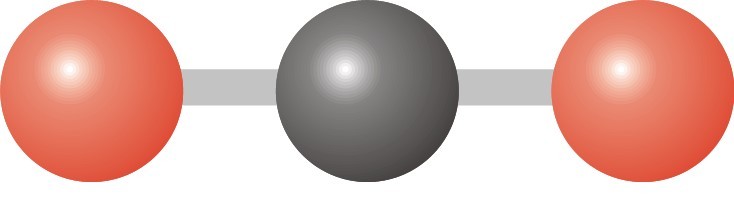
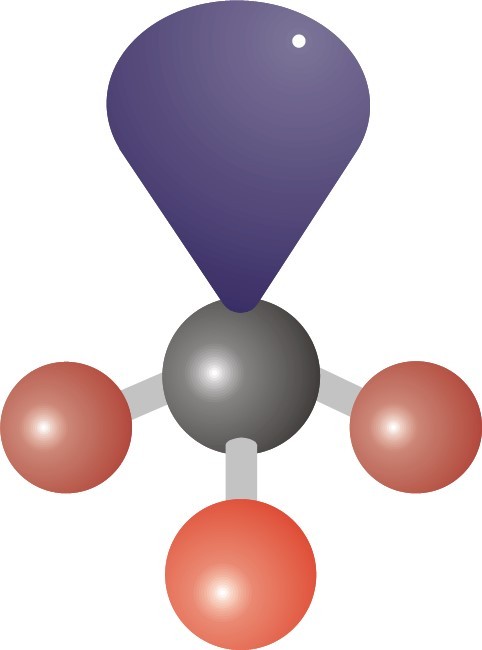
Which molecule would have this shape?
a)
BF3
b)
CH4
c)
PCl5
d)
CO2
26.
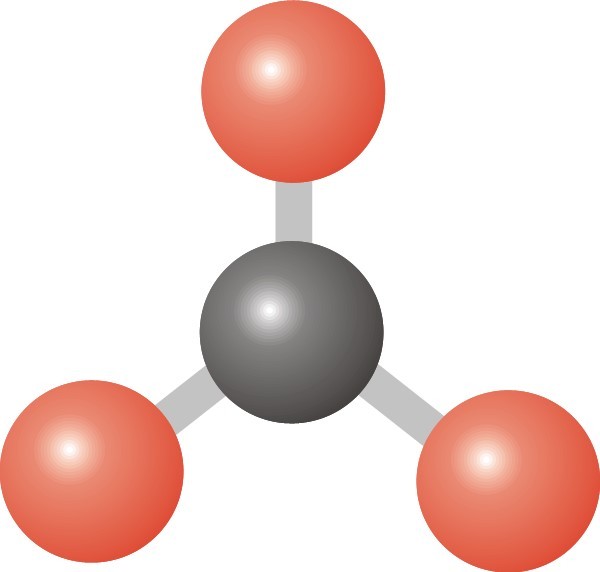
What molecule could this be? 
a)
BF3
b)
CH4
c)
H2O
d)
CO2
27.
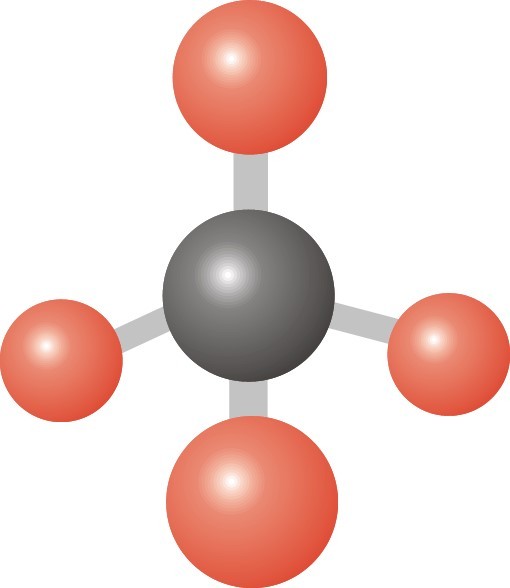
Who could this molecule be?
a)
CH4
b)
CO2
c)
PCl5
d)
BF3
28.
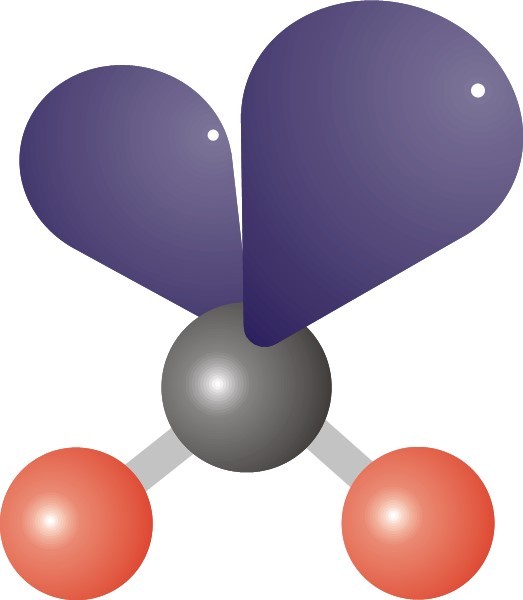
Who could this be? 
a)
CO2
b)
NH3
c)
H2S
d)
CH4
29.
Who could this be?
a)
H2O
b)
NH3
c)
CO2
d)
CH4
30.
Will this molecule be polar or nonpolar? PH3
a)
polar
b)
nonpolar
31.
What molecular shape is the structure shown here? (BCl3)
a)
linear
b)
trigonal planar
c)
tetrahedral
d)
trigonal pyramidal
32.
What is the molecular shape of a silicon dioxide molecule?
a)
linear
b)
trigonal planar
c)
bent
d)
tetrahedral
33.

Which sub shell has more stability????

a)

3d

b)

4p

c)

5s

d)

4d

34.

BMO is formed due to

a)

Constructive Interference

b)

Destructive Interference

c)

Different sign of wave function

d)

Both 2 & 3

35.

Which orbital has nodal plane????

a)

BMO

b)

ABMO

c)

NBMO

d)

All of these

36.

Bond order describes

a)

A. no.of bonds formed between two atoms

b)

B. magnetic behaviour of the molecule

c)

C. Size of the molecule

d)

D. quantum number

37.

Bond order=_____________________

a)

A. No. of antibonding electron-No. of bonding electron/2

b)

B. No. of bonding electron-No. of antibonding electron/2

38.

Molecule which have one or more than one unpaired electrons in their molecular electronic configuration are ____________

a)

A. Diamagnetic

b)

B. Paramagnetic

39.

Can you predict the molecule? Justify your answer

a)

A. N2

b)

B. F2

c)

C. O2

40.

what is the bond order in N2

a)

1

b)

2

c)

3

d)

4

41.
What forms when two atoms combine?
a)
A molecule.
b)
A nucleus.
c)
A proton.
d)
An electron.
42.

The ABMO is denoted by _ sign

a)

#

b)

^

c)

*

43.

The electron configuration of a particular diatomic species is (σ2s)2(σ*2s)2(σ2p)2(π2p)2(π*2p)4. What is the bond order for this species?

a)

1.5

b)

1

c)

0.5

d)

0

e)

2

44.

Which is a type of molecular orbital

a)

s

b)

sp

c)

π\pi

d)

sp2

45.

Electrons fill energy levels and sublevels _____ in energy first.

a)

lower

b)

higher

46.

following mo diagram represents which molecule?

a)

N2

b)

O2

c)

F2

d)

none of these

47.

magnetic property of oxygen gas is

a)

paramagnetic

b)

diamagnetic

c)

both

d)

none

48.

how many unpaired electrons are in O2 molecule?

a)

1

b)

2

c)

3

d)

0

49.

Which of the following statements is true?

a)

Electrons are never found in an antibonding MO.

b)

All antibonding MOs are higher in energy than the atomic orbitals of which they are composed.

c)

Antibonding MOs have electron density mainly outside the space between the two nuclei.

d)

None of the statements is true

50.

Which among the following is diamagnetic?

a)

N2

b)

O2

c)

N22-

d)

O2-

51.

Which of the following pair is expected to have the same bond order?

a)

O2 , N2

b)

O2+, N2

c)

O2 , N2+

d)

O2, N2