
 Worksheets
Why is French spoken all around the world?
Total questions: 26
Worksheet time: 13mins
What is the main theme of our elective class "Exploring Francophone Cultures"?
Learning Advanced French grammar
Exploring French-speaking countries
Reading French literature
Becoming fluent in French
What type of lesson did we study on yesterday and today? What did we take notes on?
A French language lesson
A short history lesson
A science lesson
A math lesson

What is the primary focus of the flags shown in the document?
French art
French-speaking countries
French cuisine
French fashion
How many countries in the world have the French language as an official language ?
Only France
10 countries
29 countries
15 countries
On how many continents is French spoken ?
5 continents
4 continents
only in Europe
on 3 continents
With French, what are the most
most widely spoken languages in the world ?
Mandarin, English, Spanish and Arabic.
Japanese, Portuguese, German
Thai, Italian,
Greek
Deutch, Swedish,
Russian
Which of the following is NOT a reason for colonization?
Political
Economic
Social
Recreational
What is a common political reason for colonization?
To gain more power, resources and land.
To adopt Indigenous ways of living
To escape from their own laws
To build new ships
Where did the French settle during the first wave in the Americas and Caribbean?
Brazil, Mexico, and Argentina
Canada, parts of the Caribbean, and Louisiana
Greenland, Iceland, and Norway
Australia, New Zealand, and Fiji
During the first wave of colonization, what did the French build in the regions they settled?
Skyscrapers
Trading posts and small colonies
Amusement parks
Space stations
During the second wave of colonization, which Asian countries were mentioned as part of the French expansion?
China and Japan
Vietnam and Cambodia
India and Pakistan
Thailand and Malaysia
How did some people react to French rule and control in these colonized regions?
Everyone adapted to French customs
Everyone resisted French rule
Some adapted, while others resisted
No one was affected
What does "Scramble of Africa" mean in the context of our lesson from Wednesday ?
An African dish made with eggs.
When many African countries colonized Europe.
When European countries divided the African continent among themselves.
When many African countries rejected the rule of European countries.
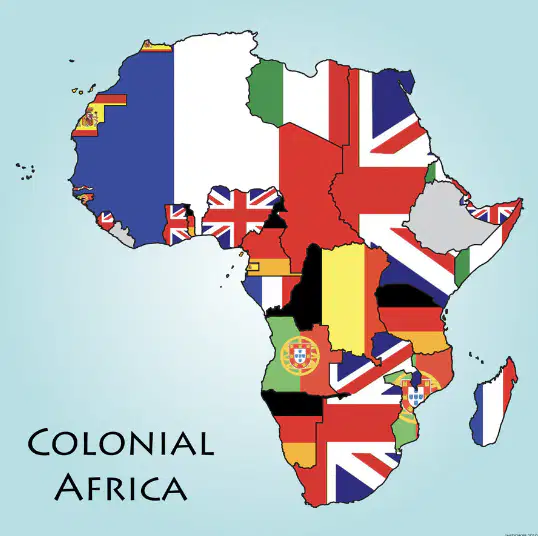
Which country is NOT associated with the 'Scramble for Africa'?
England
France
Mexico
Italy
What was a primary goal of French colonization?
To explore new lands and spread French culture
To isolate from the rest of the world
To eliminate all other languages
To become a part of the British Empire
When was France's first wave of colonization?
Before 1500s.
Between 1500s and 1700s.
Between 1800s and 1900s.
After 1900s.
When was France's second wave of colonization?
Before 1500s
Between 1500s and 1700s
Between 1800s and 1900s
After 1900s
Which of the following best describes the relationship between colonization and indigenous cultures?
Colonization always led to the enhancement of indigenous cultures.
Colonization often disrupted and transformed indigenous cultures.
Colonization had no significant impact on indigenous cultures.
Colonization led to the complete disappearance of all indigenous cultures.
Which of the following is a direct effect of colonization on indigenous populations?
Increased biodiversity in the colonized region.
The introduction of new languages and religions
The establishment of international trade agreements.
The development of new architectural styles.
What was a common economic effect of colonization on the colonized regions?
The establishment of self-sufficient economies.
The exploitation of natural resources for the benefit of the colonizing country.
The equal distribution of wealth among indigenous populations.
The development of advanced manufacturing industries.
How did colonization typically affect the culture of indigenous peoples?
It led to the complete preservation of indigenous traditions and customs.
It often resulted in the suppression or alteration of indigenous cultures.
It had no impact on the cultural practices of indigenous communities.
It encouraged the spread of indigenous cultures to other parts of the world.
Which of the following is an example of cultural impact due to colonization?
The introduction of new agricultural techniques.
The spread of European languages and educational systems.
The increase in local wildlife populations.
The development of new transportation networks.
What is one way colonization affected the political structures of indigenous societies?
It often led to the strengthening of indigenous political systems.
It resulted in the imposition of foreign governance systems.
It had no impact on the political structures of indigenous societies.
It encouraged the development of new indigenous political ideologies.
How many people worldwide speak French ?
1 million people speak French globally.
50 million people speak French globally.
100 million people speak French globally.
300 million people speak French globally.
How many colonized country gained their independence from France ?
War or revolution
Peaceful negotiations or treaties
Political change within the colonized country; asking the local people to vote for their future
All of these answers
French is considered the first of the 3 official languages of...
Restaurant industry
Nobel Peace Prize
the Olympic Games
US Department of Agriculture

