
 Worksheets
Latin American Geography
Total questions: 80
Worksheet time: 59mins

What is this a map of?
Latin America
South America
I am a long, narrow country stretching along South America's western edge.
The Andes Mountains run through me and end in me.
I have the longest coastline in the world.
Panama
Mexico
Colombia
Chile
The United States is north of me.
I am very 90 miles from Florida.
I am surrounded by the Gulf of Mexico and the Caribbean Sea.
Mexico
Cuba
Chile
Panama

Which physical feature is shown on the map in dark green?
Andes Mountains
Amazon Rainforest
Strait of Magellan
The Pampas

This is the Longest river in South America.
Nile River
Mississippi River
Amazon River


What is the name of the longest mountain range in Latin America?
Andes
Alps
Rockies
Himalayas

Which body of water lies to the north of Latin America and is known for its oil reserves?
Caribbean Sea
Gulf of Mexico
Pacific Ocean
Atlantic Ocean

Which country in Latin America is famous for its ancient ruins of Machu Picchu?
Brazil
Peru
Mexico
Argentina
Which river forms the border between the U.S. and Mexico?
Amazon River
Orinoco River
Rio Grande
Paraná River
Where does the Amazon River Flow?
Pacific Ocean
Southern Ocean
Atlantic Ocean
Indian Ocean
What is the process of cutting trees, brush, and grass to clear fields called?
Mining
Slash-and-burn
Urbanization
Terraced farming
Which city in Latin America has the highest population?
Buenos Aires
Mexico City
Sao Paulo
Lima
What are some of the disadvantage of tourism in Latin America?
Reduce income gap between rich and poor
creation of new jobs
Local Government reducing debt
Congestion and pollution in unspoiled settings
Which ancient Incan citadel is found in the Andes Mountains of Peru?
Chichen Itza
Teotihuacan
Machu Picchu
A narrow strip of land that has water on both sides and joins two larger bodies of land is called an
peninsula
isthmus
canal
Latin America is made up of what regions?
Mexico and Central America, Caribbean and South America
Central America, North America, South America and Bahamas
Caribbean, Lesser Antilles, Greater Antilles, South America
South America, North America, Central America
Mexico, Central America and South America
The movement of people from rural areas to cities is called
potable
urbanization
industrialization
immigration
______________ farming is a farming technique introduced by the Inca for growing crops on the side of a mountain. This reduces soil erosion and allows for farming in difficult terrain
terrace
slash and burn
The river or stream which flows into a larger river is called a
tributary
estuary
canal

Peru
Paraguay
Mexico
Cuba
A group of islands
peninsula
isthmus
archipelago
estuary


Latin American economies contain which two main elements in their economy to help people meet their basic needs?
Agriculture and tourism
Agriculture and industry
Tourism and industry
Trade and Industry
Indigenous means what?
Native or original
Foreigner
Immigrants
Descendants of natives

We discussed deforestation, city's sinking, and overfishing in class, which of our 5 Themes of Geography does the revolve around?
Location
Movements
Human-Environment Interaction
Region
Place
Why is the Roman Catholic religion the dominant religion in Latin America?
African slaves brought new religious traditions to South America
Spanish colonization of South America spread new religious traditions
Incan leaders encouraged people in South America to convert to new religions
Colonial immigrants adopted the beliefs of indigenous people living in South America
Which of the following is one way cultures of Central America were influenced by Spanish colonization?
Farming became the primary economic activity in the region
Christianity and the Spanish language were introduced into the region
Mayan cultural practices were adopted by the Spanish settlers in the region
Women gained greater equality when Spanish laws were applied to the region
The Maya were well known for their -
knowledge of mathematics and astronomy.
many conquests and warlike culture.
part in the Atlantic slave trade.
inability to keep written records.
This type of agriculture was practiced by the Incas.
slash and burn
chinampas
3-field rotation
terrace farming
The Aztecs were eventually conquered by __________, and the Inca were conquered by __________.
Francisco Pizarro, Vasco Balboa
Hernando Cortez, Juan Ponce de Leon
Juan Ponce de Leon, Vasco Balboa
Hernando Cortez, Francisco Pizarro

Where were the Maya located?
A
B
C
Where were the Aztecs located?
A
B
C
Where were the Incas located?
A
B
C
Name of the Aztec ruler killed by the Spanish
Montezuma
Monte Christo
Montealban
Monty
Brutal attacks by the Spanish _________________________ and the spread of disease led to the fall of the Aztecs and Incas.
government
king
conquistadors
bullfighters

Aztec capital city built on a swampy island
Tenochtitlan
Cuzco
Machu Picchu
Pacal
Which country would you visit if you wanted to see the Aztec ruins?
Mexico
Peru
Costa Rica
Venezuela
________ beans were used as money. This is now what we make chocolate out of.
Coco
Cacao
Maize
Calpulli
This popular sport was played throughout Mesoamerica, believed to be invented by the Olmec. This game had religious importance and the losing team was sacrificed to the gods.
Basketball
Baseball
Soccer
Ball Game
What divided the claims between Spain and Portugal in the New World?
The Treaty of Paris
The Treaty of Tordesillas
Treaty of Guadalupe-Hidalgo
Proclamation Line
What is a city-state?
an artificial field of mud and vegetation used to produce crops
the building where a bureaucrat works
the great pyramid that stood at the center of the city
a city with its surrounding territory that forms an independent state
Which proves the Maya were successful mathematicians and astronomers?
They built a pyramid
They played a complicated ball game
They created a 365 day calendar
all of the above
What city is currently built over the Aztec capital and is slowly sinking 10-20 cm a year?
Rio De Janeiro

How did the opening of the Panama Canal stimulate long-term economic activity in the United States?
The Panama Canal allowed for increased trade by reducing the physical barriers between the US and countries with Pacific Ocean ports.
The US hired numerous construction workers to undertake the construction and maintenance of the Panama Canal.
Trading ships from the US were unable to access Panamanian ports before the opening of the Panama Canal.
Once the Panama Canal opened, Panamanian traders were able to travel along the canal and access to US ports on the Gulf of Mexico.

The Amazon River is the _______ largest river in the world.
Second
Third
First
What is the Amazon River most known for?
Being the longest river in the world
Having the largest volume of water
Being the deepest river in the world
Its clear blue waters

In ecology, the term biodiversity refers to...
variety of living organisms in a particular area
What is urbanization?

What is this?
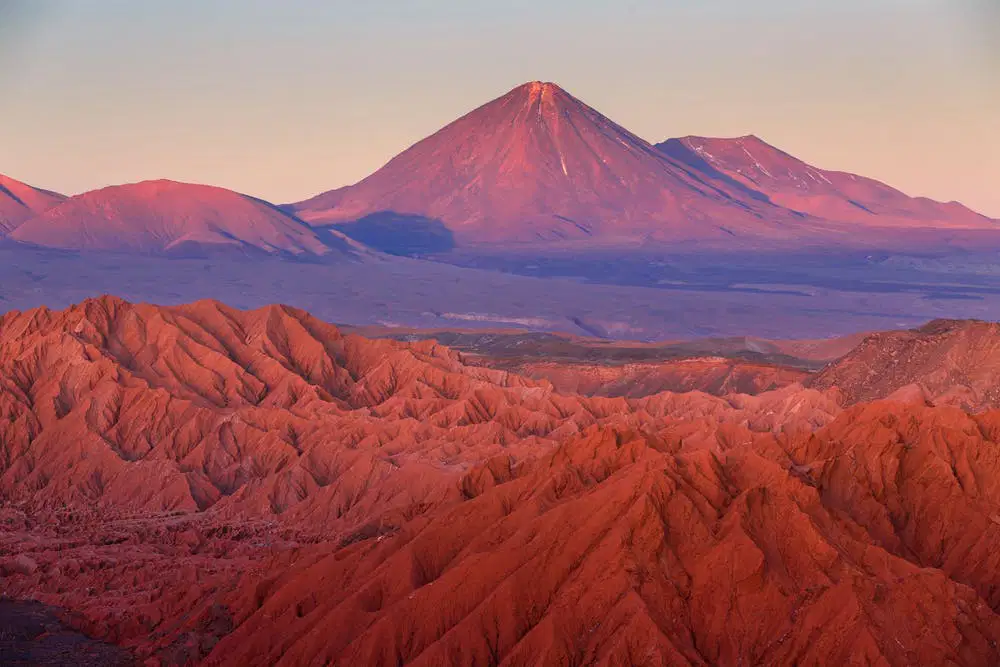
What is this?
The Gobi Desert
The Sahara Desert
The Grand Canyon
Atacama Desert

Where is this?
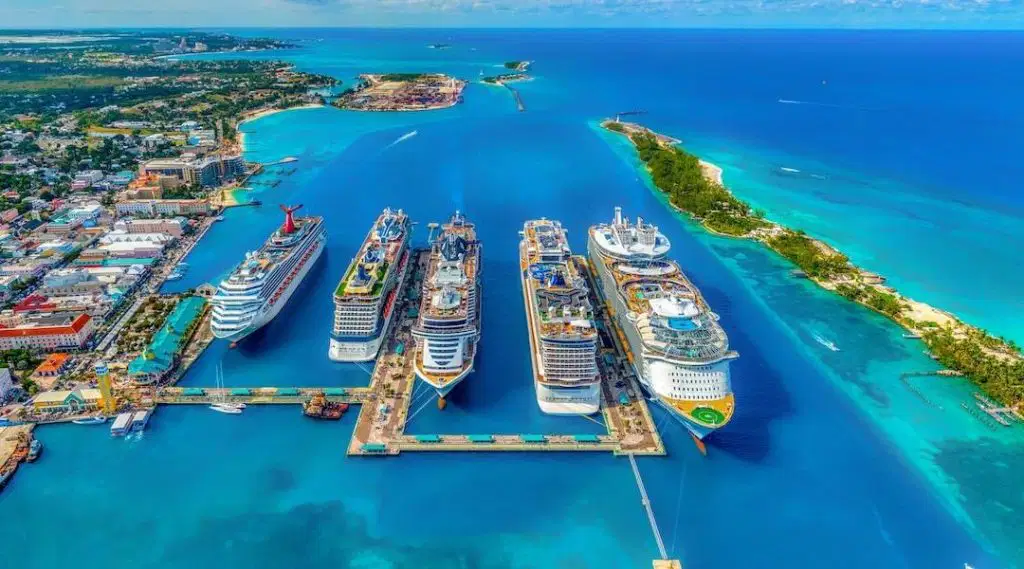
Where is this?
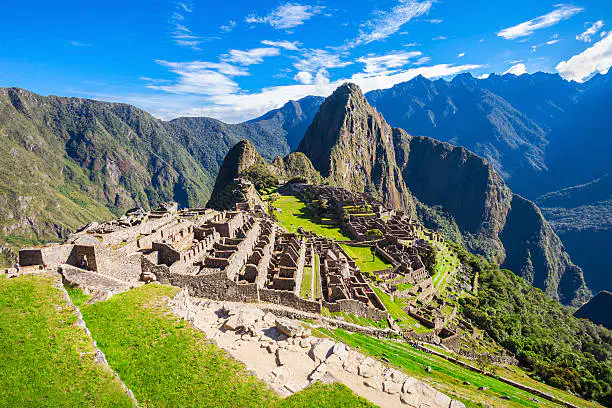
Where is this?

