
 Worksheets
Skeletal System Review
Total questions: 50
Worksheet time: 40mins
What is the primary function of osseous tissue?
Support and protect organs
Produce hormones
Store vitamins
Regulate temperature
Osseous tissue is also known as ______.
Muscle tissue
Bone tissue
Nerve tissue
Skin tissue
Which of the following is NOT a function of the skeletal system?
A) Support
B) Point of attachment for Movement
C) Hormone production
D) Blood cell production
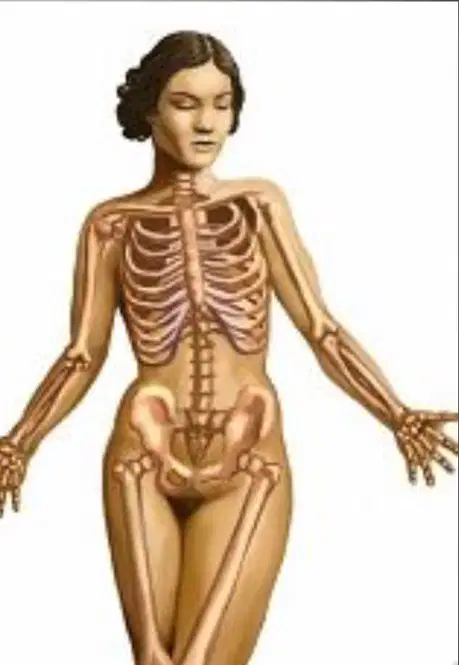
How many bones does an adult human have?
206
270
300
250
The skeletal system provides structure to the body.
True
False
The skeletal system stores minerals such as calcium.
True
False
Which of the following bones is part of the axial skeleton?
Femur
Humerus
Skull
Tibia
Fill in the blank: The _________ is a bone that connects the arm to the body.
Femur
Humerus
Clavicle
Tibia
Leverage in the skeletal system is related to ______.
Storage of lipids
Force of motion
Blood cell production
Protection of organs
What type of bones are classified by their shape and include the femur and humerus?
Long bones
Flat bones
Sutural bones
Irregular bones
Flat bones are found in the ______.
Skull
Femur
Tibia
Humerus
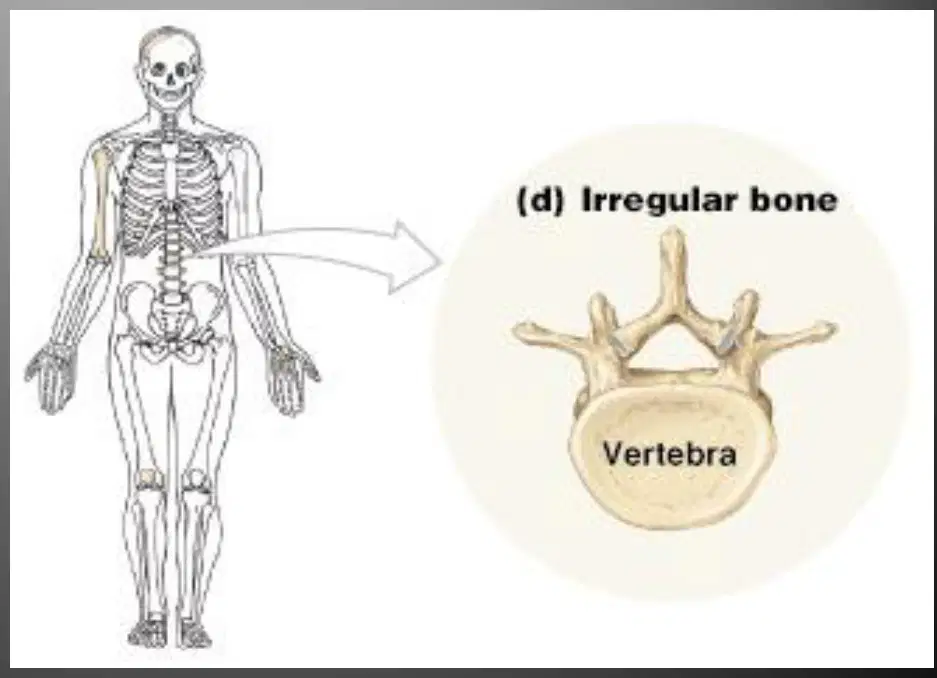
Which of the following is an example of an irregular bone?
Femur
Spinal vertebrae
Tibia
Radius
The compact bone is primarily composed of which of the following?
Osteons
Trabeculae
Cartilage
Marrow

Match the following
A
Haversian canal
B
Osteocyte
C
Canaliculi
D
Osteon
Mark the correct position of the diaphysis and main epiphysis

#7 in the diagram is: (a)

match the following regions of spongy and compact bone.
canaliculi
B
osteon
A
trabeculae
C
spongy bone
D
compact bone
E
Match the following
largest bone in the rear leg of an animal
femur
The enlarged end of a long bone
epiphysis
Substance that is primarily collagen, which gives bone high tensile strength
osteoid
These are typically thinner than others and are usually curved
flat
This makes up the lower jaw
mandible


What is the strongest bone in the body?
Femur
Clavicle
Ulna
Metacarpals


Which letter contains yellow marrow
G
H
C
A

How are lamellae arranged in an osteon?
Haversian canals are rings of bone tissue that surround central lamellae.
Lacunae are tiny channels that connect lamellae in separate rings of bone tissue.
Lamellae are rings of bone tissue that surround a central Haversian canal.
Lamellae are tiny channels that connect lacunae in separate rings of bone tissue.
In the bone development, primary ossification happens at the
joints
bone collar
shaft of the bone
the two epiphyses
In bone development, the secondary ossification takes place on the
collar bone
shaft of the bone
epiphyses plates
articular cartilage
Bone form first as
tendons
ligaments
hyaline cartilage
articular cartilage
A process when a cartilage gradually changes into bone tissue is called
osseus
ossification
resorption
bone modification
During endochondral ossification
hyaline cartilage is replaced by bone
hyaline cartilage turns into bone
bone replaced by hyaline cartilage
bone turns into hyaline cartilage

Name this joint
gliding
saddle
ball and socket
condyloid


Which is not a division of the skeletal system?
Axial
Central
Appendicular
What division of the skeleton would we find the Skull?
Axial
Appendicular

What is this an image of?
Pectoral Girdle
Pelvic Girdle
Femoral Girdle
Shoulder Girdle
Match the following common names of bones to their scientific names
Kneecap
Patella
Thigh Bone
Femur
Collar Bone
Clavicle
Shoulder blade
Scapula
Which of the following describes the joints in the skull and ribs?
movable
hinge
pivot
immovable
Which bone disease causes bones to become weak and brittle?
artereosclerosis
arthritis
fracture
osteoporosis
Where are red blood cells produced?
compact bone
red bone marrow
spongy bone
yellow bone marrow
An example of a pivot joint can be found in the forearm.
True
False
The carpals are your ankle bones.
True
False

