
 Worksheets
Unit 4 Round 4; Topics 1-7
Total questions: 60
Worksheet time: 32mins
What four states does Kurdistan exist within?
Syria, Lebanon, Jordan, and Armenia
Turkey, Armenia, Iran, and Georgia
Syria, Turkey, Iran, and Iraq
Iran, Iraq, Saudi Arabia, and Israel
The Kurdish people are examples of which of the following?
A people with a sovereign state.
A nation.
A stateless nation.
A nation-state.
What is an example of a state?
Hawaii
Cherokee Nation
Greenland
Canada
What is the largest multinational state?
USA
Indonesia
Russia
China
Hong Kong is a ....
Nation-State
Autonomous Region
Semi-Autonomous Region
Multistate Nation
What are two Palestinian territories in Israel?
Hamas
West Bank
Tel Aviv
Gaza
What is the definition of nation?
People who think of themselves as one based on a shared sense of culture and history and who desire political autonomy.
a state with a single nation
a group of people (a nation) with a common culture occupying a particular territory, but they do not have their own independent state
a state with two or more nations
What is the definition of nation-state?
people who think of themselves as one based on a shared sense of culture and history and who desire political autonomy
a state with a single nation
a group of people (a nation) with a common culture occupying a particular territory, but they do not have their own independent state
a state with two or more nations
What is the definition of a stateless nation?
people who think of themselves as one based on a shared sense of culture and history and who desire political autonomy
a state with a single nation
a group of people (a nation) with a common culture occupying a particular territory, but they do not have their own independent state
a state with two or more nations
What is the definition of a multination state?
people who think of themselves as one based on a shared sense of culture and history and who desire political autonomy
a state with a single nation
a group of people (a nation) with a common culture occupying a particular territory, but they do not have their own independent state
a state with two or more nations
What was one consequence of the establishment of Israel in 1948?
The displacement of hundreds of thousands of Palestinians
The dissolution of the Ottoman Empire
The emergence of new nations in Eastern Europe
The division of Africa among European powers
Why did the Berlin Conference of 1884-1885 lead to ongoing conflicts and tensions in Africa?
It weakened the colonial powers after World War II.
It provided a powerful impetus for independence movements.
It redrew the borders of Europe and the Middle East.
It created artificial borders that ignored existing ethnic and cultural boundaries.
The process where regions within a state demand and gain political strength from the central government
Devolution
Centripetal Force
Ethnic Cleansing
Irridentism
Strong sense of pride in ones country
imperialism
nationalism
idealism
colonialism
What do we mean by the term "self-determination"?
Nations being allowed to decide how they are governed
An illegal act involving an egg whisk and a stick of celery
It means that you show your commitment to the job you are doing
Nations should have the right to have their own flag and passport
Process by which a state breaks down through conflicts among its ethnicities
Ethnic Cleansing
Balkanization
xenophobia
Apartheid
genocide
Process in which more powerful ethnic group forcibly removes a less powerful one in order to create an ethnically homogeneous region
Ethnic Cleansing
Balkanization
xenophobia
Apartheid
genocide
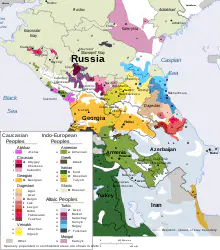
The variety of languages, ethnicities & religions in a shatterbelt are examples of
Centripetal forces
Choke points
Unifying characteristics
Centrifugal Forces
Borders that are established before there has been major settlement by people in a territory.
Subsequent boundary
Consequent boundary
Superimposed boundary
Geometric boundary
Borders that are drawn in areas that have been settled by people, typically due to changes that have occured over time
Subsequent boundary
Consequent boundary
Superimposed boundary
Geometric boundary
Type of subsequent boundary - takes into account the existing cultural distribution of the people living in the territory and redevelops boundary lines to more closely align with cultural boundaries
Relic boundary
Consequent boundary
Superimposed boundary
Geometric boundary
Border that is drawn over existing and accepted borders by an outside force
Relic boundary
Consequent boundary
Superimposed boundary
Geometric boundary
Borders that are established on straight lines of latitude and longitude instead of physical or cultural boundaries
Subsequent boundary
Relic boundary
Consequent boundary
Superimposed boundary
Geometric boundary
Border that no longer exists, but has left some imprint on the local cultural or environmental geography
Subsequent boundary
Relic boundary
Consequent boundary
Superimposed boundary
Geometric boundary

Example: the boundary between Mali and Mauritania (many boundaries in Africa)
Subsequent boundary
Antecedent boundary
Consequent boundary
Superimposed boundary
Geometric boundary

Example: the boundary between East and West Germany during the Cold War (states are currently combined as one state: Germany)
Subsequent boundary
Antecedent boundary
Consequent boundary
Relic boundary
Geometric boundary
Which zone of the United Nations Convention of the Laws of the Sea (UNCLOS) is the most economically beneficial for coastal countries?
Territorial zone-12 nm
Economic Exclusive Zone (EEZ)-200 nm
High seas-anyone
Contiguous zone-24 nm
The main purpose of the UNCLOS was to.....
settle maritime territorial disputes
claim resources
waste time
none of the above
What are the Spratly Islands?
Islands in the Gulf of Thailand
Small insignificant islands in the Pacific
Military bases located off of Guam to deter Chinese Military
The maximum extent of a contiguous zone is ____.
24nm from baselines.
24nm from claimed territorial seas.
12nm from baselines.
200nm from claimed territorial seas.
The maximum breadth of the exclusive economic zone is ___.
300nm from baseline
300nm from territorial seas
200nm from baseline
200nm from territorial seas
A coastal state has sovereign rights to _____ in its EEZ.
ban fishermen of other nationalities from fishing
explore, exploit and manage the natural resources
stop foreign navies from conducting naval exercises
restricting foreign entities from laying underwater cables
UNCLOS sets the limit of the EEZ from a counties coastline. In event where countries are less than 400nm apart at sea, which of the following explains how the EEZ boundary is delimited for each country?
Both countries will follow the median-line principle
Both countries will share all of the water area
Both countries will state their case to UN for ownership
Neither country can claim the area as it is international law
What is the main reason countries like Canada, Russia, Norway, Denmark, and the U.S. are disputing ownership of the Arctic Ocean and North Pole?
They want to extract natural resources beyond their exclusive economic zones.
They claim indigenous people from their country once lived in the Arctic.
They argue the first explorer to reach the North Pole was from their country.
They say Arctic treaties are the same as Antarctic treaties.
The census occurs once every
century
five years
decade
50 years
Which term refers to the process of deciding how many members of the House each state gets?
Redistricting
Reapportionment
Gerrymandering
Census
The House of Representatives is made up of _____ members
What is the first step in the reapportionment/redistricting process?
Have state legislatures draw district lines.
Determine how many people each representative will represent.
Do the census.
Determine the number of representatives each state will have.
What is redistricting?
the process of establishing the number of representatives in the U.S. Senate
the process of drawing United States and state electoral district boundaries
the idea that all states should have an equal number of people in Congress
the use of the Census to determine who should run for office
The last census was conducted in which year?
2015
2010
2020
Gerrymandering is:
When district boundaries are drawn in order to benefit the party in power and help it stay in power.
When seats in the House of Representatives are redistributed among states because of changes in population.
When district boundaries are redrawn to reflect changes in population.
A measurement of the US population that occurs every ten years.
Splitting a community so they can't elect their own representative is known as ___________.
cracking
packing
blocking
redistricting
Grouping parties into one district so the other party wins adjacent districts is an example of ____________.
cracking
packing
blocking
redistricting
Which of the following is generally true of the gerrymandering of congressional districts?
It results in more Democrats being elected to the House.
It results in more Republicans being elected to the House.
It guarantees that all minority parties will be equally represented.
It creates districts that favor one political party over another.
It violates the principle of one-person, one-vote.
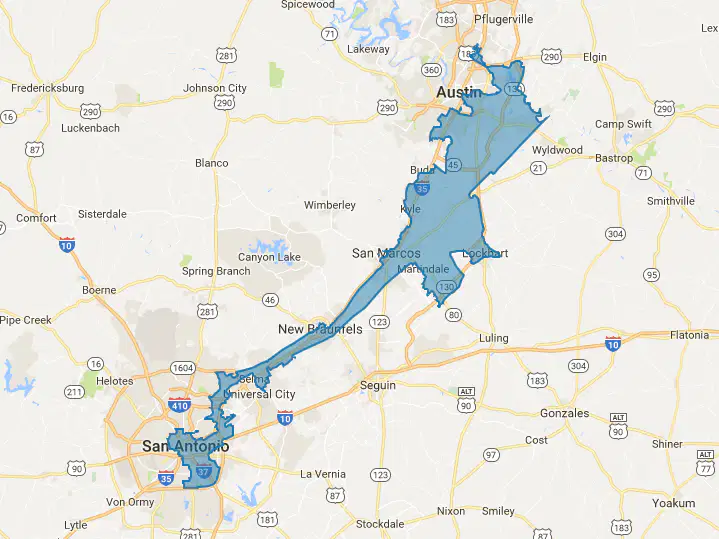
Texas' 35th district, which includes drives through NB, is an example of this gerrymandering tactic
joining
cracking
breaking
packing
How did the term 'gerrymandering' originate?
From the term 'gerry' meaning 'to manipulate'
From the name of a type of lizard
From the combination of 'geography' and 'redistricting'
From the name of a politician who redistricted voting districts

What kind of state is France?
Federal
Unitary

What kind of state is the United States of America?
Unitary
Federal
What is a unitary government?
A government where power is divided between a central government and regional governments.
A government where all powers are held by a single, central authority.
A government formed by independent states coming together for a common purpose.
A government where local governments have more power than the central government.
What is a federal government?
A government where all powers are held by a single, central authority.
A government where power is divided between a central government and regional governments.
A government formed by a loose alliance of states.
A government where local governments have no autonomy.
Which of the following is a characteristic of a unitary government?
High degree of autonomy for local governments.
Centralized decision-making process.
Power is shared between the central and local governments.
States have the right to secede.
Which of the following is a characteristic of a federal government?
All powers are concentrated in the central government.
Local governments have no say in governance.
Power is divided between a central authority and constituent political units.
The central government can dissolve local governments at will.
Which system of government is more likely to have a single, national legal system?
Federal
Unitary
Confederate
Presidential
In which system of government are states or provinces more likely to have their own laws and policies that differ from the national government?
Unitary
Federal
Confederate
Monarchy
Which system of government is more likely to adapt quickly to local needs and changes?
Federal
Unitary
Confederate
Monarchical
In which type of government is the process of amending the constitution generally more complex and difficult?
Unitary
Federal
Confederate
Direct Democracy
Which of the following is an advantage of a federal system of government?
It ensures a high degree of uniformity in laws and policies across the country.
It allows for greater central control over the economy.
It can better accommodate regional differences and local autonomy.
It simplifies the legal system by having a single set of laws for the entire country.
In a federal system, what is the role of the constitution in defining powers?
It outlines only the powers of the central government, leaving the states to define their own powers.
It does not play a significant role in defining powers.
It clearly divides powers between the central government and the states or provinces.
It grants all powers to the states, with the central government having only those powers specifically granted by the states.

