
 Worksheets
PS Unit 1 & 2 Test
Total questions: 179
Worksheet time: 2hrs 51mins
The SI base unit of length is the
kilometer
meter
liter
kilogram
Units obtained by combining SI units are called
conversions
multiples
base units
derived units
_________ is the mass per unit volume of a material.
volume
size
weight
density
A visual display of data or information
model
graph
photograph
percentages
Information collected by counting can best be displayed on a
line graph
circle graph
bar graph
stem and plot graph
In a line graph, the dependent variable is plotted on the _____
x-axis
y-axis
A type of graph that is useful for showing trends or continuous change is a _________________
line graph
bar graph
circle graph
stem and plot graph
Graphs are a quick way of communicating a lot of ________ in a small space.
food
variables
information
animals
Mobiles and laptops are examples of
Technological objects
Technological skills
Technological methods
Technological system
Airport systems and educational platforms are examples of
Technological methods
Technological objects
Technological systems
Technological skills
Printing books and production of glass are examples of
Technological methods
Technological skills
Technological systems
Technological objects
Computer programming and piloting a plane are examples of
Technological systems
Technological objects
Technological skills
Technological methods
Technology that uses living things or living systems is called
Biotechnology
Biased technology
Chemotechnology
Synthetic science


Which of the following is the units for acceleration?
kg*m/sec/sec
kg*m/sec
m/sec2
m/sec
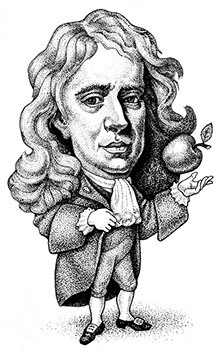


A cannonball with a mass of 0.5 kg is flying at an acceleration of 10 m/sec2. What is it's force?
50 Newtons
5 Newtons
20 Newtons
9.5 Newtons

A cannonball with a mass of 10 kg is flying at an acceleration of 5 m/sec2. What is it's force?
50 Newtons
5 Newtons
20 Newtons
9.5 Newtons


1st
Law of Motion
2nd
Law of Motion
3rd
Law of Motion
1st
Law of Motion
2nd
Law of Motion
3rd
Law of Motion
1st
Law of Motion
2nd
Law of Motion
3rd
Law of Motion
1st
Law of Motion
2nd
Law of Motion
3rd
Law of Motion
1st
Law of Motion
2nd
Law of Motion
3rd
Law of Motion
1st
Law of Motion
2nd
Law of Motion
3rd
Law of Motion
1st
Law of Motion
2nd
Law of Motion
3rd
Law of Motion
1st
Law of Motion
2nd
Law of Motion
3rd
Law of Motion
1st
Law of Motion
2nd
Law of Motion
3rd
Law of Motion
1st
Law of Motion
2nd
Law of Motion
3rd
Law of Motion
1st
Law of Motion
2nd
Law of Motion
3rd
Law of Motion
Determine the acceleration that results when a 12N net force is applied to a 3kg object.
3 m/s
4 ft/s
13 m/s
4 m/s2
It is easier to throw a baseball fast than a bowling ball
A football on the ground will not move until someone kicks it


The unit for acceleration is
mph
ft/sec2
m/s2
What are the three ways an object can accelerate?
Speed up, slow down or change direction
Go forward, go backward or stop
Turn left, turn right or go straight
distance, displacement or speed

Football A has a greater mass than football B. Which football will have greater acceleration when both are thrown with the same force in the same direction?
Football A
Football B
They will have the same acceleration
Mass has no effect on acceleration


Machines will not reduce the amount of _____________ that has to be done.
effort force
resistance force
work
friction
A _____________ pulley will change the direction of movement, but not the force.
fixed
moveable
block and tackle
double
If the resistance force is increased and the effort force is decreased, the mechanical advantage will _____________
increase
decrease
remain the same
A lever's input arm is 10m long and the output arm is 2m long, the MA is _____________.
.20
5
20
200
Tommy does 15J of work to push the pencil over 1m. How much force did he use?
0.15N
15N
16N
14N
Angela uses a force of 25N to lift her grocery bags while doing 50J of work. How far did she lift the grocery bags?
0.5m
2m
75m
1250m
Who does more work? You, lifting a 600N box up one meter, or your friend using a 5m ramp to move the box up 1 meter?
You
Your Friend
The work is the same, your friend used less force over a greater distance
What happens to your effort force when you move the fulcrum closer to the load?
it increases
it decreases
it depends on how large the load is
it depends on how long the lever is
A moveable pulley has a MA of _________
0.5
1
2
3
What does a mechanical advantage of 10 mean?
That you have to use 10x more force, because the machine divides your force by 10.
That your object will move 10x farther, because the machine divides your force by 10.
That you can use 1/10 as much force, because the machine multiples your force by 10
Will a long ramp increase or decrease your mechanical advantage?
increase
decrease
not enough information
A football field is about 100m long. If it takes you 20 seconds to run its length, how fast were you running?
0.2 m/s
5 m/s
120 m/s
2000 m/s
A car travels 400 m in 8 hours. Speed = _________
0.02 m/hr
50 m/hr
408 m/hr
32000 m/hr
Velocity is
the same as speed
a change in speed
speed in a certain direction
the same as acceleration
A car accelerates when it
speeds up
slows down
changes direction
all of the above
A car accelerates from a standstill to 60 km/h in 10 seconds. What is its acceleration?
1.7 km/h/s
6 km/h/s
10 km/h/s
600 km/h/s
A truck accelerates from 25 m/s to 55 m/s in 30 seconds? What is its acceleration?
0.83 m/s2
1 m/s2
1.83 m/s2
2.7 m/s2
Inertia is the tendency to resist
motion
changes in motion
speed
friction
Inertia is increased when
an object moves faster
an object is at rest
mass decreases
mass increases
You throw a 5 kg ball that accelerates at 2 m/s/s. How much force did you use?
2.5 N
0.4 N
10 N
7 N
Which law? A rocket is pushed into space by the gases and the gases are pushed out of the back of the rocket.
1st Law
2nd Law
3rd Law
Which law? Acceleration is determined by the force exerted and the mass of the object.
1st Law
2nd Law
3rd Law
Which law? A swimmer pushes water back with her arms, but her body moves forward.
1st Law
2nd Law
3rd Law
Which law? A truck stops suddenly and the boxes in the back slide forward.
1st Law
2nd Law
3rd Law
Which law? For every action, there is an equal and opposite reaction.
1st Law
2nd Law
3rd Law
Which law? The grocery cart is full, so it is harder to push.
1st Law
2nd Law
3rd Law
If you visit a smaller planet, your weight will
not change
increase
decrease
Weight is the measure of how much ___________ is pulling on an object's mass.
friction
gravity
momentum
air resistance
Forces that do not change an object's motion are _________ forces
balanced
net
sum
unbalanced
Balanced or unbalanced? A car travelling at 50 mi/h south.
balanced
unbalanced
Balanced or unbalanced? a plane climbing in altitude.
balanced
unbalanced
Balanced or unbalanced? A bike going around the track at a steady speed
balanced
unbalanced
Balanced or unbalanced? using your brakes to slow down
balanced
unbalanced
On an acceleration graph, what does a flat line (horizontal) mean? What does it mean on a speed graph?
no movement on both graphs
accel = constant speed, speed = no movement
accel = no movement, speed = constant speed
speed up on both graphs
Kinetic Energy is the energy of _________
thermal
movement
potential
atoms
Everything has thermal energy
False
True
All matter is made up of atoms that are constantly moving
True
False
Thermal energy is the __________ _________ energy of moving particles
total potential
average potential
average kinetic
total kinetic
Temperature is the __________ _________ energy of moving particles
average potential
average kinetic
total potential
total kinetic
Hot things have ____________ thermal energy than cold things
more
less
same
potato
Objects with MORE MASS have______________
lower potential energy
lower number of atoms
higher thermal energy
higher temperature
Temperature is a way we ____________ energy
eat
measure
gain
lose
Cold things often have a _________ kinetic energy because_______
lower; particles are moving around less
lower; particles are moving around more
higher; particles are moving around the same
higher; particles do not move
Potential energy is the _________
energy of movement
same as kinetic energy
stored energy inside of something
potato
Temperature always measures the ___________ movement of molecules
median
mode
total
average
For objects that have the SAME mass, which object will have a HIGHER thermal energy?
the object with the higher temperature
the object with the lower temperature
the objects will have the same temperature
the objects have no temperature
Which will have the HIGHEST thermal energy?
Hot cup of tea
Cold bathtub water
Huge lake
Warm bowl of soup
Which will have the LOWEST thermal energy?
Large mug of hot coffee
Baby bottle with warm milk
Gatorade jug of cold Gatorade
Large frozen puddle
Objects with MORE MASS have MORE thermal energy because
there are more molecules with energy in bonds
there are less atoms
there is less kinetic energy in the system
there is no potential energy at all
Energy is the ability to do __________
bonds
work
atoms
molecules
Law of Conservation of Mass says...
Energy is always created and destroyed
Energy is only in hot things
Energy can be destroyed easily
Energy cannot be created or destroyed
Dribbling a basketball is an example of
potential energy
stored energy
temperature
kinetic energy
As temperature increases, molecules _____________
move slower
move the same
move faster
stop moving
What happens to the molecules inside bridges when temperature increases? Why are there joints in the structure?
Molecules move more, joints prevent them from hitting each other
Molecules move less, they shrink in size
Molecules move more, joints allow them room to expand without breaking bridge
Molecules are not affected by temperature
Kinetic Energy is the energy of _________
thermal
movement
potential
atoms
Everything has thermal energy
False
True
All matter is made up of atoms that are constantly moving
True
False
Thermal energy is the __________ _________ energy of moving particles
total potential
average potential
average kinetic
total kinetic
Temperature is the __________ _________ energy of moving particles
average potential
average kinetic
total potential
total kinetic
Hot things have ____________ thermal energy than cold things
more
less
same
potato
Objects with MORE MASS have______________
lower potential energy
lower number of atoms
higher thermal energy
higher temperature
Temperature is a way we ____________ energy
eat
measure
gain
lose
Cold things often have a _________ kinetic energy because_______
lower; particles are moving around less
lower; particles are moving around more
higher; particles are moving around the same
higher; particles do not move
Potential energy is the _________
energy of movement
same as kinetic energy
stored energy inside of something
potato
Temperature always measures the ___________ movement of molecules
median
mode
total
average
For objects that have the SAME mass, which object will have a HIGHER thermal energy?
the object with the higher temperature
the object with the lower temperature
the objects will have the same temperature
the objects have no temperature
Which will have the HIGHEST thermal energy?
Hot cup of tea
Cold bathtub water
Huge lake
Warm bowl of soup
Which will have the LOWEST thermal energy?
Large mug of hot coffee
Baby bottle with warm milk
Gatorade jug of cold Gatorade
Large frozen puddle
Objects with MORE MASS have MORE thermal energy because
there are more molecules with energy in bonds
there are less atoms
there is less kinetic energy in the system
there is no potential energy at all
Energy is the ability to do __________
bonds
work
atoms
molecules
Law of Conservation of Mass says...
Energy is always created and destroyed
Energy is only in hot things
Energy can be destroyed easily
Energy cannot be created or destroyed
Dribbling a basketball is an example of
potential energy
stored energy
temperature
kinetic energy
As temperature increases, molecules _____________
move slower
move the same
move faster
stop moving
What happens to the molecules inside bridges when temperature increases? Why are there joints in the structure?
Molecules move more, joints prevent them from hitting each other
Molecules move less, they shrink in size
Molecules move more, joints allow them room to expand without breaking bridge
Molecules are not affected by temperature
Where is the strongest attraction force of the magnet?
Below the magnet
At the poles
Middle of the bar magnet
Above the magnet
As the distance between two magnets increases, the force between them
decreases
does not change
increases
stays the same
As the distance between two magnets decreases, the force between them
does not change
decreases
stays the same
increases
If you cut a magnet in half, what happens to the poles?
None of these answers
Both halves will get a South Pole
Both halves with either get north or south pole
Both halves will get a Norh Pole
You can make an electromagnet stronger by
Increasing the number of coils
Decrease the number of coils
Increase the current
Decrease the current
Electric charges always flow from
negative to negative
positive to positive
positive to negative
negative to positive
A material through which electrons do NOT flow easily is a(n)
insulator
fuse
circuit breaker
conductor
A material through which electrons DO flow easily is a(n) ______.
fuse
conductor
insulator
circuit breaker
If you wrap more coils around an electromagnet, it will become
brighter
stronger
weaker
invisible
A magnetic field exerts a force on
magnetic materials
materials close by
materials far away
none of these answers
The function of a generator is to change
electrical energy to mechanical
electrical energy to thermal energy
electrical energy to chemical energy
mechanical energy to electrical energy
What happens when electricity runs through a wire
none of these
it generates a magnetic field around the wire
It uses magnetism to move the charge through the wire
The magnetic field matches that of the Earth
What makes a magnet weaker
Dropping it
Heating it
Radiation
All of these

What do the lines around this magnet represent?
South Pole
magnetic domains
magnetic field
North Pole
If you place the North pole of a magnet next to the South pole of another magnet, they will
attract
repel
nothing will happen
non of these
oil, natural gas, and coal; formed from the remains of ancient plants and animals that were buried and altered over millions of years
renewable resource
fossil fuel
biomass
pollutant
liquid fossil fuel formed from decayed remains of ancient organisms; can be refined into fuels and used to make plastics
petroleum
acid precipitation
biomass
coal
natural resources, such as fossil fuels, that cannot be replaced by natural processes as quickly as they are used
renewable resource
pollutant
nonrenewable resource
photochemical smog
reaction in which two or more atomic nuclei form a nucleus with a larger mass, releasing large amounts of energy
photovoltaic cell
nuclear reactor
fission
fusion
process of splitting an atomic nucleus into two or more nuclei with smaller masses, releasing large amounts of energy
fission
fusion
nuclear reactor
nuclear waste
an apparatus in which controlled nuclear chain reactions generate electricity
photovoltaic cell
turbine
nuclear reactor
generator
radioactive by-product that results when radioactive materials are used
pollutant
hazardous waste
nuclear waste
acid precipitation
energy source that is replaced by natural processes faster than it is used
renewable resource
nonrenewable resource
fossil fuel
petroleum
device that converts solar energy into electricity; also called a solar cell
nuclear cell
photovoltaic cell
transfer cell
photochemical cell
electricity produced from the energy of moving water
hydroelectricity
nuclear
biomass
geothermal
thermal energy contained in and around magma; can be converted by a power plant into electrical energy
fission
fusion
magmatic energy
geothermal energy
renewable organic matter from plants and animals, such as wood and animal manure, that can be burned to provide thermal energy
biomass
fossil fuel
geothermal
biothermal
the total number of individuals of one species occupying the same area
carrying capacity
population
pollution
census
maximum number of individuals of a given species that the environment can support
population
census
carrying capacity
limiting factor
any substance that contaminates the environment
nuclear waste
hazardous waste
pollutant
photochemical smog
wastes that are poisonous, cause cancer, or can catch fire
hazardous waste
pollutant
nuclear waste
acid precipitation
the ozone-containing pollution that results from the reaction between sunlight and vehicular or industrial exhaust
photovoltaic cell
photochemical smog
acid precipitation
hazardous waste
water with a pH below 5.6 that falls to Earth as rain or snow and can harm plants and animals and corrode buildings
hydroelectricity
hazardous waste
acid precipitation
photochemical smog

