
 Worksheets
Energy, Work, Power and Heat Transfer Practice Test
Total questions: 60
Worksheet time: 5hrs 0mins
____________________ is the storage of energy
Chemical Energy
Potential Energy
Mechanical Energy
Kinetic Energy
Which of the following shows an example of Potential Energy?
A football flying through the air
Two kids high-fiving
A rock sitting on top of a high ledge
A flashlight shining brightly
When rolling a marble down a ramp when does it have the most potential energy?
At the bottom of the ramp
While traveling down the ramp
While being lifted to the top of the ramp
At the top of the ramp
Four balls are thrown at the same velocity, with different masses. Which ball has the most kinetic energy?
The 20g ball
The 50g ball
The 24g ball
The 40g ball
Two kids are bowling and both choose the same ball. Whose ball will have the most force?
The one who is tallest
The one who has the best shoes
The one who can throw the ball the fastest
The one who uses the heaviest ball
Where does your body get its potential energy?
From Sleep
From Food
From the Sun
From Rainbows
As the velocity of an object decreases its KE will...
increase
decrease
stay the same
Kinetic energy is...
energy carried in ultraviolet waves
energy stored in food
energy in motion
energy from splitting an atom

Suppose all of these objects were moving at 12 m.p.h. Which of these would have the greatest kinetic energy?
A car moving
A person running
A ball rolling
Which one of these has kinetic energy?
a car parked on a steep hill
a tennis ball rolling across the court
a picture hanging on the wall
a piece of coal before it's burned

Look at the y-axis (the one labeled Kinetic Energy) on the left. What is the unit used to measure energy?
Newton (N)
Kilogram (kg)
Joule (J)
Meters per second (m/s)
Stationary objects have kinetic energy.
true
false
Which of these are examples of kinetic energy? Choose all FOUR correct answers.
kicking a soccer ball
tossing a paper into the trash
bouncing a basketball
standing in place
hitting a volleyball
The energy of motion
Kinetic Energy
Potential Energy
Which of these are measurements of power?
100 joules/second


The formula for work is
work/time (P = W/t)
force × distance (W = Fd)
distance/time (s = d/t)
mass × acceleration (F = ma)

The formula for power is
work/time (P = W/t)
force × distance (W = Fd)
distance/time (s = d/t)
mass × acceleration (F = ma)

Work is done when which two things happen?
an object is moved
power is converted into Newtons
an object has been subjected to force (unbalanced)
an object stays in place

Work is only done when an object __________
moves
stays still
articulates
conjugates

Use one of these equations to answer this question (W = Fd) and (P = W/t): Toph pushes against the turret with 500 Newtons of Force. It stays in place. How much work has been done?
1200 Joules of work
500 Joules of work
No work has been done
200,000 Joules of work

Use one of these equations to answer this question (W = Fd) and (P = W/t): When Aang fights Ozai, he wields 100,000 Joules in 25 seconds. What is his power?
4,000 J/s (Watts)
250,000 J/s (Watts)
125,000,000 Newtons
2,000,000 Joules
units of force are
newtons
grams
joules
meters
Fred kicks a ball with a force of 20N to George, who is 5M away. How much work was done to the ball?
25J
100J
4J
75J

What is the power of a kitchen blender if it can perform 3,750 Joules of work in 15 seconds?
250 W
0.004 W
56,250 W
25 W

How much work is done using a 500-watt microwave oven for 1 minute? (Hint: Use seconds as the unit for time.)
30,000 J
500 J
8.3 J
0.12 J

How much power is used if a force of 35 Newtons is used to push a box a distance of 10 meters in five seconds? (Hint: Solve for work first. This is a 2-step problem.)
70 W
3.5 W
7 W
350 J

Observe the model to answer the following question: When does the skater have the most potential energy?
At the top of the ramp.
At the bottom of the ramp.

Recently we learned about kinetic energy (energy of motion).
A system of objects may also contain stored energy, also known as potential energy, depending on their relative positions. As you can see on the energy graph, an object has more potential energy if it is positioned higher. In other words, the skater has more potential energy at the top of the ramp.
GOT IT!
I don't get it.
What is the formula to calculate potential energy?
potential energy = mass * gravity * distance
potential energy = mass * acceleration * height
potential energy = mass * gravity * height
potential energy = force * distance
A book with a mass of 2 kg is placed on a shelf 3 meters high. What is the potential energy of the book?
58.8 J
0.588 J
588 J
5.8 J
A ball with a mass of 0.5 kg is held at a height of 10 meters. What is the potential energy of the ball?
49 J
10 J
5 J
25 J
A rock with a mass of 5 kg is lifted to a height of 8 meters. What is the potential energy of the rock?
40 J
80 J
160 J
392 J
A box with a mass of 10 kg is placed on a table 2 meters high. What is the potential energy of the box?
100 Joules
196 Joules
20 Joules
40 Joules

A cheetah can run briefly with a speed of 31 m/s. Suppose a cheetah with a mass of 47 kg runs at this speed. What is the cheetah’s kinetic energy?
1457 J
728.5 J
45,167 J
22,583.5 J

A ping pong ball has a mass of about 2.45 g. Suppose that ball is hit across the table with a speed of about 4.0 m/s. What is its kinetic energy?
19.6 J
0.0196 J
4.9 J
0.0049 J

What is the kinetic energy of a 26 kg eagle, flying at an altitude of 65 m at a speed of 19 m/s?
32,110 J
16,055 J
4693 J
247 J
A golf pro swings his driver with a mass of 0.75 kg at a velocity of 60 m/s. What is the kinetic energy of the club?
22.5 J
It doesn't have kinetic energy-it has potential energy.
2,700 J
1,350 J

A cat is hanging out several feet from a fire in a fireplace. This causes the kitty cat to get warm. The kitty cat is warm because of...
Convection
Conduction
Radiation
The fur sweater he's wearing!
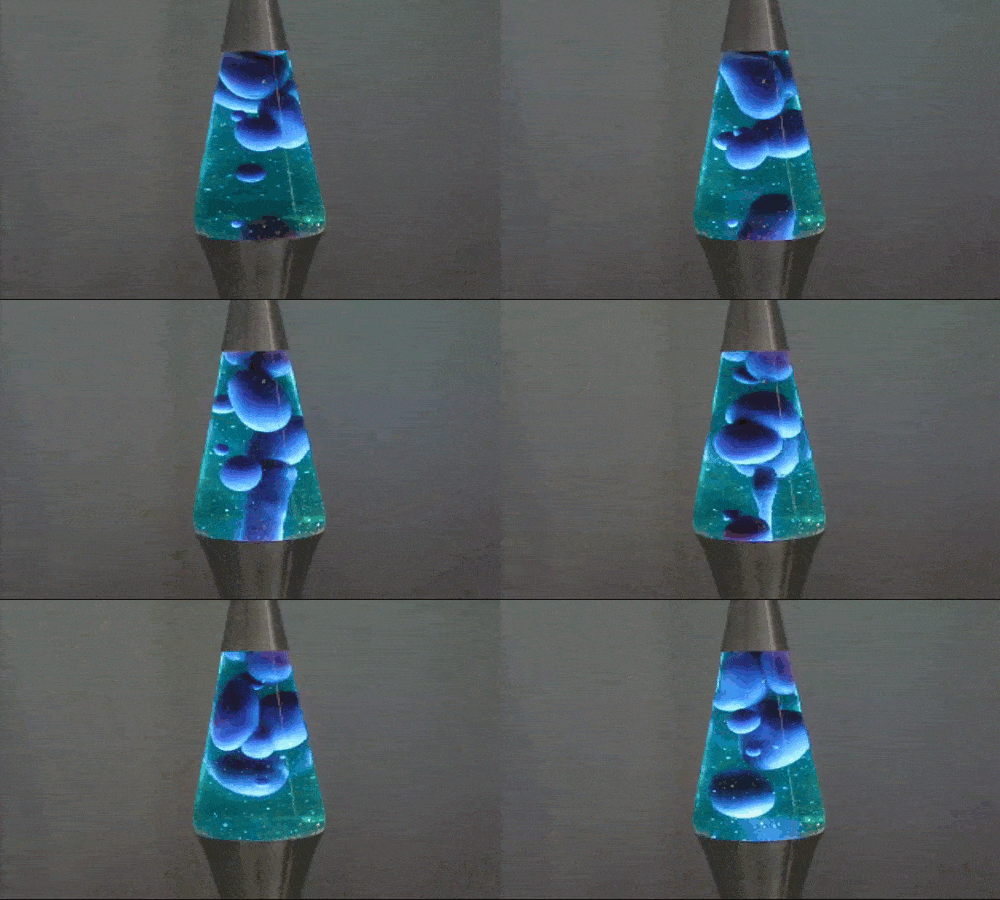
A certain type of decorative lamp contains colored liquids. These liquids form globs that break off and rise to the top of the liquid. The globs rise due to
Convection
Conduction
Radiation
Globulation

Near the ceiling of a room, the air is warmer. The warmer air is rising because of
Convection
Conduction
Radiation
It was told to by this crazy fool!

A fireman that is at a building that is on fire feels a door and it is hot. Why does his hand feel hot?
Convection
Conduction
Radiation
The Human Torch was on the other side!
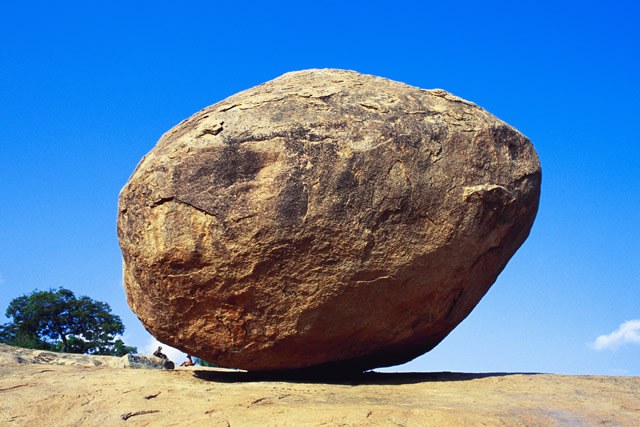
A huge boulder at the state park in Arizona gets so hot during a mid summer's day. This is due to...
Convection
Conduction
Radiation
Boogie Fever

As you hold a piece of ice, it begins to melt from the warmth of you hand on it. This is because of
Convection
Conduction
Radiation
the fact that you are the Human Torch from the Fantastic Four.

In heat transfer, heat always flows from the _______________ object to the _______________ object.
hotter / colder
colder / hotter
hotter / hotter
colder / colder

Which of the following statements is true regarding heat energy?
The quicker a molecule moves, the colder it is.
The slower a molecule moves, the warmer it is.
The quicker a molecule moves, the warmer it is.
The faster you dance, the quicker you get tired.

Heat/magma moving under Earth's mantle; hot magma rises and cold magma sinks...
Conduction
Convection
Radiation

__________ is the transfer of heat by the movement of a fluid.
Conduction
Convection
Radiation
_____________, convection, and conduction are the three types of heat transfer.
Conveyance
Radiation
Translocation

