
NEW
Font size
 Worksheets
Exploring Panay Bukidnon Culture
Total questions: 24
Worksheet time: 13mins
What is the significance of cultural dances in Panay Bukidnon?
Cultural dances in Panay Bukidnon are only performed during festivals.
Cultural dances are primarily for entertainment purposes.
Cultural dances have no impact on community relationships.
Cultural dances in Panay Bukidnon are significant for expressing identity, preserving heritage, and fostering community cohesion.
Name a traditional dance performed by the Bukidnon people.
Hula
Tinikling
Binasuan
Samba
What instruments are commonly used in Bukidnon cultural dances?
drums, harmonica, maracas
guitar, flute, tambourine
kulintang, agung, dabakan
piano, violin, saxophone
Describe the movements typically seen in Bukidnon dances.
Static poses with no rhythm
Movements in Bukidnon dances include graceful arm movements, rhythmic footwork, dynamic body postures, and circular formations.
Slow and heavy movements
Only hand clapping without footwork
How do cultural dances reflect the history of the Bukidnon community?
Cultural dances have no connection to the community's history.
Cultural dances are solely for entertainment purposes.
Cultural dances reflect the history of the Bukidnon community by narrating their traditions, beliefs, and significant historical events.
Cultural dances are only performed during festivals.
What role do costumes play in Bukidnon cultural dances?
Costumes are chosen based on the dancer's personal preference.
Costumes are primarily used for warmth during performances.
Costumes serve as a form of entertainment for the audience.
Costumes represent identity, heritage, and cultural significance in Bukidnon dances.
Can you name a festival where Bukidnon dances are showcased?
Panagbenga Festival
Pahiyas Festival
Kaamulan Festival
Sinulog Festival
How do the themes of Bukidnon dances relate to nature?
The themes of Bukidnon dances ignore environmental aspects.
Bukidnon dances are primarily about urban life.
The themes of Bukidnon dances relate to nature by celebrating and mimicking natural elements and phenomena, highlighting the community's connection to their environment.
The dances focus solely on historical events.
What is the importance of storytelling in Bukidnon dance performances?
Storytelling is crucial as it conveys cultural narratives and preserves traditions in Bukidnon dance performances.
Dance performances do not involve any cultural elements.
Storytelling is irrelevant to the audience's understanding of the dance.
Storytelling is only for entertainment purposes in Bukidnon dance.
How have modern influences changed traditional Bukidnon dances?
Contemporary music has been banned from all traditional dance performances.
Modern influences have led to the complete abandonment of traditional dances.
Traditional dances have remained unchanged over the years.
Modern influences have introduced contemporary music, choreography, and costumes to traditional Bukidnon dances, creating a fusion that appeals to younger audiences.
_____________ is a percussion and chordophone made of kawayan.
Subing
Litgit
Sunganggang
Tikumbo
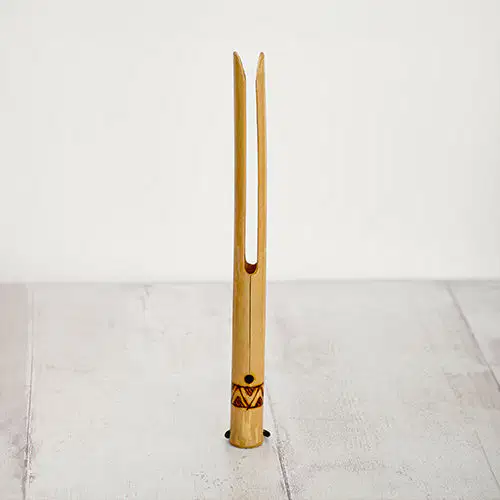
It is a buzzer struck on the palm of a hand.
Subing
Litgit
Sunganggang
Tikumbo
______________ is a two-stringed bowed instrument made of bulo. Abaca hemp finely braided is used as strings.
Subing
Litgit
Sunganggang
Tikumbo
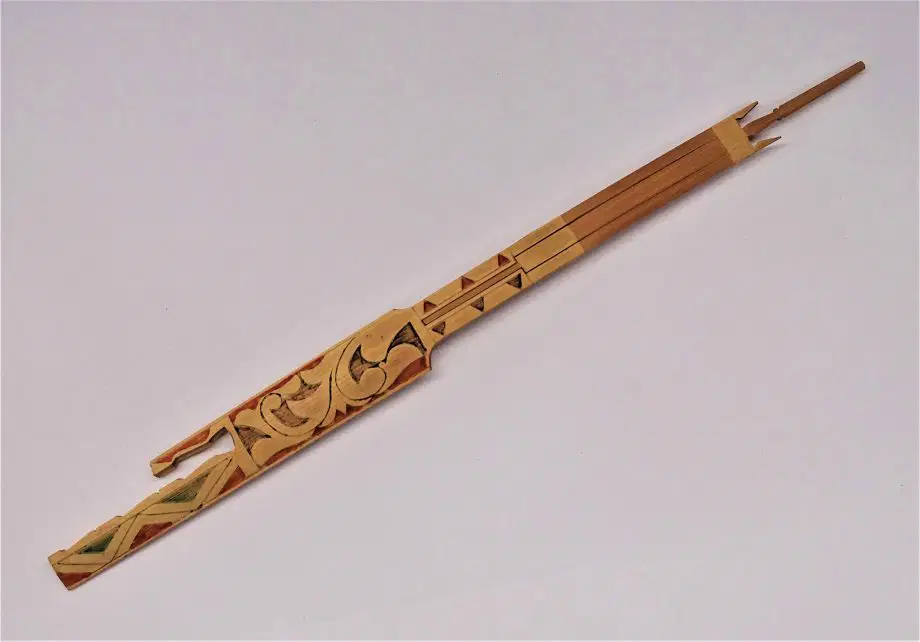
It is a Jaw’s harp, an aerophone, chordophone, and idiophone at the same time because to play it entails “inhaling and exhaling air” (aerophone). By repeatedly moving the bamboo’s pointed edge, the instrument’s tongue or bamboo string is vibrated (chordophone) and a percussive effect (idiophone) is produced from the rhythm.
Subing
Litgit
Sunganggang
Tikumbo
____________ is a bamboo flute made of bagakay (one of the smallest bamboo varieties).
Litgit
Tikumbo
Sunganggang
Tulali
1. Also known as Sulodnon, Halawodnon or Panayanon Sulud , are the tumandok or native or indigenous dwellers of the more portions of the Island.
Panay Bukidnon
Pampanga
Ilo-ilo
Eastern Samar
2. Which of the the following is considered as mastermind vocal song that a certain atmosphere effect in a Wayang show?
Sulukan
Sugidanon
Suludnon
Wayang Kulit
3. It is the largest country in Southeast Asia, it is located off the coast of mainland Southeast Asia in the Indian and Pacific oceans. I
Philippines
Indonesia
Malaysia
Thailand
4. Why does " Sugidanon " is reputed as the longest published epic in the Philippines?
Because it has ten parts in 10 volumes
Because it has ten parts in 11 volumes
Because it has ten parts in 12 volumes
Because it has ten parts in 13 volumes
5. It is a shadow puppet theater performance from Java, Indonesia.
Dhalang
Puppeter
Wayang Kulit
El Gamma Penumbra
6.What do you call to an orchestra made up of a set of instruments from Java/Bali Indonesia and is considered as an integral part of the country's culture?
Gamelan
Sugidanon
Wayang Kulit
Sulukan
7.What do you call to a long narrative reflecting the existing customary laws, beliefs, practices, and values of the Panay Bukidnon ancestors?
Sulukan
Suludnon
Sugidanon
Chorale
8. Is an anthropologist and professor emerita of University of the Philippines who began researching about the Panay Bukidnon.
Federico Caballero
Dr. Alicia P. Magos
Romulo Caballero
Juancho Caballero
9. What is the main functions of sugidanon in the Iloilo Panay Bukidnon community?
Structural
Aesthetic
Story telling
Past time

