
 Worksheets
untitled
Total questions: 55
Worksheet time: 30mins
What is a possible answer or explanation to a question based on knowledge, observations, and research?
HINT: It is often written in "if...then" format.
Observation
Hypothesis
Experiment
Conclusion
Why is it important to write down your procedure?
So that I can photocopy it for my friends.
To take up more class time.
So that other scientists can repeat it.
So that I don't have to do it later.
The information gathered from making observations is called ____.
experiment
graph
procedure
What is an independent variable?
The variable being tested or changed by the scientist, also known as the manipulated variable.
The variable that the
scientist is measuring or
observing, also known as the responding variable.
The variables that the scientist keeps constant, which allows them to attribute the results to the independent variable alone.
How many independent variables should we change when conducting an experiment?
1
2
3
As many as we want
What is the independent variable in the following scenario?
"The blood pressure of a soldier is measured while he is resting. The soldier is then exposed to a stressful environment and his blood pressure is measured again."
the environment
the soldier
blood pressure
none of the above
What is a dependent variable?
The variable being tested or changed by the scientist, also known as the manipulated variable.
The variable that the
scientist is measuring or
observing, also known as the responding variable.
The variables that the scientist keeps constant, which allows them to attribute the results to the independent variable alone.
What is the dependent variable in the following scenario?
"The blood pressure of a soldier is measured while he is resting. The soldier is then exposed to a stressful environment and his blood pressure is measured again."
the environment
the soldier
blood pressure
none of the above
What is a controlled variable?
The variable being tested or changed by the scientist, also known as the manipulated variable.
The variable that the
scientist is measuring or
observing, also known as the responding variable.
The variables that the scientist keeps constant, which allows them to attribute the results to the independent variable alone.
What is the controlled variable in the following scenario?
"The blood pressure of a soldier is measured while he is resting. The soldier is then exposed to a stressful environment and his blood pressure is measured again."
the environment
the soldier
blood pressure
none of the above
Suppose you are performing an experiment measuring the maximum amount of table salt that can be dissolved in water as the temperature of the water increases. In this experiment, what would be the dependent and independent variables?
temperature is the independent variable; amount of table salt is the dependent variable
amount of water is the independent variable; amount of table salt is the dependent variable
temperature is the independent variable; amount of water is the dependent variable
amount of table salt is the independent variable; temperature is the dependent variable
A theory is a ____.
proposed explanation for an observation
well-tested explanation for a broad set of observations
summary of the results of many observations
procedure used to test a proposed explanation
A variable that you change during an experiment is called a(n)
Dependent variable
Independent variable
What is an observation?
Something you measure or detect with your senses.
The way you feel about something
An educated guess
A theory that has been disproved
What is the scientific method?
A systematic procedure for how to conduct a scientific experiment
The process of solving a problem
A way of making non-scientific observations
A way to summarize findings from multiple investigations
An educated guess in science is called a/an
hypothesis
procedure
conclusion
lucky

What step does every scientific experiment begin with?
hypothesis
question/problem
procedures
conclusion


What is the best way to collect and record data?
In a data table
On post-it notes
On scrap paper
interpretive dance
What is the primary goal of conducting a risk assessment?
To eliminate all risks entirely
To identify and control workplace hazards
To increase productivity and efficiency
To meet legal requirements
What is the first step in the risk assessment process?
Implementing control measures
Reviewing existing risk assessments
Identifying hazards
Training employees
What are the steps to risk assessment?
1: Identify the Hazards.
2: Decide Who Might Be Harmed and How.
3: Evaluate the Risks and Take Action to Prevent Them.
4: Record Your Findings.
5: Review the Risk Assessment.
1: Identify the Hazards.
2: Decide Who Might Be Harmed and How.
3: Record Your Findings.
1: Identify the Hazards.
2: Decide Who Might Be Harmed and How.
3: Evaluate the Risks and Take Action to Prevent Them.
4: Record Your Findings.
1: Identify the Hazards.
2: Decide Who Might Be Harmed and How.
3: Evaluate the Risks and Take Action to Prevent Them.
4: Review the Risk Assessment.
The first step in risk assessment is ........
Hazard Identification
Risk Evaluation
Recording significant findings
Risk Control

What is this piece of lab equipment called?
Beaker
Graduated cylinder
Test tube
Funnel


Long hair should be....
Cut short
Tucked behind ears
Tied back during experiments
Put away
What equipment is part of the Personal Protective Equipment?
Goggles, Apron
Hair tie, Apron
Goggles, shoes
gloves, hair tie
If a spill should occur, what do you do?
Report spill to teacher
Clean the spill
Continue with experiment
Wipe spill onto floor/into sink
If any equipment is broken or damaged, what should you do
Continue with experiment
Swap it with another group's equipment
Don't do the experiment
Report to teacher immediately
Is it okay to run in the lab?
Only if it is an emergency
Yes
No
If i'm playing with friends
When is it okay to mix chemicals
During an experiment
When a teacher instructs you to
When you feel curious
Before the experiment starts
It is okay to sit down during an experiment?
Only when the teacher says
Yes
No
When i feel tired of standing
If an injury occurs, what should you do?
Leave the class and go to sick bay
Stay quiet about it
Notify Teacher immediately
Administer first aid

What does this symbol mean?
flammable
corrosive
danger to the environment
Health Hazard
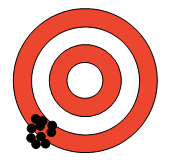
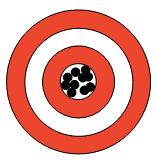
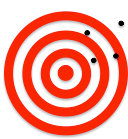
Which option below shows both precision and accuracy?


How close a measurement is to the accepted value is called..
Accuracy
Precision
Significant
Estimate
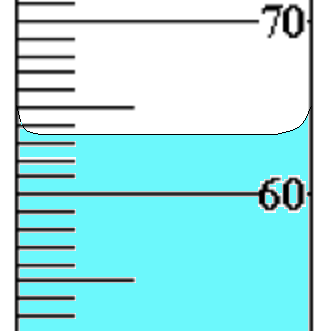

Which Student is the most Precise?
Alex
Shandra
Luis

