wayground logo

Free Printable Worksheets

Font size

S
M
L
XL
Worksheets

OSE 7.1 Unit Assessment

Total questions: 30

Worksheet time: 17mins

Name
Class
Date
1.
What are molecules made of?
a)
A) Water
b)
B) Atoms
c)
C) Air
d)
D) Energy
2.
What makes one substance different from another substance?
a)
A) Its color and shape
b)
B) The type of atoms it contains
c)
C) The number, type, and arrangement of atoms in its molecules
d)
D) Its temperature
3.
Which statement is true about substances?
a)
A) All substances are made of the same type of atoms
b)
B) A substance can be made of different types of molecules
c)
C) A substance is made of the same type of molecules or atoms
d)
D) Substances do not contain atoms
4.
In a chemical reaction, what happens to the atoms in the reactants?
a)
A) They disappear
b)
B) They change into new types of atoms
c)
C) They are rearranged to form new substances
d)
D) They remain unchanged
5.
What do scientists use molecular models for?
a)
A) To predict the weather
b)
B) To understand chemical reactions
c)
C) To study animal behavior
d)
D) To design buildings
6.
What did Dalton's investigations help to understand?
a)
A) Gravity
b)
B) The structure of atoms and molecules
c)
C) Plant growth
d)
D) The solar system
7.
Which of the following is a result of a chemical reaction?
a)
A) Melting of ice
b)
B) Formation of a new substance
c)
C) Breaking of glass
d)
D) Dissolving sugar in water
8.
What is true about atoms in a molecule?
a)
A) They are only from one element
b)
B) They can be from different elements
c)
C) They are not bonded together
d)
D) They are always in a liquid state
9.
What happens to the particles in a chemical reaction?
a)
A) They increase in size
b)
B) They are destroyed
c)
C) They are rearranged
d)
D) They change color
10.
Which statement best describes an atom?
a)
A) The smallest unit of a compound
b)
B) The smallest particle that retains the properties of an element
c)
C) A type of molecule
d)
D) A form of energy
11.
When a bath bomb reacts in water, what type of change occurs?
a)
A) Physical change
b)
B) Chemical change
c)
C) No change
d)
D) Reversible change
12.
What demonstrates the conservation of mass during a chemical reaction involving substances like water and carbon dioxide?
a)
A) The total mass of reactants and products is equal.
b)
B) The reaction produces energy.
c)
C) The reaction can be seen with the naked eye.
d)
D) The products weigh more than the reactants.
13.
What role do sensory receptors play in detecting chemical changes, such as those in a reaction?
a)
A) They absorb the chemicals involved in the reaction.
b)
B) They change the chemical composition of the reactants.
c)
C) They send signals to the brain in response to chemical stimuli.
d)
D) They prevent the reaction from occurring too quickly.
14.

Which of the following best describes a chemical bond?

a)

B) A type of molecule

b)

A) A force that holds atoms together in a molecule

c)

C) A form of energy

d)

D) A process of breaking down molecules

15.
Why is a model of a molecule useful in studying chemical reactions?
a)
A) It helps predict physical changes like melting and freezing.
b)
B) It provides a visual representation of the arrangement of atoms.
c)
C) It shows the actual size of the molecules involved.
d)
D) It can replace experiments in the laboratory.
16.

How many carbon atoms are there in C3H12O5?

a)

1

b)

3

c)

12

d)

5

17.

How many molecules (or groups) are there in 2CH4?

a)

1

b)

2

c)

3

d)

4

18.

The amount of matter in a object.

a)

Density

b)

Mass

c)

Atom

d)

Physical Property

19.

The atoms of each substance are ______________________________ in order to form the products.

a)

increased

b)

rearranged

c)

decrease

20.

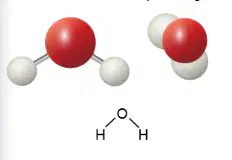
How many water molecules are in the picture?

a)

1

b)

2

c)

3

d)

4

21.

Matter cannot be _____ or ______.

a)

created, destroyed

b)

changed, destroyed

c)

energy, changed

d)

flipped, flopped

22.

The bubbles from the bath bomb are filled with:

a)

Argon

b)

Nitrogen

c)

Carbon dioxide

d)

Carbon monoxide

23.

Matter and energy can flow into and out of a/an...

a)

atom

b)

molecule

c)

closed system

d)

open system

24.

What is this in molecular formula?

a)

3water

b)

3H₂O 

c)

H3O3

d)

3O6H

25.

Flammability is a ______ of a substance.

a)

good time

b)

property

c)

character

26.
________________ is anything that has mass and takes up space.
a)
volume
b)
matter
c)
mass
d)
weight
27.
The amount of matter something contains is its ______________.
a)
gas
b)
solid
c)
weight
d)
mass
28.
Steam is an example of what state of matter?
a)
Solid
b)
Liquid
c)
Gas
d)
Thermo
29.

What happens when sugar dissolves in water?

a)

Physical change because a new substance is formed

b)

Chemical change because a new substance is formed

c)

Physical change because the sugar is just getting smaller

d)

Chemical change because the sugar is just getting smaller

30.

Which liquid is the least dense?

a)

Oil

b)

Water

c)

Syrup

d)

Plastic bottle