
 Worksheets
Bonding and Nomenclature Review
Total questions: 50
Worksheet time: 25mins
Cations have what charge?
+
-
What is a negative ion called?
anion
cation
covalent
isotope
How many electrons would a Nitrogen ion gain/lose?
lose 5
gain 5
lose 3
gain 3
What is the ion formed from Sulfur?
S+2
S-2
S+6
S-6
How many electrons would a Calcium ion gain/lose?
lose 1
gain 1
lose 2
gain 2
If an atom loses electrons, the charge will be positive.
true
false
An atom with 2 protons, 3 neutrons, and 4 electrons has a charge of ____.
+2
-2
+3
0
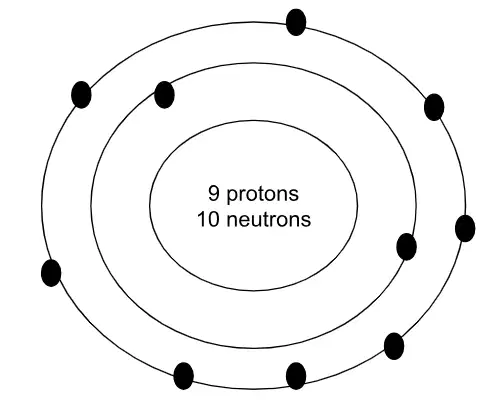
What charge does this ion have?
0
+1
-1
+2
If an element has 3 valence electrons, what charge will likely form on its ion ?
+3
+5
-3
-5
Why do all bonds form?
so the number of protons equals the number of electrons
so an atom can become unstable
to fill the outermost energy level
According to the Octet Rule, atoms of elements react with each other in order to attain ____ electrons in their outermost energy level or shell.
2
4
6
8
10
Which of the following could NOT form an ionic compound? Check all that apply.
Li+ and Cl-
F- and O2-
Ba2+ and Ag+
Mg2+ and S2-
What is the formula for trinitrogen octahydride?
N3H8
NH4
N8H3
N3H6
What is the name of SF4?
sulfur fluoride
sulfur trifluoride
sulfur tetrafluoride
monosulfur difluoride
What is the name of P2O5?
pentaphosphorus dioxide
diphosphorus pentoxide
phosphorus oxide
phosphorus pentoxide
Covalent compounds are made up of__________
metal and metal
metal and nonmetal
nonmetal and nonmetal
metal and polyatomic
Which of the following is an ionic compound?
disulfur trioxide
sulfate
carbon monoxide
sodium chloride

Which of the following describes covalent bonds?
Bonds form because of opposite charges
electrons are shared to fill outer electron shells
Electrons are transferred between atoms
Covalent bonds are magical
CH4
I2
LiBr2
What would be the proper chemical formula for combining Al3+ and Cl-1 :
beryllium dichloride
beryllium chlorate
magnesium sulfite
lithium nitrite
chromium nitrate
chromium trinitride
chromium nitrite
iron trichloride
iron chloride
iron chlorite
Tin Selenide
Monotin diselenide
Tin triselenide
Dicopper carbonate
Dicopper monocarbonate
copper carbonate
magnesium difluoride
monomagnesium difluoride
Identify what is incorrect about the following:
BeCl2 = Beryllium chlorine
The ending on beryllium should be -ide
The ending on chlorine should be -ide
The prefix di- should be on chlorine
The prefix mono-should be on beryllium
Identify what is incorrect about the following:
F5I3 = Pentafluorine diiodide
The ending on fluorine should be -ide
The prefix for iodide should be tri-
The prefix for fluorine should be tri-
The ending on iodide should be -ine
Identify what is incorrect about the following:
Ca3(PO4)2 = Calcium phosphide
The anion should be phosphate
The prefix di- should be on phosphide
The prefix tri- should be on calcium
The ending on calcium should be -ide
Identify what is incorrect about the following:
Strontium sulfite = SrSO4
Sulfite is SO3, not SO4
Sulfite is S, not SO4
Strontium is S, not Sr
The formula should be Sr2(SO3)2
Identify what is incorrect about the following:
Diboron tetranitride = B2NO3
Tetranitride should be N3, not NO3
Tetranitride should be N4, not NO3
Diboron should be B, not B2
Tetranitride should be NO4, not NO3
Identify what is incorrect about the following:
Calcium Oxide = Ca2O2
The subscripts (2) should not be present at all
The subscript (2) should not be on the Ca
The subscript (2) should not be on the O
There is nothing incorrect
Identify what is incorrect about the following:
Li2S = Dilithium monosulfide
There should not be prefixes
Sulfide should be sulfate
Sulfide should be sulfite
The prefix for sulfide should be tri-
__________ bonds involve an unequal sharing of electrons, while __________ bonds involve an equal sharing of electrons.
Nonpolar, polar
Polar, metallic
Metallic, nonpolar
Polar, nonpolar
Which of the following is correct for the compound of sodium and fluorine?
Sodium loses electrons becoming positive; fluorine gains electrons becoming negative; the attraction between them results in the formation of an ionic bond.
Sodium loses electrons becoming negative; fluorine gains electrons becoming positive; the attraction between them results in the formation of an ionic bond.
Sodium and fluorine share electrons forming a covalent bond.
Sodium gains electrons becoming negative; fluorine loses electrons becoming positive; the attraction between them results in the formation of an ionic bond.
Which of the following is correct for the compound of phospohrus and iodine?
Phosphorus loses electrons becoming positive; iodine gains electrons becoming negative; the attraction between them results in the formation of an ionic bond.
Phosphorus loses electrons becoming negative; iodine gains electrons becoming positive; the attraction between them results in the formation of an ionic bond.
Phosphorus and iodine share electrons forming a covalent bond.
Phosphorus gains electrons becoming negative; iodine loses electrons becoming positive; the attraction between them results in the formation of an ionic bond.

