Wayground logo

Free Printable Worksheets

Font size

S
M
L
XL
Worksheets

plants and sound

Total questions: 109

Worksheet time: 2hrs 34mins

Name
Class
Date
1.

Sound is a form of energy produced by ______________.

a)

Vibrations

b)

Distances

c)

Prisms

d)

Forces

2.

Sound waves travel the FASTEST through _____________.

a)

Gases

b)

Liquids

c)

Solids

3.

An object that does not vibrate cannot produce

a)

Sound

b)

Light

c)

Heat

d)

Electricity

4.

A place where no sound exists is...

a)

in the air.

b)

under water.

c)

space.

d)

all of the above

5.

Why do we see lightning before we hear the thunder?

a)

Our eyes trick us.

b)

Light travels faster than sound.

c)

they're two separate things.

6.

Clay is a type of soil that can be used in:

a)

pottery.

b)

sand boxes.

c)

recipes.

7.
This type of soil is best for plant growth. 
a)
rock
b)
sand
c)
loam
d)
clay
8.
The four types of soil are _____. 
a)
humus, gravel, pebbles, sand
b)
sand, silt, clay, loam
c)
sand, rock, pebbles, granite
d)
sand, clay, bedrock, topsoil
9.
Which part of a plant is this?
a)
Leaf
b)
Stem
c)
Roots
d)
Fruit
10.

The part of the plant that absorbs water is _________.

a)

Roots

b)

Flowers

c)

Stem

d)

Leaves

11.

What do the leaves of a plant do?

a)

They make the food for the plant.

b)

They take in the water from the ground.

c)

They transport water to the other parts of the plants

d)

They support the plant upright.

12.

This part of the plant holds the plant in the ground and gets water and nutrients from the soil.

a)

stem

b)

leaves

c)

flower

d)

roots

13.

The _________ helps hold the plant up and carries water and nutrients to the rest of the plant from the roots.

a)

leaves

b)

roots

c)

stem

d)

seed

14.
What is plant germination?
a)
a place where plants get sick
b)
planting a seed
c)
When  a seed grows into a plant
d)
the way a plant makes food
15.
During which stage do clouds form?
a)
condensation
b)
evaporation
c)
precipitation
16.
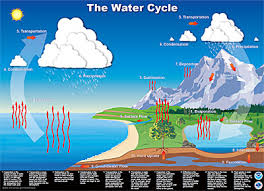
What is A?
a)
Evaporation
b)
Condensation
c)
Precipitation
d)
Runoff
17.
True or False: Evaporation is caused by the sun's heat.
a)
True
b)
False
18.

True or False: The process by which water moves through the Earth and the atmosphere is called the nitrogen cycle.

a)

True

b)

False

19.

What is it called when water droplets form on the outside of a cool glass?

a)

Condensation

b)

Transpiration

c)

Precipitation

d)

Evaporation

20.
_______ is when light hits and object and it BOUNCES off.
a)
Reflection
b)
Refraction
21.

When an object blocks the path of light, what is formed ?

a)

A problem

b)

A fog

c)

A reflection

d)

A shadow

22.

Translucent is ?

a)

When light bounces off an object.

b)

Materials that only allows a little light to pass through.

c)

Our main source of light

23.

Light travels in ---------

a)

Wave

b)

Striaght line

24.

Translucent objects let only some light pass through.

a)

True

b)

False

25.

The Moon reflects light from the .............

a)

Earth

b)

Sun

26.

Part of the plant that absorbs water.

a)

Roots

b)

Flowers

c)

Petals

d)

Leaves

27.

Part of the plant that has chlorophyll

a)

Roots

b)

Flowers

c)

Petals

d)

Leaves

28.

Part of the plant that is colorfull

a)

Roots

b)

Flowers

c)

Petals

d)

Leaves

29.

Green substance that turn the leaves green

a)

Chlorophyll

b)

Roots

c)

Green Paint

d)

Spore

30.

The flowers from plants turn into _________.

a)

Fruits

b)

Trees

c)

Leaves

d)

Vegtables

31.
What does a plant need to survive?
a)
sunshine
b)
nutrients
c)
water
d)
all of the above
32.
What do the leaves of a plant do?
a)
They make the food for the plant.
b)
They soak up the water from the ground.
c)
They deliver water to the other parts of the plants
d)
They make seeds
33.
True or False: All plants flower.
a)
True
b)
False
34.
What gives plants the power to make their own food?
a)
the sun
b)
insects
c)
seeds
d)
the flower
35.
How could a plant spread its seeds?
a)
An animal could eat the fruit and spread the seeds
b)
Seeds could float away in the wind
c)
The seed could get stuck in an animals fur and be carried to a new place.
d)
All of the above
36.
Pollination in the way plants_____________.
a)
make food
b)
absorb minerals
c)
absorb sunlight
d)
create new seeds
37.

Solar Energy from the Sun is turned into _________ energy in a plant

a)

chemical

b)

mechanical

c)

sound

d)

thermal

38.
What part of the plant is #3?
a)
leaf
b)
root
c)
flower
d)
stem
39.

What is one job of the stem?

a)

To pollinate the plant

b)

To make food for the plant

c)

To carry food and water to the plant

40.

Every plant begins as a...

a)

bush

b)

seed

c)

tree

d)

fruit

41.
Part of a plant used for support and has tubes for carrying food, minerals, and water
a)
roots
b)
stem
c)
leaves
d)
flower
42.
The lenses of a telescope, a microscope, and a hand lens
a)
reflect light
b)
bounce light
c)
absorb light
d)
refract light
43.
oil and natural gas are formed from ______________________
a)
dead ocean organisms
b)
plants
c)
dinosaur bones
44.
What formed this canyon?
a)
wind 
b)
ice wedging
c)
glaciers
d)
floods (water)
45.
What does a prism do to light?
a)
reflect
b)
refract
c)
obsorb
46.
this is how light _________________ off of a shiny surface.
a)
reflects
b)
frefracts
c)
obsorbs
47.
sounds are made by __________________
a)
light
b)
vibrations
c)
heat
48.
coal is formed from _____________________
a)
dead ocean animals
b)
dead plants
c)
dinosaurs
49.
what formed this valley
a)
glacier
b)
water
c)
wind
d)
gravity
50.
Thermal energy is
a)
heat energy
b)
light energy
c)
mechanical energy
d)
electrical energy
51.
The ___________________ of water compacts sediments into sedimentary rocks.
a)
smell
b)
weight (pressure)
c)
color
d)
fish
52.
What is happening in this picture?
a)
evaporation
b)
heating
c)
water
d)
condensation
53.
What type of energy is used to make the turbines in a windmill and hydroelectric dam spin?
a)
mechanical
b)
electrical
c)
light
d)
sound
54.
light bends when it goes from
a)
air into water
b)
air to a mirror
c)
water into water
d)
air into air
55.
At what temperature does water begin to turn to ice?
a)
100 C
b)
32 C
c)
0 C
d)
23 C
56.
_____________________ are needed to  form fossil fuels.
a)
metal
b)
decaying organisms
c)
lava
d)
metal
57.
_________________ is formed in layers.
a)
sedimentary rock
b)
crystals
c)
metamorphic rock
d)
igneous rock
58.
a)
parallel circuit
b)
series circuit
c)
open circuit
59.
oil is formed from
a)
ancient dead plants
b)
ancient ocean organisms
c)
dinosaurs
d)
sediments
60.
___________________ is a renewable resource.
a)
coal
b)
minerals
c)
wind
d)
oil
61.
___________________ is not a non renewable resource.
a)
coal
b)
minerals
c)
wind
d)
oil
62.

____ is the evaporation of water from a plant's leaves.

a)

Transpiration

b)

Water absorption

c)

Storage

63.

Plants use water, _______, and light energy to produce their food (sugar)

a)

carbon dioxide

b)

oxygen

c)

air

64.

Plants use water, carbon dioxide, and _______ energy to produce their food (sugar)

a)

heat

b)

light

c)

sound

65.

Plants use ____, carbon dioxide, and light energy to produce their food (sugar)

a)

air

b)

sound

c)

water

66.

Transpiration is the __________ of water from a plant's leaves.

a)

stems

b)

evaporation

c)

water absorption

67.

Transpiration is the evaporation of ________ from a plant's leaves.

a)

air

b)

water

c)

oxygen

68.

Which of the following are located on a plant's leaves?

a)

xylem

b)

phloem

c)

roots

d)

stomata

69.

The stomata are located on the _____________of the leaves.

a)

top

b)

bottom

70.

The main job of the ____________ is to take in nutrients and water from the soil.

a)

roots

b)

stems

c)

leaves

71.

The main job of the ____________ is to carry nutrients, water and sugar to all part of the plant.

a)

roots

b)

stems

c)

leaves

72.

The main job of the ____________ is to make food for the plant.

a)

roots

b)

stems

c)

leaves

73.

The basic needs of plants that help them live and grow are:

Sunlight, carbon dioxide, water, and __________

a)

space to grow

b)

oxygen

c)

stem

74.

Which of the following materials used by plants to make food can be found in the air?

a)

pollen

b)

soil

c)

oxygen

d)

carbon dioxide

75.

Water is carried from the roots through the stem by tissues called _______________

a)

xylem

b)

phloem

76.

Phloem are tissues that transport ___________ to all parts of the plant

a)

sugars

b)

water

77.
What medium does sound travel through slowest?
a)
gas
b)
solid
c)
liquid
d)
trees
78.
Sound is caused by....
a)
molecules
b)
vibrations
c)
people
d)
space
79.
Sound does not travel in space because
a)
Space is too far away.
b)
There is no matter in space.
c)
Space is the final frontier
d)
Space has planets.
80.
Sound is caused by? 
a)
force
b)
vibrations
c)
instruments
81.
What is vibration?
a)
how loud a sound is
b)
the back and forth movement of matter
c)
how high or low a sound is
d)
the loudness or softness of a sound
82.
What is frequency?
a)
the number of vibrations per second
b)
how high or low a sound is
c)
the loudness or softness of a sound
d)
the back and forth movement of matter
83.
Measure of how high or low a sound is
a)
amplitude
b)
compression
c)
speed of sound
d)
pitch
84.
A longer string makes a _______ pitch than a short string.
a)
louder
b)
softer
c)
higher
d)
lower
85.
The highest pitch is made by the _______ instrument.
a)
biggest
b)
wooden
c)
smallest
d)
shiniest
86.
An object that does not vibrate cannot produce
a)
sound
b)
light
c)
heat
d)
electricity
87.
What is volume?
a)
how high or low a sound is
b)
the loudness or softness of a sound
c)
the number of vibrations per second
d)
vibrations
88.
What medium (solid, liquid, gas) does sound travel fastest through?
a)
solid
b)
liquid
c)
gas
89.
Sound is a form of? 
a)
energy
b)
pitch
c)
volume
90.
Sound travels FASTEST through which of these materials?
a)
Air
b)
Empty space
c)
Metal
d)
Water
91.
Why is the school library covered with carpet?
a)
So everyone can make a lot of noise
b)
to help absorb sounds to keep it quiet
c)
because it looks good
d)
to help absorb sounds so it can stay noisy
92.
Sound moves in a _________.
a)
Transverse wave
b)
Longitudinal wave
93.
How is sound produced?
a)
By the vibration of particles
b)
By the transfer of particles 
94.
Area of a longitudinal wave where particles are CLOSE together.
a)
Compression
b)
Rarefaction
95.
Area of a longitudinal wave where particles are APART. 
a)
Compression
b)
Rarefaction
96.
Which device measures sound waves?
a)
Oscilloscope
b)
Stethoscope 
c)
Radio
d)
I don't know
97.
The reflection of sound waves off of a hard surface can create ______.
a)
A wave
b)
An echo 
98.
Soft surfaces _______ sound waves. 
a)
Reflect
b)
Absorb
99.
Sound travels FASTEST through which of these materials?
a)
Air
b)
Empty space
c)
Metal
d)
Water
100.
Sound is caused by? 
a)
force
b)
vibrations
c)
instruments
101.
What is vibration?
a)
how loud a sound is
b)
the back and forth movement of matter
c)
how high or low a sound is
d)
the loudness or softness of a sound
102.
Sound is a form of? 
a)
energy
b)
pitch
c)
volume
103.
Measure of how high or low a sound is
a)
amplitude
b)
compression
c)
speed of sound
d)
pitch
104.
A longer string makes a _______ pitch than a short string.
a)
louder
b)
softer
c)
higher
d)
lower
105.
To make a sound from a stringed instrument louder you must
a)
hit it
b)
pluck it harder
c)
hold it higher
d)
pluck it softer
106.
The highest pitch is made by the _______ instrument.
a)
biggest
b)
wooden
c)
smallest
d)
shiniest
107.
Why is sound able to travel faster through a solid than a gas?
a)
Gas molecules are packed tightly.
b)
Sound does not travel faster through a solid than a gas.
c)
Solid molecules are packed tightly.
d)
Gas molecules move slowly.
108.
An object that does not vibrate cannot produce
a)
sound
b)
light
c)
heat
d)
electricity
109.
What is volume?
a)
how high or low a sound is
b)
the loudness or softness of a sound
c)
the number of vibrations per second
d)
vibrations