
 Worksheets
Review II
Total questions: 15
Worksheet time: 11mins
Name
Class
Date
1.
Which of the following is not needed for photosynthesis to occur?
a)
sunlight
b)
carbon dioxide
c)
water
d)
oxygen
2.

HH crossed with Hh. What is the probability of hh?
a)
0%
b)
25%
c)
50%
d)
100%
3.
What is the primary role of mitochondria in eukaryotic cells?
a)
To store genetic information
b)
To produce ATP
c)
To synthesize proteins
d)
To produce glucose
4.
Which of these is a product of photosynthesis and a requirement for cellular respiration?
a)
Glucose
b)
Carbon Dioxide
c)
Sunlight
d)
Water
5.
What products are produced during photosynthesis?
a)
Oxygen and glucose
b)
Carbon dioxide and ATP
c)
Oxygen and sunlight
d)
Glucose and Carbon dioxide
6.
The two parts of photosynthesis are the Light Reaction Cycle and...
a)
The Calvin Cycle
b)
The Kelvin Cycle
c)
The Royal Cycle
d)
The Monty Cycle
7.
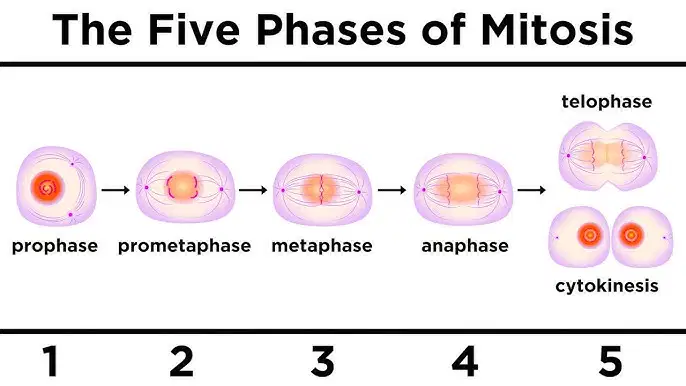
In mitosis, the two resulting cells are
a)
different from the starting cell and identical to each other.
b)
different from the starting cell and different from each other.
c)
identical to the starting cell and different from each other.
d)
identical to the starting cell and identical to each other.
8.
How many cell divisions does meiosis go through?
a)
2
b)
1
c)
4
d)
23
9.

The dominant trait is
a)
yellow pea seeds
b)
green pea seeds
c)
there is no dominant seed
d)
both yellow and green seeds
10.

What term describes what you see, or the physical appearance.
a)
Genotype
b)
Phenotype
c)
Homozygous
d)
Heterozygous
11.

Two heterozygous parents produce offspring. What is the probability of the HETEROZYGOUS GENOTYPE appearing in the offspring generation?
a)
75%
b)
25%
c)
50%
d)
100%
12.

Two heterozygous parents produce offspring. What is the probability of the HOMOZYGOUS DOMINANT GENOTYPE appearing in the offspring generation?
a)
75%
b)
25%
c)
50%
d)
100%
13.
Dominant alleles are represented by a:
a)
Male gene
b)
lowercase letter
c)
recessive trait
d)
capital letter
14.
AA and Aa always show up as
a)
dominant
b)
recessive
15.
•The organelle responsible for photosynthesis:
a)
Vacuole
b)
Chloroplast
c)
nuclear membrane
d)
mitochondria
e)
Cytoplasm
100 %

