
 Worksheets
Construction Health and safety Level 1
Total questions: 21
Worksheet time: 11mins
Which TWO of these are the main reasons for significant fatalities in the construction industry every year? Give TWO Answers
Being struck by a vehicle
Electrocution by badly maintained plant or machinery
Falling from height
Scalding with hot materials
If you have a minor injury that breaks the skin and draws blood, what should you do? Give ONE Answer
Carry on working so that progress is not interrupted
Cease working for the rest of the day
Make an insurance claim against your company
Report it so that it is logged in the accident book and go and get any necessary first aid
Which TWO of these are obligations on your employer in respect of asbestos? Give TWO Answers
Arrange for health surveillance where legislation or policy requires it.
Develop suitable control measures to prevent exposure to asbestos
To take out additional insurance
To train every member of the workforce to deal with asbestos
How much asbestos is still mined in the UK? Give ONE Answer
100 tonnes a year
150 tonnes a year
250 tonnes a year
None, it is banned
Which of the following practices will NOT contribute significantly to energy use reduction? Give ONE Answer
Collecting rainwater for use on-site and recycling water from concrete wash-out areas
Keeping vehicles switched on because of the amount of energy needed to ignite them in the first place
Saving energy and reducing nuisance by good maintenance of vehicles
Turning off taps and using hoses with triggers
What is the first step you should take if a hazardous liquid is accidentally released?
Ignore the spill and continue working
Use absorbent materials to contain the spill immediately
Notify a supervisor and wait for instructions
Flush the spill with water to dilute it
What is NOT a factor that can lead to the instability of an excavation site? Choose ONE answer.
Heavy rainfall causing soil saturation
Vibrations from nearby construction activities
Using non-recyclable materials for site fencing
Improper sloping or benching of the excavation walls
Which of the following is least likely to be used to assess a person's effectiveness in their job role? Choose ONE option.
Experience
Technical skills
Charisma
Certifications
Which of the following is NOT a duty of employers under the Health and Safety at Work etc. Act 1974?
Ensuring the safety of the workplace environment
Providing adequate training and supervision
Offering free lunch to all employees
Maintaining safe equipment and machinery
Which one of these is NOT an aspect that would normally be set out in a permit to work? Give ONE Answer
Dated
Insurance details
Signed by a properly authorised person
Time-limited
What is needed if a water system is suspected of being contaminated by legionella bacteria? Give ONE Answer
A heat reduction plan
A noise reduction plan
A safe system of work
Additional insurance
Which of these is NOT a symptom of stress? Give ONE Answer
Changed appearance
Giddiness
Poor quality of work
Unusual shows of emotion
If you need to move a load that is significantly heavier on one side, how should you approach picking it up? Give ONE Answer
It does not matter how you approach picking it up
The heavy side should be toward you
The light side should be toward you
Which of these is NOT a way that will be communicated to you to wear additional PPE? Give ONE Answer
As a result of a risk assessment or a direction in a method statement
As directed by signs and notices
From site rules or site induction
If one of your co-workers just decides it's necessary
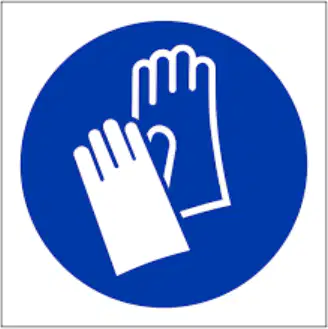
What is the meaning of this sign? Give ONE Answer
Do not use hand signals
No gloves to be worn
Use hand signals here
Wear protective gloves
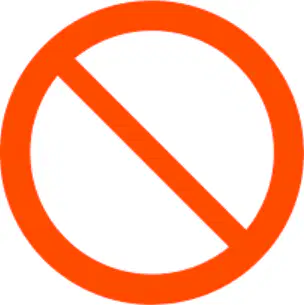
What does the symbol represent? Give ONE Answer
General mandatory action
General prohibition
General warning
Wear PPE
What should you always do with lifting equipment when not in use? Give ONE Answer
Clean them constantly
Leave them running
Refuel them
Store them safely
What should you always do with lifting equipment before beginning to use them? Give ONE Answer
Check if they can be used that day
Check them for damage or defects
Clean them
Fill them to the maximum fuel level
When using a MEWP (Mobile elevating work platform) which of these actions is appropriate? Give ONE Answer
Climb out of a MEWP in an elevated position unless the unit has been specifically designed for that purpose.
Signalling to the person dealing with the emergency ground controls if you become unwell
Stand on the guardrails of the MEWP
Clipping on to a nearby structure
Which of the following is NOT a recommended practice when working at heights? Choose ONE option.
Ensuring the ladder is stable
Working alone without supervision
Using a safety harness
Wearing non-slip footwear
What is the primary purpose of a risk assessment? Give ONE Answer
To identify potential hazards
To increase paperwork
To ensure compliance with insurance policies
To delay project timelines

