
 Worksheets
Module 109 power point 1Quiz
Total questions: 46
Worksheet time: 23mins
What is one of the objectives of the material handling module?
Describe the basic concepts of material handling and manual lifting.
Explain the history of material handling.
Discuss advanced material handling machinery.
Analyze the economic impact of material handling.
Which of the following is a focus of the material handling module?
Identify common material handling safety precautions.
Design new material handling equipment.
Evaluate the cost of material handling.
Develop a marketing plan for material handling services.
What skill related to knots is taught in the material handling module?
Identify and describe how to tie knots commonly used in material handling.
Create decorative knots for packaging.
Analyze the strength of different knots.
Design new types of knots for material handling.
Which of the following is a safe manual lifting technique?
Bending at the waist
Keeping the load close to the body
Twisting while lifting
Lifting with straight legs
Which of the following is a type of knot you should be able to tie?
Slip knot
Granny knot
Bowline
Overhand knot
How many of the following knots should you be able to demonstrate tying?
One
Two
Three
Four
What is a square knot typically used for?
To form a loop that neither slips nor jams
To join the ends of two ropes of similar diameters
To tie the working end of a rope around an object
To create a decorative knot
Which knot is sometimes referred to as the "king of knots"?
Square knot
Bowline
Half hitch
Reef knot
What is a half hitch often used for?
To join two ropes of different diameters
To form a loop that neither slips nor jams
As an element in forming other knots
To create a decorative knot
What is a clove hitch?
A knot that consists of two half hitches made in opposite directions
The end of a rope that is not being knotted
The portion of a rope between the standing end and the working end
To change the form and rearrange the parts of a knot
What is the standing end of a rope?
The end of a rope that is being used to tie a knot
The end of a rope that is not being knotted
The portion of a rope between the standing end and the working end
To change the form and rearrange the parts of a knot
What does the term "capsize" refer to in knot tying?
A knot that consists of two half hitches made in opposite directions
The end of a rope that is not being knotted
To change the form and rearrange the parts of a knot
The portion of a rope between the standing end and the working end
What is the working end of a rope?
The end of a rope that is not being knotted
The end of a rope that is being used to tie a knot
The portion of a rope between the standing end and the working end
To change the form and rearrange the parts of a knot
What is the standing part of a rope?
The end of a rope that is being used to tie a knot
The end of a rope that is not being knotted
The portion of a rope between the standing end and the working end
To change the form and rearrange the parts of a knot
Which of the following is a recommended practice to prevent injuries when handling materials?
Ignore the task at hand.
Wear appropriate PPE.
Lift with your back.
Avoid planning.
What should you be aware of to prevent injuries when handling materials?
The color of the materials.
The weight of the materials.
Hazards posed by heights and suspended loads.
The temperature of the materials.
What is one of the steps to take before handling materials?
Pre-plan the task.
Start lifting immediately.
Ignore safety procedures.
Use any available equipment.
What should you do before attempting a lift?
Ignore the situation
Assess the situation
Ask someone else to do it
Start lifting immediately
What type of clothing should be worn during material handling?
Casual clothing
Proper clothing
Formal clothing
No specific clothing
What does PPE stand for in the context of material handling?
Personal Protective Equipment
Public Protective Equipment
Personal Planning Equipment
Public Planning Equipment
What should be followed during material handling tasks?
Personal preferences
Established policies
Random guidelines
No guidelines
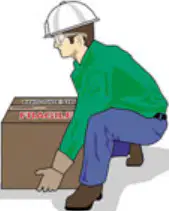
What is the first step in the proper lifting technique shown in the diagram?
Bend your back
Keep your legs straight
Bend your knees
Lift with your arms
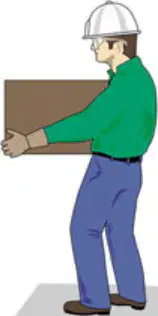
According to the diagram, what should you do after bending your knees when lifting a box?
Twist your body
Keep the box close to your body
Lift with your back
Stand on your toes
What is the first step in the guidelines for lowering a load?
Lower the load in the same way it would be lifted.
Treat the area as a fall zone.
Size up the load first.
Use a different method for lowering.
How should the load be lowered according to the guidelines?
In a different way than it was lifted.
In the same way it would be lifted.
Without any specific method.
As quickly as possible.
What should the area where the load is being lowered be treated as?
A safe zone.
A fall zone.
A loading zone.
A restricted zone.
Which of the following items should be chocked according to safety guidelines for stacking and storing?
Cartons
Lumber
Items that should be chocked
Bags
What should always be done with materials and equipment when they are not in current use?
Leave them as they are
Properly store them
Discard them
Use them immediately
Which of the following is NOT mentioned as an item to follow safety guidelines for stacking and storing?
Bricks
Masonry blocks
Electronics
Flammable materials
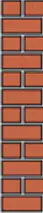
What is the maximum height for stacking loose bricks according to the guidelines?
5 feet (1.5 m)
6 feet (1.8 m)
7 feet (2.1 m)
8 feet (2.4 m)
At what height should you begin stacking bricks two inches in from the edge?
2 feet (0.6 m)
3 feet (0.9 m)
4 feet (1.2 m)
5 feet (1.5 m)
How much should you move in from the edge for each additional foot of height when stacking bricks?
1 inch (2.5 cm)
2 inches (5 cm)
3 inches (7.5 cm)
4 inches (10 cm)

What is the setback for a stack of masonry blocks above six feet?
One-half block per layer
One block per layer
Two blocks per layer
No setback required
What safety equipment should be used when working at heights over 6 feet (2 m)?
Safety goggles
Safety harness with a fall-arrest lanyard
Hard hat
Steel-toed boots
What should be used to raise or lower tools and materials when working from heights?
A ladder
A pulley system
A rope
A crane
Why is it important to tie off tools and materials in elevated work areas?
To prevent theft
To keep them secured
To make them easily accessible
To organize them
What should never be done on scaffolds or runways?
Paint them
Stack or store materials
Clean them
Measure them
What must be done to unfasten true knots?
Pull in the reverse direction
Unweave them
Cut them
Tie them tighter
How can hitches be undone?
By cutting them
By pulling in the reverse direction
By tying them tighter
By unweaving them
Which of the following is a key knot-tying term?
Loop end
Free end
Standing end
Loose end

What is the name of the knot shown in the diagram?
Bowline Knot
Square Knot
Clove Hitch
Sheet Bend

What is the result if the second half knot is tied in the wrong direction when tying a square knot?
A secure knot
A granny knot
A double knot
A slip knot
How is a granny knot described in terms of security?
Highly secure
Moderately secure
Highly insecure
Very stable
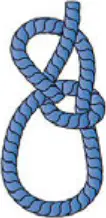
What is a key caution to consider when using a bowline knot?
It should not be used if the rope may have to be released while under load.
It is the strongest knot for all purposes.
It is best used for decorative purposes only.
It is the easiest knot to untie under load.
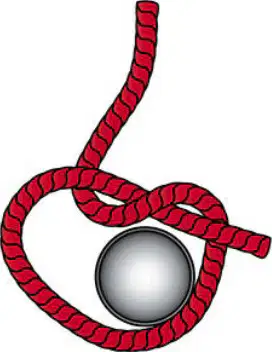
What is the main caution given about using the Half Hitch knot?
It should not be used alone for heavy loads or when safety is critical.
It is the strongest knot for all purposes.
It is only used for decorative purposes.
It is the easiest knot to untie.
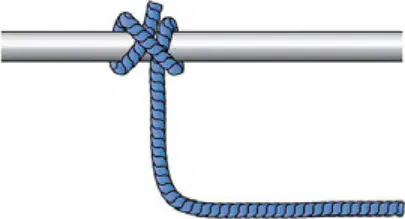
What is recommended to make the Clove Hitch knot more secure?
Use additional half hitches
Use a different type of rope
Tie it tighter
Use a double knot

